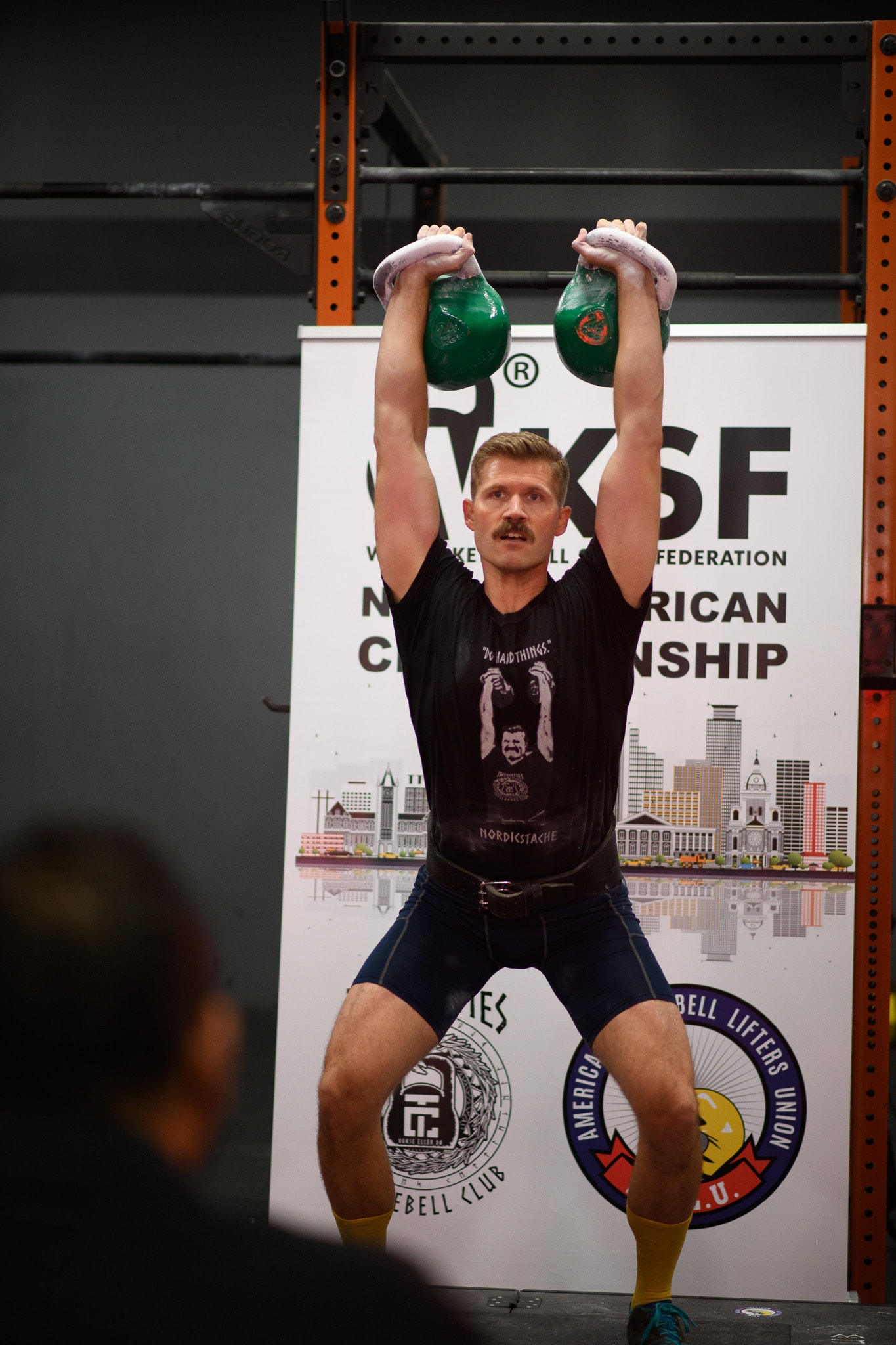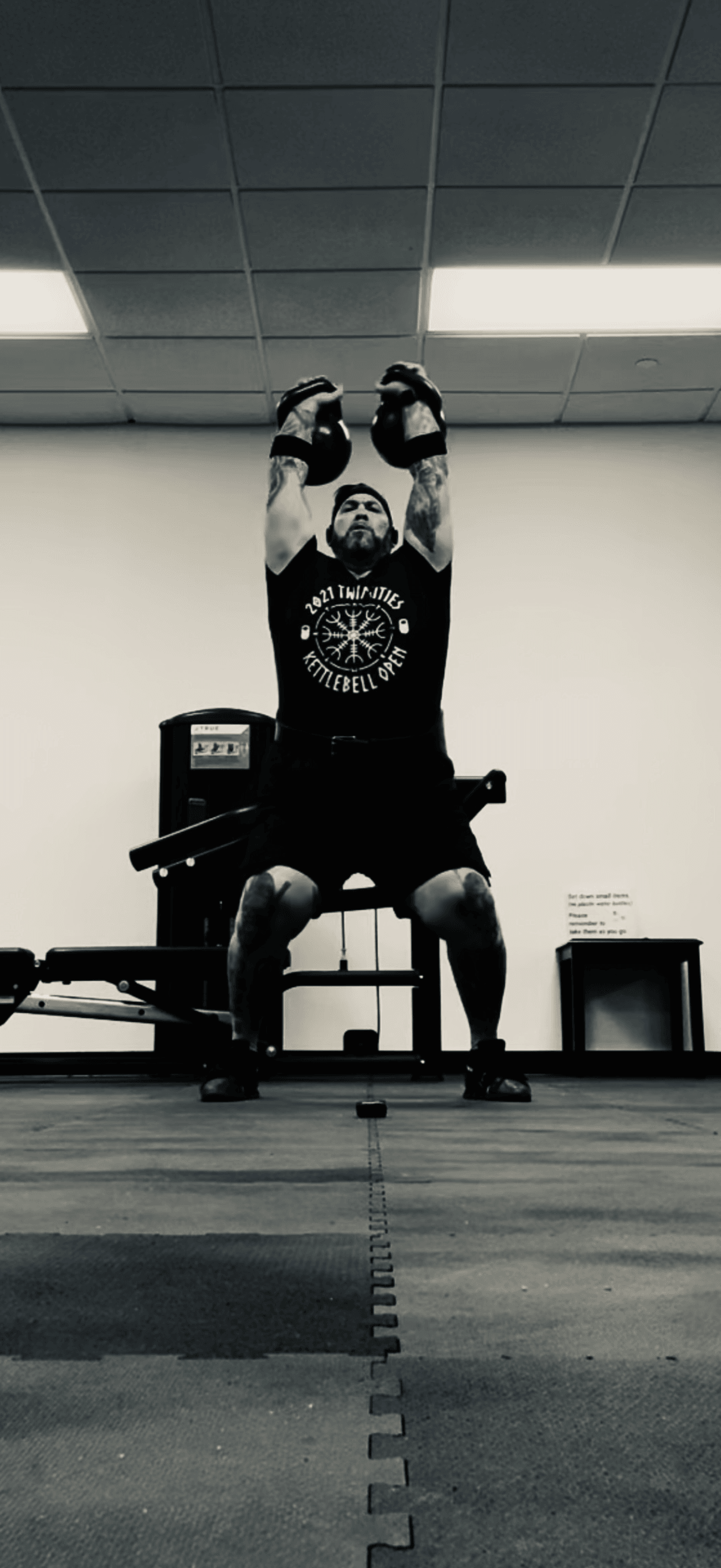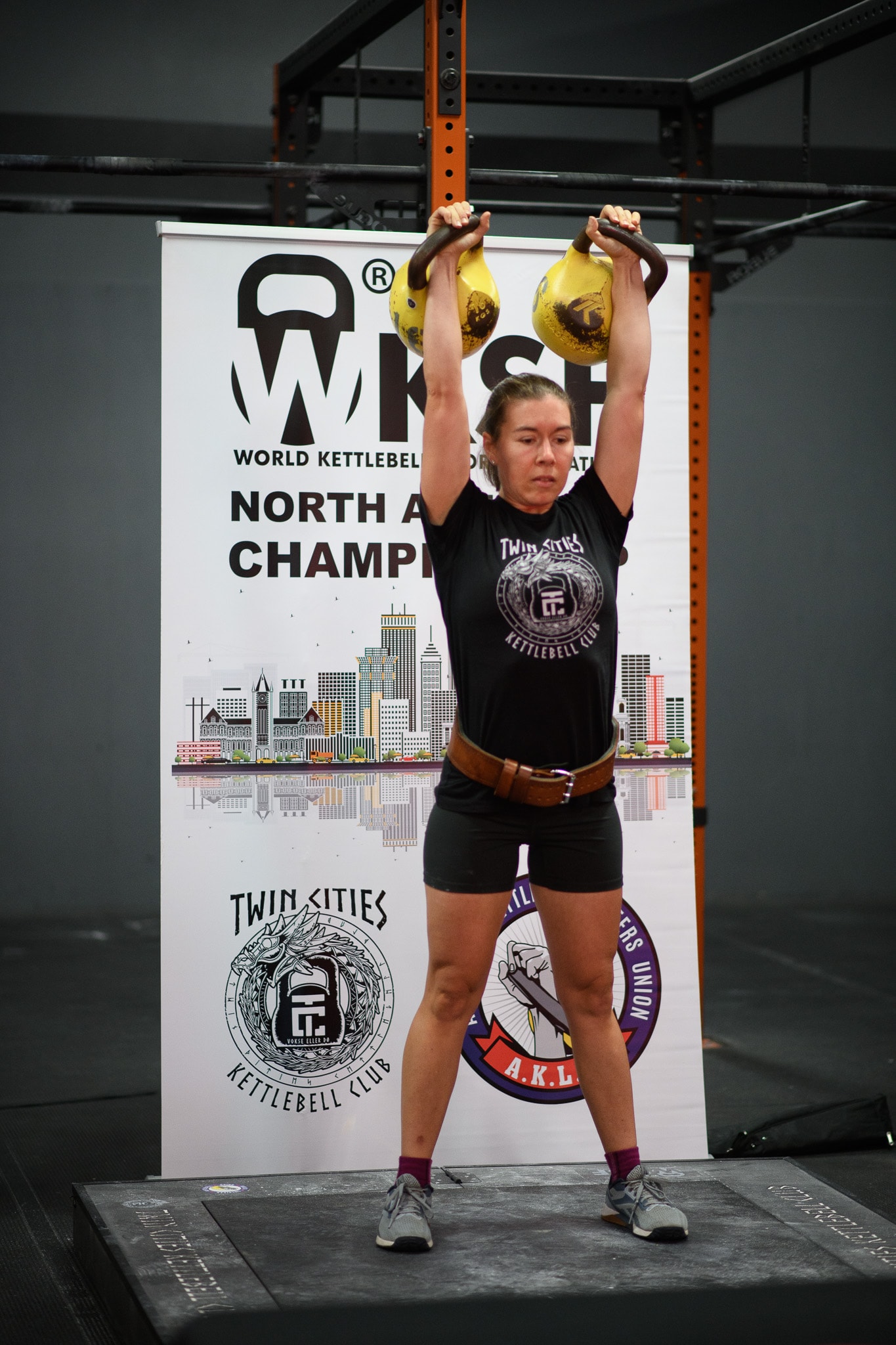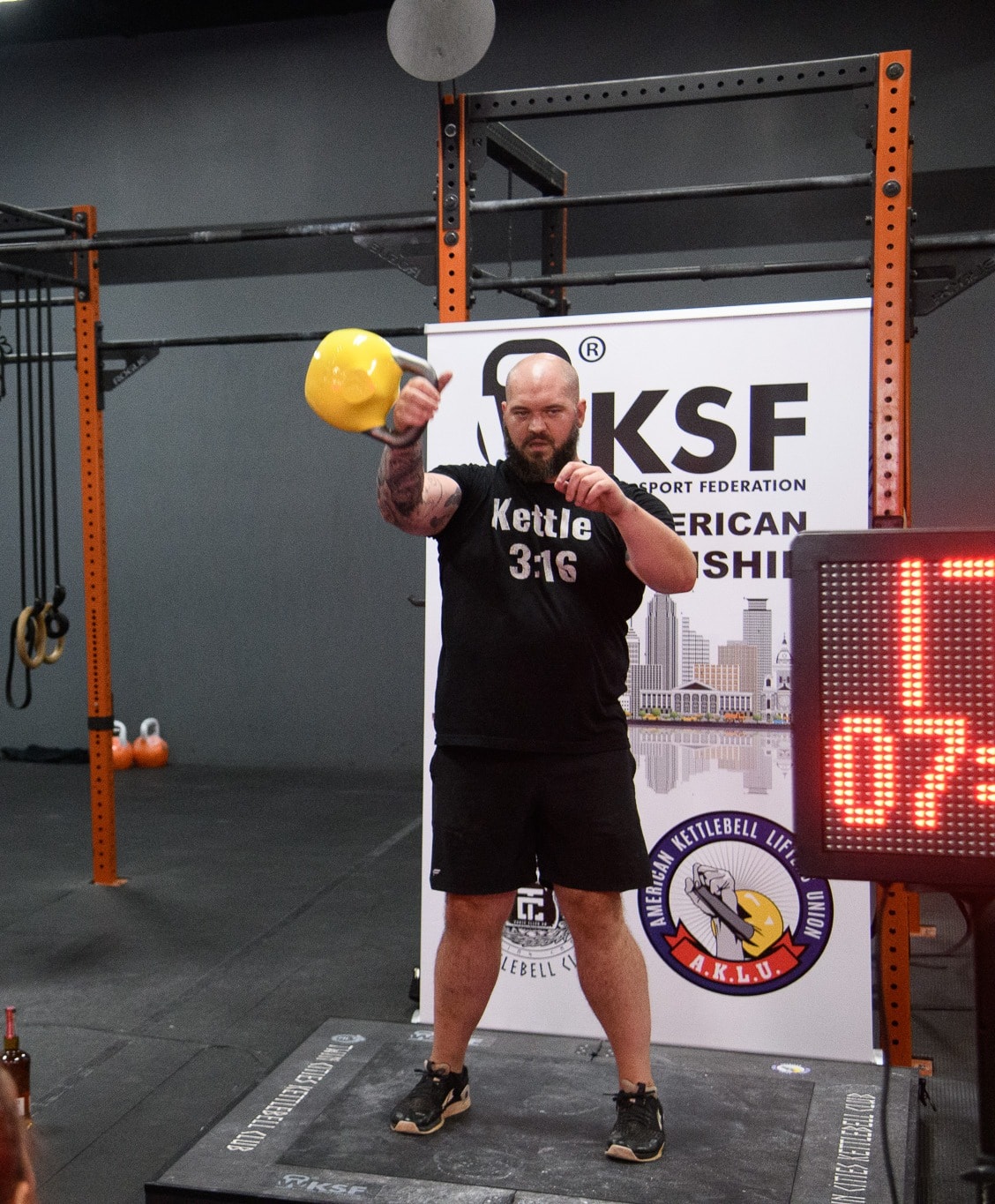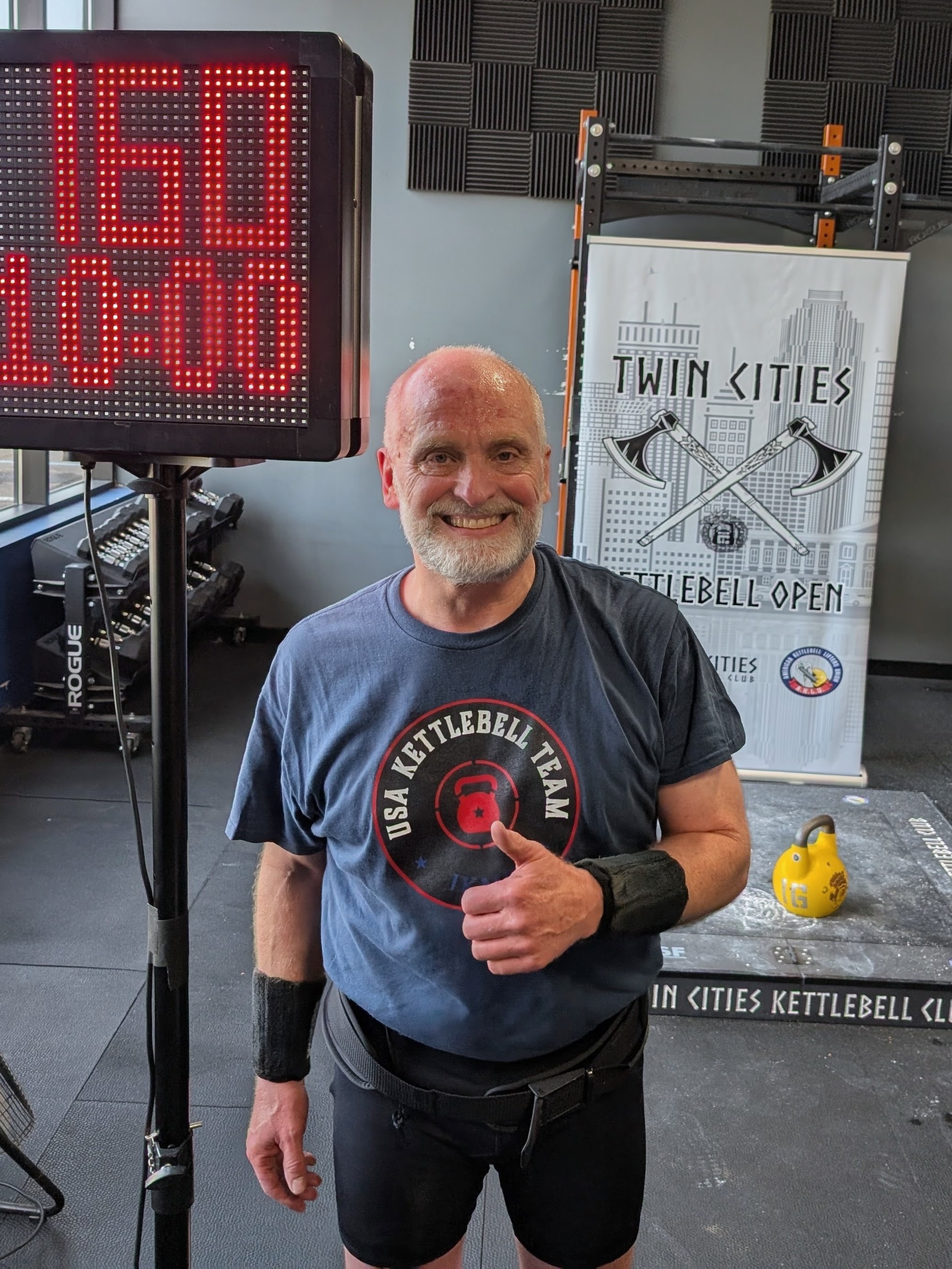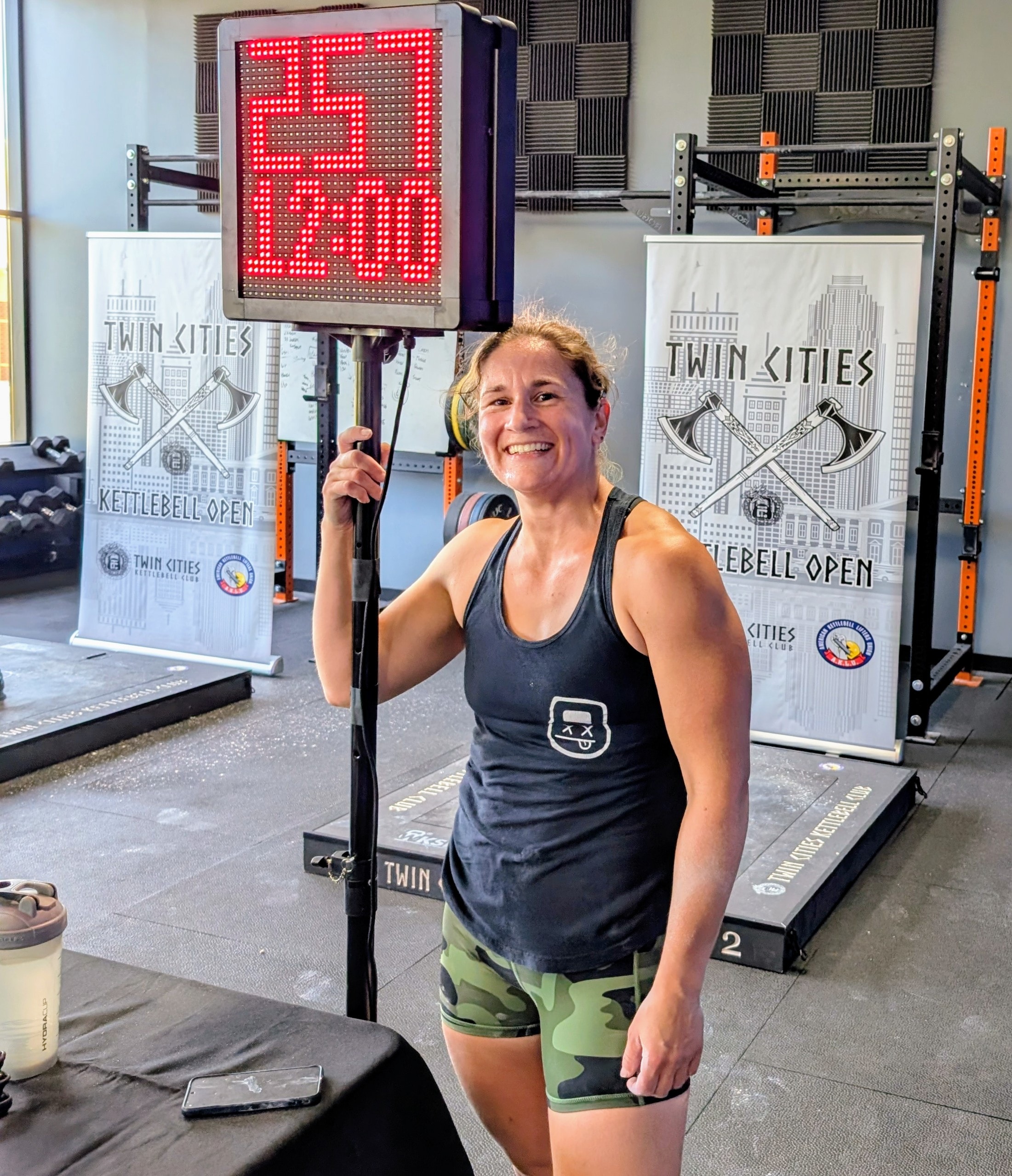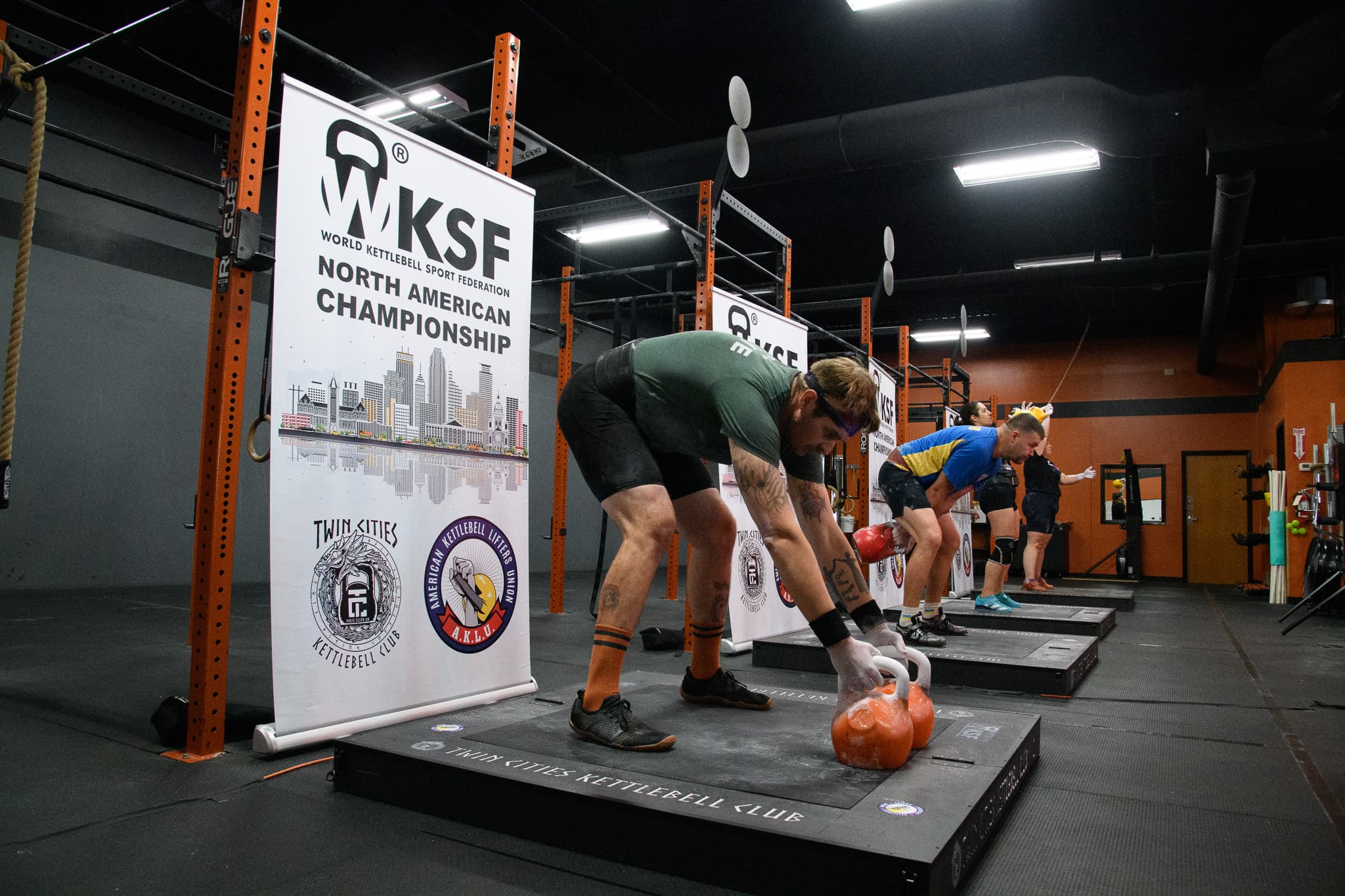
Athletes competing at Twin Cities Kettlebell Open

Twin Cities
Kettlebell Club

Becoming our best selves through sport.

I've been coaching fitness for 20 years and have specialized in kettlebell sport since earning my first certification in 2009, working with people from their first kettlebell to the World Championships. The programming is data-driven, the approach is personal, and the relationship is real. I know what starting from scratch actually looks like; I lost over 100 pounds after blowing out my back playing college football and rebuilt from the ground up. That experience is still the foundation of everything I coach.

Who This Is For

Anyone looking for real coaching and real results.

Skill level doesn't determine the fit. The system meets you wherever you are and takes you where you want to go. The common thread isn't ability or experience; it's communication, consistency, and willingness to trust a process built for the long game rather than quick fixes.
The First Timer

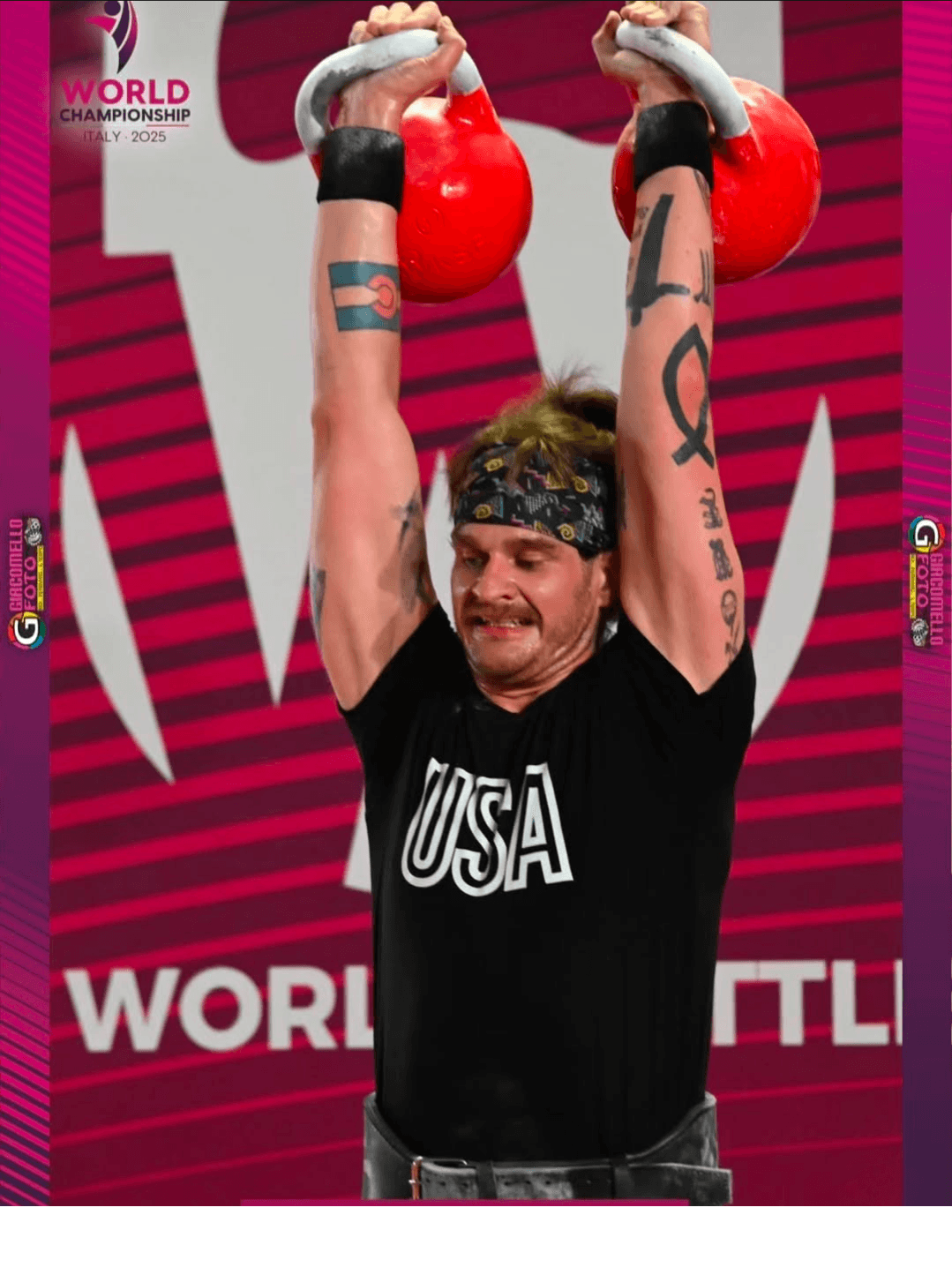
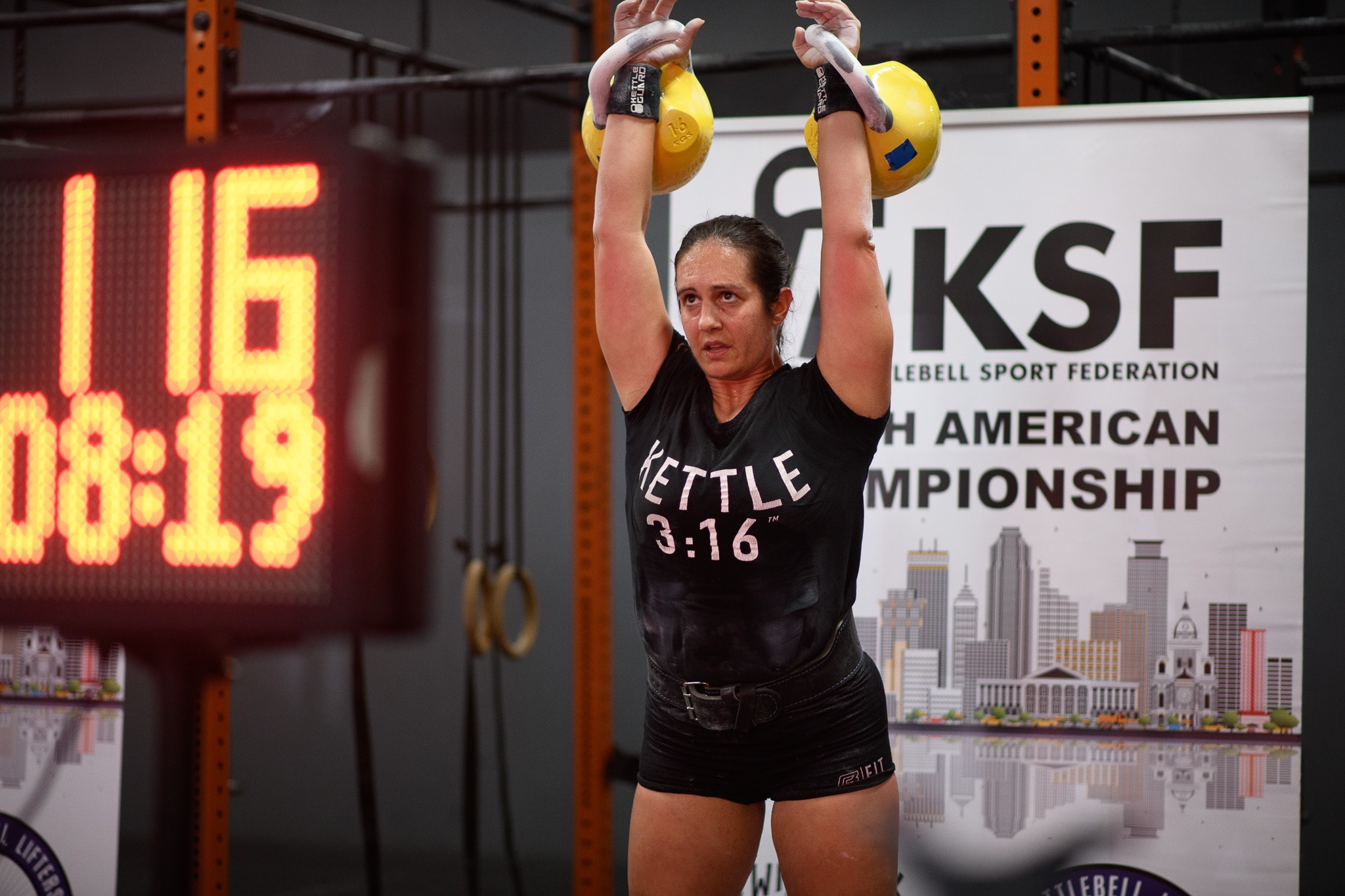
You've heard about kettlebell sport, it looks insane and fun, and you want in. You might already train, just not this. More of my clients start here than anywhere else. The learning curve is real but the sport is worth it, and the right coaching from the start makes a significant difference.

I was very enthusiastic about getting into shape and I really had no idea what I was doing. Jordan helped save me a lot of time and prevented some inevitable burnout and injuries. Most of all, he's helped me understand how to be the healthiest version of myself I can be.

Steve RustinCoached from beginner to USA World Championships team, professional division

The Comeback

Life interrupted. Injury, surgery, burnout, a pandemic, whatever it was — you stepped away and now you're stepping back. Starting over isn't the same as starting fresh, and you need someone who understands the difference. I've coached people back from post-surgical rehab and multi-year breaks.

I worked with Jordan at the start of my kettlebell journey and then again 7 years later when I needed someone to jumpstart my training after the pandemic. His programming meets you where you are and takes you to your goals.

Sarah ForneroThree trips to the World Championships

The Executive

You run a team, a department, a company. The calendar is a warzone and your bandwidth is finite. You don't need a cheerleader; you need a coach who respects the constraint, builds around it, and delivers results without wasting your time. The programming is efficient, the communication is direct, and the accountability is real.

Jordan's approach is different than any other coach I've met; he's got a listen-first mentality who honestly wants to help in any way he can. His approach reinforces training as a habit that works with you when motivation may fail.

Ryan ThompsonBank executive and kettlebell sport athlete

The Transformer

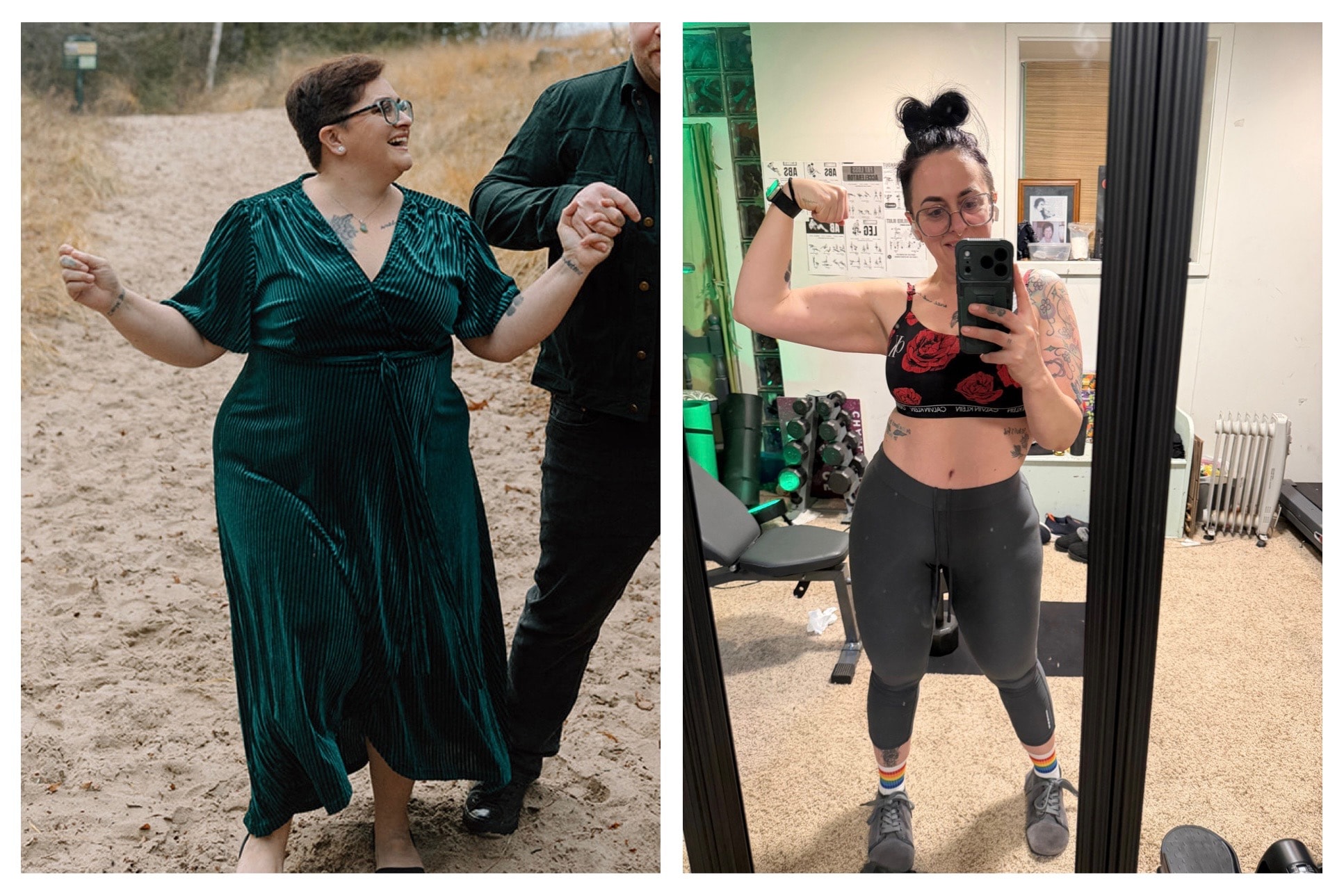
You're not here for kettlebell sport. You're here because something shifted — a surgery, a health decision, a moment where you said "this changes now." Your body is in the middle of a real change, and generic programming doesn't work here. You need a coach who understands how to build around what your body is going through, not around what it was.

My journey with weight has felt more like a lifelong battle, and for years I felt like I was fighting my own body. Choosing bariatric surgery may seem unconventional, but it was a life-changing tool and the best gift I could give myself. Combined with support in fitness and nutrition, along with the knowledge I've gained over the years, I'm finally thriving. I've always been a badass, but now my strength feels attainable and sustainable.

Anora

The Plateau Breaker

You're not a beginner. You train; you've been training. But something isn't connecting — you've hit a ceiling or you're grinding without progress. The problem isn't effort. It's that you can't see yourself from the outside. That's what a coach is for.

I met Jordan at the height of the pandemic. I was on a fat loss journey already and he piqued my interest in kettlebell sport. To say it was a life changing moment would be an understatement. Jordan is more than a coach to me, he's a friend and someone I consider a brother. I'm becoming a coach myself and have my son training under me and Jordan is a big reason why I'm creating that legacy and community. Coaching is one thing but community and brotherhood are a whole other level.

Tim BoyerKettlebell sport athlete and coach

The Busy Parent

Training around life — kids, work, school runs, whatever. You haven't abandoned fitness; you've just had to get real about what's possible. 30 to 45 minutes three days a week can still move the needle if the programming respects the constraint. I've built a lot of good programs inside very tight windows.

After abdominal surgery, Jordan encouraged me to do as much as I was able and when I needed to change exercises, he kept me motivated. I've learned to listen to my body better, and to actually follow through on what it is telling me.

Brenna ThompsonMom, wife, dietitian, and kettlebell sport athlete

The Competitor

You came from another sport — football, hockey, running, whatever it was. The competitive drive never left; it just doesn't have anywhere to go anymore. Kettlebell sport has a ranking system, sanctioned meets, and a path that goes as far as you're willing to push it. I've coached athletes from their first local meet to the World Championships.

I took myself out at halftime of the eighth game of my senior year of college football and never played another snap. I spent years well over 350 pounds after that. I thought I could bench 500 and squat 600, so how hard could it be to lift kettlebells for 10 minutes? It turns out it was really hard — and it gave me somewhere to put the competitive drive that football left behind.

Jordan Kunde-WrightFounder, Twin Cities Kettlebell Club · AKLU Secretary · USA representative to WKSF

The Legend

You've been competing for years and you're not close to done. Age is a number; the real ceiling is programming that stops expecting improvement. My first athlete is still competing at world-class level in his 60s. I've seen what long-arc training actually produces and it's not what most coaches will tell you.

The Elite

You're already competing at Rank 1 or higher. You don't need encouragement; you need precision. Long-arc periodization, multi-year programming cycles, technical depth at the level the sport demands. I've worked with athletes at CMS, MS, and MSIC across multiple events.

A note on fit: I'm not for everyone, and I'm upfront about that. If you want someone to scream at you, push you to failure every session, or hand you the same program they give everyone else, I'm not your guy. This is collaborative coaching. It requires honest communication and consistent effort from both sides.

Learn about coaching →

How It Works

01

Apply & Assess

Fill out the interest form (about 10 minutes) and we set up a free video call. 30 to 45 minutes, no pressure, no sales pitch, no hard close. We figure out together whether it's a good fit.

02

Program & Feedback Loop

I build your training plan from scratch based on your goals, schedule, equipment, and history. You train, share data and feedback, I review and adjust. This is a working relationship, not a handoff.

03

Progression & Support

As you grow, the plan evolves. Nutrition guidance, technique review, competition prep, or staying healthy into your 40s, 50s, 60s and beyond. I've had athletes work with me for six years and counting.

Apply for Coaching

Credentials

20 years in fitness coaching; kettlebell sport certified since 2009. Athletes across multiple weight classes at the World Championships. Founder of the Twin Cities Kettlebell Open (6th annual in 2026). Host of The Platform Podcast (136 episodes, listeners in 7+ countries). Board member and Secretary, American Kettlebell Lifters Union (AKLU), USA representative to WKSF.

Questions I Get Asked

Does online coaching actually work?

It works if the communication works, and I'm relentless about communication. Every athlete I coach gets personalized programming, regular check-ins, and technique review via video. Some of my longest and most successful coaching relationships have been entirely remote.

How much time does this take?

That depends entirely on your goals and your life. Most clients train 3 to 5 days a week, 30 to 75 minutes per session. I build the plan around your reality, not the other way around. If you've got 30 minutes three days a week, I can do a lot with that.

I'm a complete beginner. Is this for me?

Some of my best work has been with beginners. One of my athletes had never touched a kettlebell when we started; four years later he represented the USA at the World Championships in the professional division. You don't need experience. You need willingness.

What does it cost?

Coaching runs $150 to $250 per month, depending on the level of involvement. We figure out the right fit on the intro call. If finances are tight, I'll work with you to find something that helps, but the commitment has to go both ways.

What if it's not a good fit?

Then it's not a good fit, and there are no hard feelings. The intro call is free. No scripts, no pressure, no hard sell. If I'm not the right coach for you, I'll tell you honestly and point you somewhere better.

The Platform Podcast

Found me through the podcast?

136 episodes. Listeners in more than 7 countries. Topics ranging from kettlebell sport technique and programming to energy systems, resilience, sport psychology, and what it actually takes to build a sustainable athletic life.

The First Step Is a Conversation

I know reaching out to a coach can feel like a big step, especially if you've been going it alone for a while. The intro call is free, it's relaxed, and there's zero obligation. You tell me where you are and where you want to go, and I'll tell you honestly whether I can help. That's it.

Apply for Coaching

Vokse eller dø