Is Your Metabolism BROKEN?
From the archive · originally published May 22, 2020
"Did I break my metabolism?" I've had variations of this question asked countless times, typically by someone who has tried EVERY fad diet, a lot of workout plans, and usually spent a small fortune on supplements.
My answer is usually some variation of: possibly, but not irreparably.
Metabolic damage is all the rage in the fitness and nutrition circles right now, and for good reason. With the pressure to be lean, fit, and attractive seemingly at an all time high, people seem to be going to more and more extreme measures to try to achieve the body (and life) they want. Only to end up frustrated and wondering if they just can't lose weight anymore because they screwed up their metabolism.
The human body is incredibly adaptable, and while you can damage your metabolism, once you get back on track it will bounce back. To do that, the answer most people need is something that has been out there for a long time: It's all about balance baby! Energy balance that is.
What is energy balance?
Put simply, it's the famous Calories in/Calories out that you have probably heard 1,000 times before.
I know, I know, but bear with me...
Frustration with the "energy balance" equation and your personal results is probably very valid, and likely has a straightforward answer: the numbers don't always add up because the equation isn't as simple as you have been told.
We've all heard "experts" and "gurus" talk about how this is what it all boils down to. Just burn more than you take in and you will lose weight! You could eat fast food every meal and lose weight. Right?
Kinda...BUT it's not that simple. Metabolism is the sum of millions of chemical reactions happening simultaneously in your body every SECOND.
AND there is the emerging research on the importance of gut health and the role of the microbiome in determining how much of the calories and nutrients that pass our lips we actually ABSORB and the role that plays in health, immunity, and weight management.
PLUS the fact that individual variations in our genetics influence how people from identical backgrounds may have different health.
NOT TO MENTION that there are environmental factors that also contribute to different expressions of that genetic code.
FINALLY there are the daily variations in stress, sleep, hydration, and on and on that also play a role in how your metabolism may perform on a given day or over an extended period of time.
To distill something this complex to a simple "calories in vs. calories out" is like taking Picasso's paintings and replacing them with stick figure drawings. Sure they're both pictures, but one has a lot more depth and nuance.
So why start here?
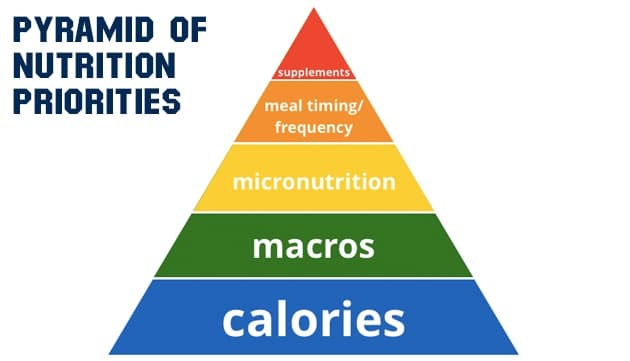
All the nuance and complicating factors aside, we have to start somewhere. Even a Picasso starts with some sketches and lines that become the basis of the image.
Determining the number of calories you need to maintain the energy balance appropriate for your goals is the sketch work of the masterpiece that will become the healthiest, most beautiful version of you.
The simplest version of the energy balance equation looks like this:
Changes in body stores = Energy in − Energy out
1. Basal Instinct
The first, most significant factor in the "energy out" part of the equation is your Basal Metabolic Rate or BMR. This is the number of calories your body needs just to operate and stay alive even if you were comatose.
If your goal is to lose weight in a healthy, sustainable fashion you should NEVER eat under your BMR caloric need!
Eating below your BMR level for sustained periods of time is unhealthy and causes your body to waste critical tissues like muscle and bone, which in turn slows your metabolism down making it harder to lose weight going forward and makes re-gain of weight when you return to normal calorie levels guaranteed.
Since most of us are NOT in a coma (thankfully), we'll switch to discussing Resting Metabolic Rate (RMR), which is very similar to BMR but typically about 10% higher due to normal motor movements throughout the day.
2. Size DOES matter!
Just like bigger houses cost more to heat and cool, larger people tend to have higher RMRs and smaller people have lower RMRs. Your RMR also changes based on your body composition because people with more muscle require more calories to maintain it.
3. The Undefeated Father Time
Age is a big factor into RMR. We burn less efficiently as we get older, which surprises no one over the age of 25. We tend to lose muscle mass and the associated mitochondria, which are the power plants of the cell responsible for ATP production. That's why energy levels diminish as we age. However, you can slow the rate of degradation by exercising consistently and eating a healthy diet.
4. The Gender Gap
Sorry ladies, you're getting the short end of the biological stick here. Because you're biologically designed to make babies, women tend to have less muscle and more body fat and thus tend to have lower metabolic rates than men of comparable size. On the plus side, you can make another human which is pretty rad.
5. Well that's NEAT!
Non-exercise activity thermogenesis (NEAT) is basically everything you do that is non-exercise like house work, getting dressed, etc. This is where small choices like taking the stairs instead of the elevator, walking to the grocery store, etc. start to add up.
6. The PUMP is Fantastic!
Exercise activity is the calorie burn you get while doing any activity you're doing intentionally for exercise purposes. Whether it's Shake Weight, CrossFit, marathon running, or juggling on a unicycle, it counts for your exercise activity burn.
7. Turn on the AFTERBURNERS!
Along with exercise activity is the "after-burn" — EPOC (Excess Post-Exercise Oxygen Consumption). This is the increased rate of oxygen intake following strenuous activity. Your body needs oxygen to repair and rebuild cellular tissues damaged during strenuous exercise. The higher rate you burn during exercise, the higher rate you burn after. That's why high intensity training is so effective for changing body composition rapidly.
8. Are you gonna eat that?
Finally, the thermic effect of food (TEF). Eating, digesting, and excreting all that food and fluid you take in throughout the day takes energy. More than you might expect — roughly 10% of daily calorie burn is used for digestion. Nutrient dense, minimally processed foods have greater thermic effect than simpler foods.
The expanded equation
Changes in Body Stores = Energy In − [RMR + NEAT + Exercise + EPOC + TEF]
5 Tips You Can Implement TODAY
-
Eat more whole foods — Your body will be burning more calories processing food, and you'll be full longer which will naturally reduce the desire for processed foods.
-
Eat more protein — Protein significantly increases TEF, and it's essential for maintaining lean body mass which keeps your RMR higher. Generally, I recommend 1 gram per pound of your target body weight.
-
Drink more water — Your body has to process those fluids, which increases your total calorie expenditure, and hydration is critical to your body's performance on a cellular level.
-
Get MOVING to increase NEAT — Fidget, stand at your desk, take the stairs, go for a walk at lunch, park further away from the door. It ALL ADDS UP.
-
Start Exercising — Whether you are a lifelong couch potato or a former athlete, no one is too far gone to start. Do SOMETHING to intentionally burn more calories every day.
If you're ready to make a lasting change, I'm here to help. Remember that everyone is different, and what works for someone else may or may not work for you. You don't have to be perfect — start where you're at and make incremental progress over time.
Grow or die.
— Coach Jordan