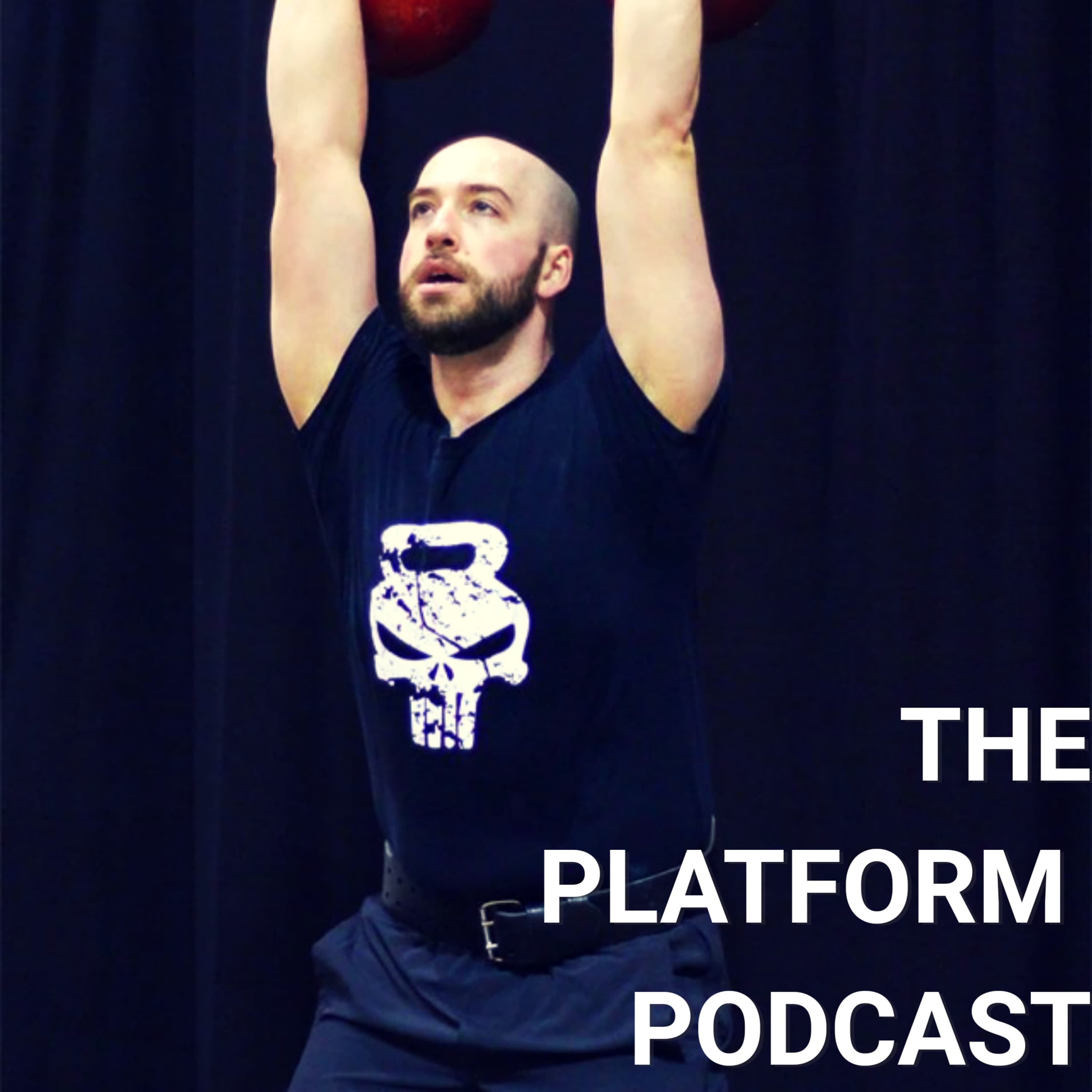
The Platform Podcast · Episode 20

Eric St.-Onge | The Kettlebell Doctor

November 25, 2020 · 64 min

Show Notes

In this episode we welcome in Dr. Eric St.-Onge (@drericstonge), he is a Sport Specialist Chiropractor and kettlebell coach and athlete. We dive into spinal mechanics, injury prevention & recovery, and the approaches to improving your resilience to injury. 

If you enjoy the content please leave a 5 star review and support my work by supporting my affiliates:

Gaspari Nutrition, use code JWright20 at check out for 20% off your order

Kettlebell Kings, use code TCKB to get 10% off

Bearfoot Athletics, use code TWINCITIESKETTL to get 10% off

Vivo Barefoot, barefoot training shoes

Transcript

Machine-generated transcript; may contain transcription errors.

What is up everyone. Thank you for listening to this episode of the platform podcast. My guest this week is Dr. Eric St. Orange. He is a sports chiropractic specialist from Canada and the kettlebell doctor. I appreciate you guys as patients. We had a little bit of struggle getting our schedules to line up. That's what happens when each of us have two kids of our own as well as full-time jobs and on my side the stress of the US elections. So I really appreciate your patients while I was slacking on getting this episode out. But I hope that you enjoy this episode. If you appreciate what I'm trying to do with putting this content out please support my sponsors. The kettlebell kings for kettlebells use code TCKB to get 10% off on all things kettlebell. My nutrition sponsor, Gaspari Nutrition use code J-Rite20 to get 20% off that Gaspari Nutrition as well as barefoot athletics use code Twin City Kettle to get 10% off on barefoot training shoes. Thank you so much and I hope you enjoy the episode. All right welcome into the platform podcast. My guest today is Dr. Eric St. Orange from Canada. He is the kettlebell doctor. He is a sports specialist chiropractor, a kettlebell athlete and a kettlebell coach. Thank you very much for coming in man. I'm really excited to have you on. I'm really happy to be here. Thanks for having me. Yeah of course. So I always ask people how did you first get into kettlebell sport? Tell us the origin story of how you stumbled onto kettlebells because most people don't get into it intentionally. So yeah the way I first got introduced to kettlebells in general was my dad brought one home. So he, I forget exactly how he found it but he he found a guy in like a town probably about like half an hour away from where we lived in my parents house and who made his own kettlebells. So the guy's name was Peter Putsoli and yeah his his brand name was super hero strength. It's not around anymore but he brought home a 35 pound and a 55 pound kettlebell home and you know like that was around the time like he was trying to get like you know a little bit more serious with training and things like that so he was just playing around with that home then I started playing around with it a little bit. And to learn a little bit more about it, I even had some sessions with that guy Peter so he kind of showed me a couple of things here and there. And then I want to learn a little bit more so I went on YouTube which was still relatively new at the time like this is 2007. I was just going to ask what year was because now that you said before that I was like okay what year we talking about we could go as far back as the early 90s or we could be talking like you know early 10s I don't know like what you said you two are like yeah I got some anchor now okay exactly so yeah YouTube was only around like what doesn't six I think it was created so this is 2007. Got it was wasteland I mean even more so than it is now it was the wild wild west totally like the you know the highest video quality was like 480p or something. So yeah I was like like summertime 2007 and some of the first videos I found actually was from the Larry Fedoranko and the World Kettlebell Club and yeah honestly and you know I was like memorized by his his his videos where he did like the 188 snatch and I think it was like 132 jerks I believe like back when he was a teenager and like I studied those videos. It was like all of his videos that he had on there and I was just hooked that I that you know finally I saw that like oh my god like this is actually like a sport people can compete with this. So did a little bit more research on the World Kettlebell Club and saw that they were actually coming to Toronto in 2008 then so I decided to register for that. And in the meantime was just trying to train Kettlebell sport on my own without really knowing what the heck I was doing so I'm not that great you know I didn't have any pro grade Kettlebell so it was with like you know the standard cast iron Kettlebells I literally like I still have I'm standing I'm actually sitting right next to my 50 found five pound Kettlebell that I bought from Peter like the original one. And if you look at it there's actually like different paint on it because I actually strip the paint off the handle because I saw that everybody else just doing Kettlebell sport on YouTube that they had chalk over the handles I'm like I can't do chuck over the the paint so I stripped the paint off and I put you know so I had the bare metal so I can actually apply chalk better on the handle I eventually you know put paint back on because I realize it was a terrible idea with cast iron Kettlebells don't ever do that it's just just terrible. Yeah just tear up your hands oh my god my hands were torn all the time oh my god all the time my hands were torn up but yeah no I just kind of kept with it and once you know it was like June 2008 when they came to Toronto and I guess I impressed the Valeria a little bit that I was able to do like you know a short set of snatches of the 24. And me like I like a week later I got an email from him saying that like offering to coach me online so that was I was pretty pumped about that because I've never really experienced anything like that before because you know as a kid I played a lot of sports but I never played anything competitively like the second things got hard I got discouraged and quit so the fact now that I found something that I was relatively good at you know you know for being so new out of it anyways was just very encouraging so I was really pumped about that I finally found something that okay this could be my thing that I could be actually good at nice what sports did you try when you were kid oh god let's swimming basketball volleyball type one dough Brazilian jiu jitsu yeah you got a pretty you got a pretty wide a pretty wide base there yeah but there you get like I only I didn't keep up with anything like the second I got hard I'm like I don't want to do this anymore this is not fun so yeah I'm assuming you came in with relatively few or no injuries then when you got when you did finally get into kettlebell sport I came in with few injuries I didn't come out with with a few injuries but that's a whole lot of fun. let's let's talk about that because for that's actually opposite of my experience like I came in with an extensive sports background fairly narrow and deep and you know Eric football is not good for your body I'm not sure if you've heard but I hear rumors yes apparently it's not good to smash your dinosaur head into other dinosaur heads I'm over over and over again so I came out with you know multiple surgeries I'm like Dalton and Roadhouse I saved time by just having a list of my injuries that I hand to my new doctors because it's just it's just I'm not even kidding it just saves us time so kettlebell sport and kettlebells in general have actually been rehabilitated for me but that sounds different from your from your experience so tell me a little about your journey how did you you got hurt doing kettlebell sport that happened so well we'll keep on now I'm a sports specialist Cairo so I know a lot more about health and fitness than I did back then so if I only knew that what I know now oh my god so keep that in mind because I do nothing about strength and conditioning back then so like even with Valeri coach me you know online again this is only like via phone so we didn't have like you know you could send him a video of your set and have him be like you're not really you're not fixating you're screwing up your your pad yeah like even sometimes like when I was call him I would have to call him in Kyrgyzstan and I had to buy like a national phone card to call him from the other side of the world so yeah yeah the time difference was a little bit silly but so yeah 2008 and yeah so July 2008 I know June 2008 was when I did the certification with the Eric kettlebell club and then I signed up for my first competition in August 2008 in Michigan and that was with a can can Blackburn from IKFF yeah totally and so I drove out there and I can be with a 24s in every single one of the events so I did by Athalon and did long cycle I did he also had chair press oh yeah yeah have you ever seen the can Blackburn's chair press videos yeah it's ridiculous that guy is a freak of nature like he's just sitting there pressing 32 kilos without his legs like yeah like like you and I would press a 16 it's totally the guy is Ken's a freak he's a great athlete and a great amazing yeah from what everybody tells me totally and there was one other event I can't I can't remember off the head so I think there's like five five different events total like by Athalon and you were gonna get your money's worth right you're like you're like I signed up I'm doing I'm doing them all without yeah exactly what you got yourself into oh man I saw a video from my sets there and it is atrocious like it's it pains me to watch it and I actually competed um 10 minutes in every events except for snatch they I a snatch I dropped it halfway through just because I tore two calluses on like the last match of like the last rep I was going to do with like my left hand so that was super thick at that point you said you're you losing your cast iron stripped down chalked up bell I'd imagine your calluses were fairly substantial they were pretty big and I didn't know anything about like taking care of calluses or filing them down to make sure that they're not too big yeah and you know so for going from that to a really really thin uh WKC kettlebell because that's how they were back in the day like very very thin handles yeah yeah yeah totally even some of them are even smaller like those like those early versions like the first a second generation ones they're they're very thin um yeah so I competed in that one and later that I think November November of Valeria invited me to go to Columbus to to do a demo at one of his um specifications that was doing down there nice so it was actually the same day I don't know if you remember you remember do you remember of like a Scott Hesley isn't that name ringabella no rings out but I'm not I'm I'm blanking on who he is so like one of the old YouTube videos there's like a video of him though so he was the first one I think to get master sports long cycle in the states okay or or I might or that might be Marty I can't quite remember I want to say I thought it wasn't I thought it was Scott but in that video like I'm in the room while he's doing that so like that event and uh so I did a set there as well and yeah I was shortly after that actually um I was starting to get like like a little bit sore my chest on my right side and one morning I was um at home and I was getting ready to go to McMaster University to to write an exam my final exam and I blew my nose and I'm one of those guys when I blow my nose like I blow hard like when I blow my nose so when I blew my nose I fractured my rib wow like it was on like diaphragmatic force into that motherfucker I did oh my god like it was on its last leg like you'll just hang it up by your thread at that point so yeah so I think what happened like just like with overtraining and with the constants like with with not really knowing like you know too much about technique just having the bell just drop on you from like from lock out to back to the rack position yeah just over and over like thousands of reps uh it was just I just had enough and you get a new lifters drape it to your iliac crest not on to your sixth rib totally and you know don't move up to 32 as quick as I did because man that was that was silly and uh yeah so I fractured so I had like a fractured rib that I got and uh yeah I had to write the exam hunched over to the side then I went to the lock-in to figure out what the heck was wrong with me at that point yeah and you see like you did it blowing your nose which is like I cracked a rib playing football and I kept playing because I was all hopped up on a drennel and I didn't like I didn't like you didn't realize I didn't realize how bad it was like the trainer was like does this hurt I was like yeah hurts is like does this hurt yeah that hurts is like okay when does it hurt just when I breathe like let's go let me get back out there and I was like okay it's fine and then like the next day I was like oh my god I couldn't like couldn't get out of bed but yeah you know during the heat of the moment you know middle of the game you don't think twice about it but like blowing your nose and taking an exam you're not exactly uh you know high on adrenaline so no no no it's like oh bad that I just sitting on a torn for three hours writing an exam hunched over to my right side doing the test I think that that was for my yeah that was my sports psychology exam and I think it okay actually because it was like actually a really fun course I really enjoyed that course actually I love I love psychology I love performance psychology sports psychology I was a psych major so oh right I don't know I love I love psychology I say I probably could have minored in psych if I actually declared it by never did I took a lot of psychology in undergrad but just going back was in like honors life sciences so just pretty much in general science but anyway so that was the end of 2009 then yeah it didn't end of you know end of 2008 for that one so then I had to take like several months off and like I'm a very slow healer so from kettlebell sport I had to like pretty much not train for for longer than I care to admit so then you know kind of starting from the bottom again take while the heel though too like that that is not something you can mess around with because if it's not fully healed like it will straight up crack again too yeah exactly and then you can puncture along as I as I was told more than once by the trainers like you know you can't keep playing because you will potentially puncture along exactly and again keep in mind I didn't know anything about strengthy condition or health back then so I'm I'm trying to like exercise do something but I'm just I'm just kind of delaying healing that rib but eventually did heel and start to work my way back up and you know start to get a little bit stronger again and I think it was yeah do you compete in back then I was in the 90 kilo weight class okay and what do you compete in now like 105 okay and yeah COVID has not been great for hey I better know 105 plus since junior year high school so you know you're doing okay thank you sir so yeah what other injuries I got I guess so yeah I think in early 2000s yeah there we go I don't know yeah it was Valentine's Day 2010 I don't know why I remember it's Valentine's Day just Valentine's Day um were you had you met your wife at this point I did just uh two weeks prior actually so that's why you remember clearly yeah totally well I met her because we started well we we we started working together and I didn't ask her out until actually um in May of that year so like we were just looking at friends you know working and then eventually we started dating you're like the there's this girl that I work with who's really attractive and I don't have the guts to ask her out quite yet pretty much and at that point well at that point too also like I knew that I was going to chiro school that that summer so I and I was you know most likely moving away so I knew I didn't want to start a relationship or anything like that yeah and February 1st 2010 I start work and I see her I'm like damn it I want to marry this girl I'm gonna have to have a long distance relationship now there's gonna suck damn it yeah that I don't win through my head but um yeah so eventually we did start dating we did have a long distance relationship and we ended up by getting married and having two kids so it actually worked out there you go congratulations thank you but if only you hadn't waited so long it wouldn't have been long distance yet totally and uh so yeah that Valentine's Day I was actually uh training somebody and um I was training him in my garage because I was the only place where I could you know do kettlebells and like you know have chalk flying around that I didn't really care and uh there was a little bit cold out and I was kind of just at this point I was just kind of teaching how um you know technique ideally shouldn't should look fairly similar depending no matter what what you're using so if you're swinging say a 16 or 40 you should look relatively the same you know technique wise and at this point I had warmed up quite enough and um you know again cold so when I was swinging the 40 kilo with one arm I herniated my disc so yeah that was fun uh elf it was never I never got a MRI back then of the disc but um with the symptomatology I would say is elf elf i-s-one okay yeah so yeah so then I had to finish the personal training session with you know with uh with a little bit of pain there yeah yeah just just a just a scotch yeah it's uh yeah and that was also was that radiating down your down your leg then um eventually symptoms did go down a little bit uh not too but time too much thankfully but um yeah and also man that was that really stung too because I had gotten invited to go to uh camp in St. Petersburg that that summer or like late that uh that spring and only like a few people got that invite to go so I had to actually say no that I couldn't go anywhere because they hurt myself so yeah that would have been the first time like North Erics were invited to Russia to train for kettlebell sports so yeah I missed that on a good opportunity there unfortunately so so now the question that comes from my mind is uh we're we're the injuries part of what precipitated you becoming a sports sports car tractor or were you already interested in that before you ever got hurt no actually I um it was actually because of kettlebell sport I am a Cairo honestly that's because other like I've got like other little aches and sprains come along the way and I went to uh my my dad's Cairo and I had seen her when I was like god like a six grade or something like that for for stuff back then and uh I went back to her and she fixed me up and like this is awesome because Cairo is next to god I tell you what totally capabilities it's amazing yeah because I really because you know like I was saying mentioning earlier that like growing up I was trying to play sports and I was never good at anything so I always get discouraged and now that I finally had something that I was good at and I was traveling to competitions and making friends and all that stuff and to keep getting hurt was heartbreaking you know it sucked I hated it so much and it was just I was just disappointed with myself and sad that I couldn't train because it kept getting hurt so when I went to her and she actually helped me get back to doing the sport I love I was sold on that profession and that's what really persuaded me to to um to apply that's awesome that's awesome so and so when did you so when did you start uh Cairo practice school and is it different I'm not sure how I'm not sure how well the curricula align across uh Eric versus Canada like how long do you how long do you have to go is it is it the same duration it's because you obviously you did your undergrad in general sciences and then yeah and then you went to Cairo practice school how long how long is the training in in Canada for for becoming a Cairo practice well funny enough I actually did my Cairo schooling in the states oh nice so that was like the whole like long distance relationship thing like I moved because I was moving to another country I didn't assume because Canada's a relatively large country too so you have distance there we only have two schools in Canada in ones in Quebec and they only allow five people outside of the province of Quebec uh into that program every year so it's you know and it's all in French which is which is fine I was just I was just gonna ask doesn't have to be in French as well because yeah like I'm fluent in French so it's it wouldn't been a big deal but um yeah the way I worked out um you know I decided to go to the one to school in the states um just because the the the the way that it works in the states is that they work on trimester and they kind of run just year round so instead of it being a four-year program in Canada with summers off like you would see in like you know traditional university and things like in the states it's literally year round with just like a week or two in between trimesters and you're done in three years four months so it's the same amount of schooling just compressed condensed condensed exactly yeah I don't know if you've heard that like I graduated undergrad 2009 still not knowing what I really want to do and I was only later that that year in 2009 that I applied for carous school so I took essentially a year off from under between undergrad and carous school so it was also another reason why I kind of wanted to catch up on missing time or lost time um so to go to the states to kind of do the the quicker version of uh carous schooling yeah well and you and you had a you know a girlfriend to get back to and put a ring on the finger and all that all that good stuff too totally all the more motivation to to get the certificate faster than as fast as possible right exactly yeah so what makes uh oh sorry go ahead go ahead what are you gonna say oh I was just I was wondering what what's the what's the difference between I don't I know a lot about chiropractic in general but I don't know about the different sub-specializations so so what makes a sports specialist chiropractor different from say you know a general health chiropractor or what other sub-specializations are there within chiropractic care so it's different within the states and Canada so in the United States you can get a diplomate in various sub-specialties so for sports and there's like a do there's a diplomate that you can get in sport sciences and you can work your way up uh you work your way up to fellowship status I can't quite recall um but there's like I think like 30 different diplomates that you can get within the chiropractic profession in the United States but in Canada there's only five specialties that um the college recognizes in Canada so sports being one of them so for myself to to to to become a sports specialist here in Canada um there's two different routes you can do it I did the route where I did a residency out of the Canadian Memorial Chiropractic College in Toronto so it's a competitive residency residency that you apply into and it's uh two years full time and through that you just fulfill all the requirements that you would need to and then you take your fellowship exam and if you pass you become a fellow with the Royal College of Chiropractic Sports Sciences Canada there's also another route that you can do it independent of a pro a formal residency program and that is you find a advisor who is a sports specialist chiro in Canada to kind of help guide you and you have to do fulfill all the other requirements but kind of try to the the find all the pieces on your own versus like the residency how I did it everything is kind of handed to you so most people that want to do it externally they um enter into a master's so that they can fulfill their um their research requirements so they have to to create a original research project to do a systematic review publish some case reports uh a bunch of different coursework a thousand field hours as well um spend as well so the requirements will stop the top of my head I think there's a couple more but um yeah so it sounds pretty easy like anybody can do it you know what I had so much free time back in the residency compared to now having two kids at home it's ridiculous um that is very true painfully true so yeah so I went the residency route and um yeah two years full time and it was um yeah jam packed all the time so I had to in every we did like several like uh professional rounds presentations that you would have to present to in front of the entire school periodically like each or each one of the residents would take turns so you had to get used to you know preparing academic presentations um gosh yeah so I did my own I did a my original research project to on the Turkish get up so I um I did a my Turkish people get up like that I'm not sure actually so yeah I did a uh I studied the shoulder muscle activation during the Turkish get up so it was just a descriptive analysis and yeah so I had yeah so I had 12 subjects come in and just slap a bunch of EMGs on their shoulders and had them each do I think 10 trials of the Turkish get up on their dominant side and just kind of described what was happening with their muscle activation during the entire process so yeah thank you so that's actually published now it's been published for several years now so um if you just like we're just going to pump it and just search my name it'll it'll come up and I think in the show notes so people can so people can read it because it is it is a it is a good study and it's one of those uh if I only knew then what I know now right I had my left shoulder surgically reconstructed in my freshman year of college after having it the sublux over the two dozen times so oh boy had I had I known in high school what I know now I would have much much more stable shoulder girdle and much better balanced anatomy and uh you know I wouldn't have spent I would spend more time rowing and doing pull-ups and not so much time on the bench press but you know so let me yeah hindsight is 2020 I tell you boy so um yeah so then I what else I do yeah just a bunch of schoolwork and then I eventually wrote so I did my residency from 2014 to 2016 and then I was able to sit for my fellowship exam late 2017 and I've been a fellow since then excellent oh yeah so forgive forgive me if this is an ignorant question but I'm Eric so um I don't understand how socialized medicine really works um is chiropractic care covered under uh Canadian healthcare or is it something that you have to pay for out of pocket out of pocket it originally was I think up until early 2000s I think uh I'm not I don't quite know kind of before my time as a chiropractor of course but no it's not covered by our universal health care so um if you want to you know get chirocovered it's you know you pay cash or you get it uh covered by private insurance if you have it I mean frankly I'm glad that that was the answer because otherwise I would have been so jealous I mean I'm already jealous of your of your socialized medicine so I probably I probably just would have been more so uh if yeah I mean care was also covered but uh yeah like sure we we pay more taxes on the front end but it it comes in handy I gotta say when you need to go to the hospital for something you know got for bid but um you know it's it's good to have it when you need it not not having to worry about how much is this going to cost me and will it put me into bankruptcy is a nice nice piece of mind certainly yeah especially when you're like driving emergently to the to the hospital right what advice would you give to somebody who's in kettlebell sport as far as spinal mechanics and what they can do to take care of their body so they prevent injury and if they get injured what you know what's your approach to spinal rehab and uh you know queuing and and all of those all of those things I know that's a very loaded question so I'll shut up and let you talk yeah okay boy uh so yeah so like so one to keep you from getting injured and two what to do once you are injured basically um essentially yeah so I mean first thing to keep yourself from getting injured uh I think one get a coach who who who knows a finger too and who can you know ideally in person but you know with a pandemic it's kind of harder to have that done obviously but um somebody who can actually look at your form to make sure you're you're performing the the movements um you know ideally you know because uh yeah but even that's even that's kind of a loaded a loaded perspective too right because there are a lot of people that look at the spinal positions on in kettlebell sport and go oh my god doesn't that hurt your back and I'm like yeah like no not being able to do this hurt my back well you know what man like there there were times when like just being in the rack position hurt my back a lot uh but it was because my hips were so stiff that I was compensating with my little back so having somebody there to maybe like you know screen your movements to make sure to kind of figure out if there's anything like just glaringly obvious like okay your hip does not function like a hip so we need to make sure that your hip is actually a hip before we proceed how many how many degrees of range of motion is it supposed to have exactly because yeah like I literally had I've literally had patients with negative 10 degrees internal range of motion of of of hip so you know somebody like that eventually something you know the hip or up the liner down the line is going to you know to gonna gonna break so have have somebody look at your movement to see okay does he actually have do they actually have the prerequisites to actually perform the movement itself like can you actually unloaded bring your arms overhead without any compensation if you can't do that exactly like if you can't do that there's your silly to lift a kettlebell overhead like I've seen so many people who can't just lift their head their arms overhead without you know arcing their back and you know eventually that will hurt your back down the line you know sooner or later it's something that's going to happen so you know just doing a proper screen where you can actually look at you know each joint and just look yeah the movement to see like okay they can actually get into that position unloaded now let's work on loading them progressively and so on and so forth and doing that partly and having a proper periodization in your training plan and having you know putting in your proper D-load weeks and all that stuff to make sure that you're actually recoup you're recovering excuse me now when you when you when you talk about the the range of motion component of it are you a proponent of like myo fascia release and things and those types of techniques and then loading the movement that's a that's a strategy I've seen a lot like active activation techniques active release techniques and then load the movements once you can establish the the appropriate range of motions that you then load the movements to to help reinforce that movement pattern with load or do you keep it unloaded until they can consistently establish those positions without any load at all it depends on the context so I wouldn't answer it's it's always it depends so I mean in a perfect world people will be able to just have you know the the proper amount of range of motion that they need for the tasks that they want to perform you know so it depends on somebody's goal whatever they want so if you have like a you know a gymnast versus a power lifter obviously mobility goals are vastly different so I'm not sure I'm asking you yes the question yeah yeah I just I was curious that there's a dichotomy right in the in the mobility world and in the strength and conditioning world right do you not put somebody under load until they can safely perform the range of motion necessary for the movement without load or do you do modalities that help increase range of motion activation techniques release techniques etc that allow them to achieve the range of motion and then put them under load so that there's a theory that that actually accelerates the gains by activating and releasing to put them in proper range of motion and then by loading once they can get into that that range of motion that they are then actually activating the the stabilizing muscles and etc you're addressing weaknesses and dysfunction in the acceptable range of motions and you can actually get progression faster it's kind of an economy I've seen among experts and I'm curious what your what your take is from your expertise and your experience yeah so certainly for me as a healthcare professional like you know I can actually put my hands on somebody and perform either my official release acupuncture joint manipulation to essentially you know cope jumpstart the whole process and you know provide a small window where they have access to that extra range of motion that was what I was looking for thank you the window yes so that they can then train on their own to help reinforce that newly achieved range of motion because literally if somebody just goes to a practitioner like myself and just gets passive care and then doesn't do their homework at home it's not going to do anything like everything that I do when I put my hands on somebody is temporary like the body is not silly you're helping them open the window for them to be able to train safely and reinforce those movement patterns but if they don't take advantage of that window they're wasting their money wasting your time wasting their time exactly because the body is not the body is smart you know it's not going to change permanently after one input that that is an extremely fragile body if that happens you know the body is not going to do that so me as you know the therapist I can help somebody open up that window get some access to that range of motion but it's up to them to do their rehab exercises that I would prescribe to them to reinforce that range of motion and if they don't do that well yeah it's just going to go right back to where it is you know you have to change certain habits to you know do you to do that rehab so that you can keep that range of motion that you have and then you need to maintain that range of motion as well you know the saying if you don't use it you lose it is very true especially when it comes to range of motion so it's something that you need to practice every single day and you know visit each the full range of motion of everyone of your joints in order to maintain that you know I think it it I personally think it's harder to gain range of motion than it is to maintain range of motion so I mean like with my with with my girls right now who are still very young and flexible and will have as much range of motion as they'll ever get in their joints you know like I'll do things like even like when there were you know two one soul like I'm moving their ankles around I'm giving them dorsi flexion of their ankles because I want them to to still have that ability when they're you know 40-50 years old to be able to get into a deep squat so it's it's it's amazing is it there's like astagrass no problems sitting there standing looking around reading a book like exactly it's curious whatever it's like no big deal and you're like well for me you sitting in a desk way too long every day I'm like oh this hurts oh yeah I've been down here like three hours now like seven seconds totally so yeah for especially kids like yeah like their age like yeah get them to do stuff or even just help just you know make it a game you know just kind of move their hips around obviously safely like I'm a professional I know how far is too far so I never go too far of course but yeah just to kind of help maintain joint mobility and joint health and that's how joints get nutrition is through movement and that's how you get that fluid exchange in in joints and how the joint gets nutrition is through movement so you need to not a kid though Sam like I don't know like a 37-year-old guy sitting in his basement on a podcast that you know asking for a friend yeah how do you how do you approach warm-up and cool down and mobility like when's the right time to stretch when's the right time for active warm-up versus myofascial release versus like because all of those that you get different information depending on whom you ask when's the right time to release muscles when's the right time to activate muscles when's the right time to stretch you know et cetera et cetera what's your approach to pre-workout pre-hab workout post-workout mobility like how do you approach kind of the holistic approach to you know expanding range of motion restoring range of motion and training right so it's yeah it's a big question so let's say I ask big questions man I'm sorry no that's good I prefer big questions rather than little questions so if you're about to train you're going into a train session you want to do like a set of kettlebells you know kettlebell sports session you know that's when you want to do a proper warm-up so a warm-up should consist of getting physically warm so you start off with like you know sub-maximal aerobic activity to get your heart rate up so five ten minutes depending on what you're doing so for me I go on my stationary bike for about five minutes just to get a little bit warm and get my blood pumping and then I'll start to do some kind of like isometric contractions just to activate certain areas that I want to have activated so for me in particular just because with my history of road back pain and knowing what my lip tensions are I do a lot of things for for glutes so I do a lot of our dogs or I do bird dogs and I do banded bird dogs and also do fire hydrants did you say banded or banded I'm sorry banded yeah so I'll put like you know the heavy band between my knees and I'll actually you know do a minute in each position so because I can't picture it but now I'm intrigued because I do bird dogs all the time and I always tell people like if you're not sweating like pushing your foot out in your arm out as hard as you can actively like you're probably not doing them right but I've never seen a banded variety so now I really want to see that because I feel like that would help me yeah just make sure you're wearing you know ideally long pants because the the band on your legs if you have hairy legs like me it hurts a little after a while I'm not gonna lie it's a little uncomfortable I'm more worried about the rubber band snap like you know coming off and snapping in a place I don't want it too but I also appreciate the tip because I am a hairy Yeti so that's good to know but I definitely want to see a video of that exercise because I think that would definitely be helpful sorry to interrupt but that's the worst and yeah so then I you know you can follow that up with oh my god what's the word I'm looking for it's like 9 p.m. right now oh 9.20 right now so I'm a little bit in a fog right now but you're in the fog of sleep deprivation so then like some like legs wings so you're actually you know performing like a large amplitude you know I'm active yeah yeah there's a word for it I can't think of it at the moment it's it's it's blatantly obvious I just can't think of it in this particular way yeah yeah like you're doing a dynamic warmup essentially so dynamic movement so I'll do like legs wings like 50 on each side but at a fairly brisk brisk yeah so at a brisk pace as well so what you're doing by squeezing all of your those muscles and you're actually working them in this particular way you're getting you know this post activation potentiation so that next time that I want to you know contract those muscles it's going to be a lot easier for your body to achieve that all right not all of us want to kind of practice oh you gotta dump that down a little bit post activation potentiation for for the dummies for the dummies in the conversation so so for example okay so everybody at home if you're not driving your car one of the things that you can do right now is like if you go into a doorway and you're in the middle of the door so the door is on either side of you you just kind of push your arms into the doorway nice and hard and you hold that for a good 30 45 seconds and relax and then you can just notice then you try to bring your arms back up you'll just notice that your arms have an easier time going you know you're you have an easier time of abducting your arms at that point so right now it's relaxed stretch tense relax stretch that not not really stretch just like tense like tense them like contract the muscle like isometrically relax and then then lift your arms up so like then you then you actively go through that range emotion of like the muscle group that you're stretching I mean stretches and increase the range emotion not not actively stressed but like you start at want you start at 10 degrees tense and then relax and then move up to 12 degrees tense well in this in this particular case just at this is just as a demo so you just like just squeeze that whatever amount of degrees like 20 degrees whatever you just hold that for a good 20 30 seconds like really hard contraction then you move out of the doorway and then you try to lift your arms up it's almost like your arms are just kind of being lifted up because your your your muscles are now primed to to to to to contract post activation potentiation okay yeah totally like literally it's in the name so post activation so post like so like the action but it makes it makes sense now that it's you know it's you know it's 830 for me but so so that's why people so that's why people warm up muscles that's part of the reason is that you know so that the next time you contract those muscles it your body has an easier time to contract those muscles because they've been activated so many times prior to so then you know it's you're you'll be able to achieve the motion the movement you want to do a little bit easier so that's why people again like warm up muscles like before you go into you know do a set of squats for instance while you warm up with lighter weight squats and you work your way up to higher your squats you know I was gonna go I was gonna go yeah I was gonna go the other way with this and I was actually thinking like is this why when you do like you know five cleans with the 28 28 kilos and then you drop down to the 24's that the 24 suddenly feel light or is that different different physiological phenomena that that's part of the reason yeah I would say so um yeah I mean like that's how you know like to get better at 28 kilo jerks train 32 kilo jerks you know like the 30 the 28 will feel relatively lighter right it's certainly that is a fact yeah and then it's the 24's feel super heavy when you came up from 20's but they feel really light when you came down from 28's totally exactly so yeah so prior to training having a proper warm up is ideal it's I should say ideal it's necessary you know like if that's what you want to if you want to optimize your performance you got to take the time to warm up so exactly how long do you take I mean I take like 25 sport sessions take take a good 60 to 90 minutes a lot of times how much time do you take prior I mean are you taking 30 minutes to warm up yeah yeah two hour session well like well now with you know kids you know before before before before you had 11 months before before before back in the day before kids and things like that um again uh my warmups will probably be a little bit quicker because again I didn't know quite as much as I do now so my warmups would be maybe like 15 minutes or so and then sessions you know a lot as long as an hour and a half or so now my warmups are like two are like a half an hour and my training session would be like another maybe 45 minutes or so before the kids wake up so like I prioritize warming up now for sure because I don't want to get injured again and then what about what about post and this is a thing that's made a big difference for me is the post uh I neglected post post workout stretching for like many many people right because it's like oh you either neglect the warmup or the cool down typically one of the two typically gets typically gets cut off and I've I've I've decided to neglect neither and I would actually rather shorten my training session then neglect either my warmup or my cool down because the one thing that's going to derail me faster than anything is getting hurt totally and so I take the time now and I tell my athletes after every session I mean they can tell you like two things I say all the time is last sets your best set and uh don't forget to stretch you know before before we sign off I always tell them don't forget to stretch because you know you shorten you've physically shortened your muscles by contracting the same muscle over over over and over and over and over again over the course of 100 200 reps whatever you've done in the in the workout like they physically shorter and shorter and shorter and if you don't restore that that active range of motion when they're warm and trained you actually shorten your range of motion over time right so like post workout stretching for me and if I'm wrong please correct me well and some of the research is showing that um you know doing like a long you know uh stretching after like a uh a training session is not necessarily um it might lead to actually increase soreness of the muscles if you stretch after a workout really so I would say anything just do like a like a little cool down afterwards five minutes so I shouldn't I shouldn't I don't want to overstate like I'm okay then you're fine minutes I'm talking like I do you know uh child's pose bird dog or not bird dog pigeon pose uh you know some dragon lunge it like things that are going to restore the range of motion okay yeah my hip internal and external rotation if I can uh some stuff for my thoracic spine you know yeah yeah you're you're you're fine with that stuff but like if you if you're pointing in like a long stretching session after like a strength session that you're you're gonna get you're gonna be real I got I got two kids that need to be fed dinner or put to bed or teeth brushed or whatever so like if I can get like seven minutes of stretching and that's a that's a win yeah I I hear you like the second I go on the floor and I stretch something my both my kids are jumping on me like I have so um yeah like after yeah doing like a cool down for a little bit that's great like I just want to do a heavy stretch um centric um you know routine right after a heavy session because just you might just be a little bit more sore for the next day or two after that uh versus if you didn't do it yeah it's funny that you say that because anecdotally now that I think about it like I've I've recently started um I now do an extensive warm up and extensive to your point like 15 to 30 minutes I do my 60 to 90 minutes of training depending on how what phase of our cycle we're in right if we're in the heaviest phase of a biathlon it's gonna take 90 minutes and then I do five five minutes cool down and then I'm like I don't have time for GPP because I've already been at it for two hours yeah so on so then I do my GPP and my cardio and my stretching on my off days so so and I've actually found that that generally I get better I get better results from a soreness recovery et cetera by not doing a big stretching session not doing GPP on the days that I'm doing my my heavy kettlebell sessions even though it's a greater frequency of training uh by spacing the volume out more and also having the intensity undulate between those different days I have found that that actually increases my uh increases my recovery decreases my soreness and increases my increases my performance uh in my in my kettlebell session since I don't really track my performance on a GPP because I don't care about my performance on a GPP I care about my performance on my kettlebell right right yeah that makes sense so um yeah I'm not sure where we're going with that so I was just rambling yeah so yeah that's like the main the main gist of it so warming up very well before a session you know using some active stretching um you know some using some active range of motion to get your muscles primed up for the session and then after the session a little bit of cool down um I wouldn't go heavy into the the stretching after a session and um like you're sent like you're saying save your your active stretching for a separate um day entirely and kind of dedicate that session to that to do like kind of work on the areas that you need work on kind of focus on those areas and every day rotation yeah that's that's that's a big one for a lot of people is the internal range of motion and um you could kill and the Irish Irish kettlebell yoga master has gotten me really uh he he I'm not sure I'm negative 10 degrees of internal rotation but definitely I'm definitely one of those people that can barely internally rotate um I hear it and it's um I'm making progress though and it does it does make a difference that's good and again it's it's all relative you know for for kettlebell sports do you need to have more range of motion not necessarily internal range of motion but for hip health I would I would you know tip towards probably yeah you know so it depends again what the the the purpose is so I want to be that guy that can still like squat down and pick up his grandkids 1 a 75 right that's 100% like 100% and like but let's be honest I'm never catching Ivan Dennis off you know he's been at he's been at this for 30 years longer than me you know so I'm like I'm I'm not going to catch that guy I'm I'm here to do this to try and to try and be as strong and healthy as I can for as long as possible so I'm trying bear that in mind even though I like in my head I'm like I want to get you know master sport I want to get CMS like all of those goals but at the same time it's like at what cost though right if you get master of sport but you aren't able to who when you're 60 was it worth it no because I didn't make any money by being master of sport it's not like it's not like being an NFL player where you sacrifice your health for the upward mobility of your family like it's just a it's an achievement but look any any sport performed at a high level is not you know quote healthy for the body yes you know I mean and I hope I mean the body was not designed to put on a skate and hold a stick on one side and slap a puck into a goal into a net like it's not the body was not designed for that you know like you know hockey players man really well and it's awesome to watch yeah but then you know when you're 32 you're getting a hipster do you already uh it's you know it's I what costs again I'm not knocking hockey obviously like I'm a sport specialist because I want to get it from from from Canada I think well no like that's the whole one of the reasons why I'm a sport specialist because I want to keep people in sport I want to keep them training like monsters and keep them to do the sport for as long as they physically can and want you know and you know I don't want to have somebody stop doing the sport that they love too soon because of injuries yeah I mean your point is really what I you know what I get into with people is what we call the the triangle of awareness and it's you know performance aesthetics and longevity are the three points of the pyramid and you can optimize for only one of those at a time now you can move directionally towards two of them typically at a time or you can decide you want to be directly in the center of the of the triangle and then you're not going to optimize for any of them at any given point but you can't optimize for for all of them at the same time and that's such a huge struggle that people don't don't realize they're like well I want to perform like a world champion athlete and I want to have visible labs all the time yeah no no no you don't understand like that's not that's not how it works like exactly look at 95% of the world's you know optimal performers they don't look like George St. Pierre he's a freak of nature he just happens to have six pack abs all the time and perform like a freak of nature because he's a freak of nature yeah he doesn't he doesn't he doesn't train to have six pack abs he trains to be the best MMA fighter in the world and he just happens to have six pack abs like exactly that's coincidental you know but David Kormier is also a world class MMA fighter or you know both of them before they retired David Kormier was a world class MMA fighter in a world champion and walked around you know with a little bit of a beer belly he could hip toss a he could hip toss you and knock you out in half a second flat you know so you know it's a rule on gardener versus whoever that Russian machine was that he beat in the gold medals back in you know back in the day right like yeah performance and aesthetics two different thing longevity different totally right like that's I think that's such an important thing for people to understand so yeah 100 percent I want to be I want to be respectful of your time I know you got I know you got to you on kids you got your wife so I want to make sure that I let you go on time if they're already in bed right now so it's fine awesome but I know you had to you two kids too so I've got to put them into bed at some point here but I'm gonna I'm gonna ask you one more question as one of my favorites as people who are both experts and experience lifters if you could give a lifter be it new or experience if you could give them one piece of advice that you wish you hadn't known when you started your kettlebell journey you know though if I knew if I knew now what I knew then what would that want piece of advice be for for somebody that wants to perform at a high level in kettlebell sport boy get help and no like no like surround yourself like people who are in the same boat as you and you know can have you know can can feed off each other and you know bounce ideas off of each other and you know so that you can both thrive together instead of going it alone so you know it's either get a coach get a you know I have I'm in a Facebook group with a bunch of other kettlebell heads and we just talk training all the time and it's good to kind of keep each other motivated and you know to have that community behind you so exactly totally so that would be the main the main thing honestly is just to you know surround yourself with some like my new individuals so that you know if the time comes you need some help with something like you you know who who to call essentially so you know get that network that's awesome well doctor kettlebell I very much appreciate you coming on how how can people find you how can they follow you how can they hire you any of those things you know this is your chance plug plug yourself on the on the social medias you've got a good you've got a good YouTube following with what journey journey to CMS or journey to master sport journey to master sport road road to master sport it's so close it's been a little bit on hold this year because you will obviously the pandemic I yeah it's like the extra kid is so to sit down to edit videos is proving difficult but it is happening behind the scenes not as often as I would like but it's it's happening but yeah if you want to find me just live on any of the socials it's Dr. Eric St.-Onge they don't allow hyphens on a lot of the usename so it's literally just DR ERICSTOMGE so Dr. Eric St.-Onge with you know I'll tag I'll tag it in the there we go description for you for everybody make it easy yeah so literally all all the socials is that same youth in name nice that's awesome and I now I've got to ask you how is the journey to master sport going how is the road to master sport going a lot of setbacks unfortunately you know like well with all the injuries I've had over the years and well I've gotten my master sport and snatch only so thank you master sport at least in one of the three that's one of them I can say so congratulations thank you that you get that title for life master there we go yes but I'm still looking for for master sport and bathlon and long cycle those are the the ones I've been really striving for like right now honestly my main limitation is just consistency because family's priority of course so I mean that's the that's what matters ultimately it's I get it you know it's yeah so that's taking care of the family and finding time to train and that's that's always the that's always the struggle like this is 10 years ago like I'm literally training like five days a week for two hours every day that does not happen anymore I'm lucky if I get three hours a week that's that's a good week if I get three hours a week probably enough we don't get any younger and it doesn't get any easier as we know and no more and more and more of those three hours is dedicated to warm up because I'm getting older and it's not a good relationship there it's yeah I hear that it's a race against the clock or you go the other way and you're like look I'm looking at those senior divisions and I'm like if I can just maintain my strength that the 24 kilos and hold out long enough I just need to age into the master of sports that's my strategy I'm like I'm just gonna age into the master of sport category if I could just keep the 24 kilo weights strong enough like I'm just gonna age that's that's my now I now the secret is out there you go exactly thank you so much man I really appreciate your time and I really appreciate you sharing your expertise with us thank you so much I can't I can't express enough how much valuable information was packed into you know an hour here so I really appreciate you taking the time thank you so much I'm glad we can finally make it work yeah absolutely thank you this this is my pleasure there's a lot of fun thank you for having me all right thanks I'll talk to you soon absolutely take care everybody bye bye thanks for listening to this episode of the platform podcast I'm Jordan Kunde-Wright if you have a question please email me at twin cities kettlebell club at gmail.com follow us on instagram and facebook at twin cities kettlebell club on twitter at tckb club online at twin cities kettlebell club.com and please help us grow our reach and give us a review on apple podcast spotify stitcher or wherever you get your podcasts until next time

Want This Kind of Coaching?

Everything on the show comes out of real coaching. If you want a plan built around your goals and your life, the first step is a free intro call.

Apply for Coaching