The Platform Podcast · Episode 61
The Power of Data
September 8, 2021 · 48 min
Show Notes
In this episode I dig into why I LOVE data so much, the differences between reliability and validity of wearable devices, quantitative versus qualitative data, and how we use data to inform our decision making on which levers to pull when in coaching situations. I hope you enjoy it!
If you enjoy the content please leave a 5 star rating & review, share on social media, and support my work by supporting my affiliates:
- REGISTER for the Twin Cities Kettlebell Open on October 23rd!!!
- Kettlebell Kings, use code TCKB to get 10% off
- Bearfoot Athletics, use code TWINCITIESKETTL to get 10% off
- Gaspari Nutrition, use code JWright20 at check out for 20% off
- Revive Supplements, use code TCKB for 10% off
- 27 Degrees Apparel, use code TCKB10 for 10% off
Transcript
Machine-generated transcript; may contain transcription errors.
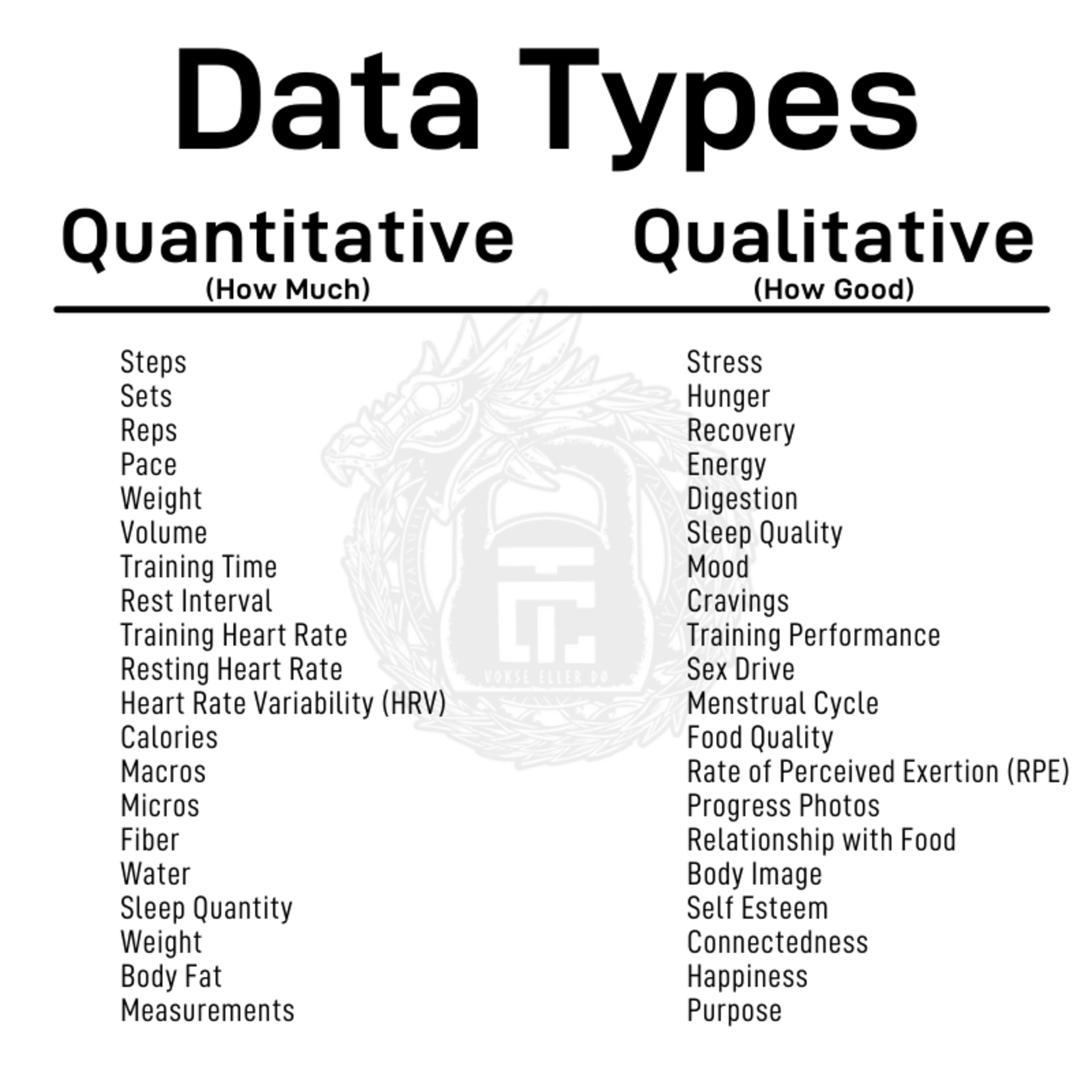
Welcome to the platform podcast where we talk to coaches athletes experts and real people to learn about their approaches to training nutrition mindset and much more I'm your host Jordan Goondi Wright founder and head coach of the Twin Cities catabell club And I'm on a mission to help others build sustainable healthy life cells Now before we jump into this episode I want to take a second to make an important announcement about the Twin Cities catabell open the event will still be taking place in person in Little Canada Minnesota on October 23rd But as you know Delta is causing all sorts of new travel restrictions for a lot of us And so we've decided that we will also include video submissions for participants who are unable are unwilling to make the trip in person You'll be able to submit your videos until midnight central time on October 22nd And you'll still be eligible for all of the same prizes as their in-person competitors Just go to our website Twin Cities catabell club dot com for details and to register there This week I'm going to be talking about data Because I'm a nerd and I love data But I had a nice conversation with Sean McAnnelly on the Twin Cities catabell club Facebook group And or on my Facebook page You know talking about how wearables are not particularly reliable and some of the Errors that that can come up and that your body tightly regulates and subconsciously regulates the output and Sean Sean made a really good point and I Also countered some of those points with with how we deal with some of those Challenges because he's not wrong But There are still a lot of things that we can do and there's a lot of ways that that we use data and leverage data in in a fashion that helps inform our decision But it's not dependent on that data being the most valid source of data So I hope you enjoy this episode. I do get a little bit into the weeds on on Data science and analytics a little bit, but I hopefully not too nerdy For you guys But anybody who's a consistent listener at this point knows that I'm kind of a nerd at heart. So All of my latent nerdery has been activated at this point. So hopefully you enjoy it and you find it educational If you do please do me a favor and like Share leave us a five star review You know tag me in an Instagram story, tell a friend Whatever any way that you can give me support. I would I would greatly appreciate it because I'm you know Really doing this as a passion project and I want to grow my reach and I really want to help as many people as I can But the best way that you could support me is to go register for the Twin Cities kettlebell open and come Spend some time with me and my friends lifting bells on the platform here On October 23 or do the video submission as I just mentioned I just really would love to have a great turnout for this event and I hope that you can make it And of course if you want to step on the platform and competing kettlebell sport or you need help just with your nutrition You can reach out to me. I help athletes of all levels reach their goals without wasting time using my integrated coaching approach Which I dive into a little bit more detail in this episode So you can follow me on Instagram Facebook and YouTube at Twin Cities kettlebell club Or email me any questions that you have at Twin Cities kettlebell club at gmail.com So now without further ado, let's step on to the platform and talk about the importance of data All right, welcome into this week's episode of the platform podcast. I hope you guys had a wonderful and relaxing Labor Day weekend I wish that I could say that I had a relaxing and wonderful Labor Day weekend, but I honestly I did not It was it was kind of a shit show My my wife and I headed up to her parents place which is about three hours north of us In the central lakes region here in Minnesota, which is beautiful and her parents have a wonderful retirement home On a lake that we go to quite often during the summer especially and you know, Labor Day is kind of the semi-official end to summer and we were hoping to get up there for a nice three-day weekend and spend spend some time up there with their family and with the kids and Maybe get a little bit of time in the lake. Maybe do some water skiing You know spent spend a couple a couple of days Soaking up the last bits of summer because this is the the time that we live for although I do have to say I'm a fall guy I love fall It's football season all that good stuff, but I digress We drove we got we got in the car drove three hours up there and on the drive up there and our son kept telling us that he his tummy hurt and He was feeling sick and sometimes he gets car sick so we didn't really think too much of it and we managed it and then We got we got there and he didn't want to eat lunch Which is totally not like him and was just kind of laying about and so my wife being a nurse Decided let's take his temperature. See what's going on and he's got a fever of 101 degrees 102 degrees Somewhere in that range and so we're like ah shit So to make a long story short we drove three and a half hours back Almost immediately after getting there. We had lunch and Then he got sick and we drove back so we spent six and a half hours in the car On Saturday just to be back on Saturday evening put our sick child to bed and take care of our daughter and and then be home All weekend But fortunately he's COVID negative Strap negative and just caught some random virus and and should be okay, but Anyways, that's my sob story about how my labor day weekend was Not as resting and relaxing as I had really hoped it would be But you know say levy you guys don't come here to hear me complain about my my kid getting sick. So I will move on The the topic I really wanted to talk to you guys about today is actually the importance of data and how data can be leveraged In order to help us manage our biological response and I have to give a shout out to to my buddy Sean McAnnelly He really prompted this this thought process for me today because we had a nice dialogue in the in the twin city kettlebell club group on Facebook talking about I made a post about why I don't why I don't own a John deer Because you know the day after we got back from our trip to Day we got back from our trip to the lake that was turned around and brought back My wife and I used the the long weekend as an opportunity to get stuff around get stuff done around the house and So so you know one of the one of the chores that has to get knocked out every week during the summer especially is You got a mother grass right and you know, we don't we don't own a massive amount of land, but it's a big enough backyard that It takes me a solid 35 to 45 minutes to mo our lawn depending on how quickly I'm I'm pacing my my pushmoing and we we have a pushmoar, you know, just a traditional gas powered pushmoar And my my boy Rowan is like dead you should get a John deer Because hey, he loves tractors, you know, like like most like most boys do especially those that grow up around my wife's family Who are a full-on John deer family, you know come from a farming background and you know, he's he's written on Some antique John deers and parades and stuff so he loves John deers and he's like dead you you should get a John deer like Opa has You'll you'll be able to be done a lot faster. Why don't you get a John deer and it's because I like the exercise son I use the I use the mowing the lawn to get some extra exercise. So, you know It ends up being about 35 to 45 minutes and it gets me about 9000 to 10,000 steps You know just in those 45 minutes because it's effortful and I'm pushing up and down a hill that we have you know We have a slight slope in our backyard. So You know It it definitely takes a little bit of work. I'm always Solidably sweating by the time I'm done, you know, I typically burn about a thousand galleries pushing them over for that period of time. So you know, it's It's a good amount of work But I enjoy it and it's it's a good way for me to get non-exercise activity thermogenesis You know, which is meat is the acronym for that and I think meat is really important Because it's one of the things that is predictive of sustaining Weight loss. It's actually a lot. It's strongly correlated to maintaining weight loss It can also be super super helpful as a way to to actually achieve weight loss because it helps you actually minimize stress and still get movement in and help you burn more calories without the cortisol response and without the The effects that that high intensity training can have And also your non-exercise activity is going to be significantly more calories than your exercise activity Because if you think about your exercise activity like if if you're super dedicated and Carve time into your schedule every week Then you are going to spend Six to 12 hours a week training that's still a very small percentage of of your of your waking hours, right?
assuming you get an eight eight hours of sleep, you know That's that's going to be one to two hours a day of training and that that's again That's if you're training a pretty pretty decent amount, right? So one to two hours a day That that's still leaves. Let's see 24 minus 10 equals 14 minus let's take the upper that's two so 14 minus two leaves 12 hours of the day that is yeah, I did have to talk that out because I don't have a spreadsheet in front of me Just to get that math, right? So it leaves 12 hours a day For you that you need to do non-exercise activity So the amount of calories that you burn in non-exercise activity is going to be significantly more than what you burn In exercise because just just by virtue of the volume, right?
So you know, you can think of non-exercise activity is walking to your car going up the stairs cleaning your house You know going to the bathroom cooking your food You know anything that is daily activity that is not Intentional exercise basically falls into the neat category So neat your your expenditure for neat is super super important because it's strongly strongly correlated to your success in maintaining weight loss and it can be a big key to actually achieving weight loss So it's it's one of the levers of transformation that we that we use You know when I'm working with my clients on on how we can help them Be successful longitudinally in in their lifestyle changes to to achieve their goals neat is a big part of that and the metric that we use Most readily to track that is steps hence my post on Facebook and on Instagram You know at Twinsittyskettlebook Club if you're not following me, please do You know, so it's it's it's a very important thing and Sean um Rightfully called out That You have to watch out for for compensatory increases in appetite and or A downregulation and other activity which is totally accurate You know, and he pointed out he he recommended the book burn that that he read which which I haven't read yet But I'm going to based on his recommendation You know because the the the basic thesis of the book from from what he told me is that Is that the body tightly regulates energy expenditure um and will downregulate and upregulate You know, it will upregulate your appetite. So when you when you burn significantly more calories Then you usually do your body will upregulate your appetite so that you so that you are hungry and you eat more Or it will downregulate your energy expenditure So you'll so you'll just naturally you and you can think about after after a hard workout You know like if I if I come in and crush a biathlon session and I put 90 minutes balls to the wall And I might I might burn 1500 calories in that 90 minutes if I'm if I'm pushing really really hard Um, you know after that session is finished all I want to do is sit on my ass I want to eat I want to take a bath. I want to sit on the couch I want to go to bed right um and then the next day After that um or that day depending on when I do that biathlon session I'm a lot less likely to to get steps in because your body Subconsciously down regulates your activity level your drive for activity for non exercise activity goes down when exercise activity goes up And it also upregulates appetite because your body is trying to create homeostasis. It doesn't like big swings right big swings Are what your body is trying to avoid because the whole point of Most of our adaptive mechanisms is to um survive and thrive and procreate So big swings and energy output if if they happen consistently um will will cause problems right we won't thrive And uh likely it likely means that we're you know fighting you know from an evolutionary standpoint It means we're fighting day in and day out or running away from you know predators day in and day out Your body doesn't like that um so it's gonna upregulate your appetite until you need more food if you're gonna keep up this level of activity Or once once the The you know adrenaline and cortisol um the adrenaline cortisol go down Your body is going to say okay all quiet on the western front Now it's time to nap now it's time to rest and digest and let's let's decrease our energy output because we can't keep up This rate of of energy expenditure or we're not going to survive We're certainly not going to have uh energy left over to to procreate and we definitely want to do that because sex is great right so He he's very you know shan is very rightly pointing out um that your body your body does have these adaptive mechanisms to try and prevent you from overexpending um and also from under eating so that that's why when you're highly active you are more hungry That's why when you're highly active and the next day you're much less You have much less drive and desire to be highly active again You're not you and there's even then there's even the the subconscious movements like uh like Uh fidgeting I don't know about you but I'm a fidgeter um I have a you know I tend to be moving my hands a lot I tend to be capping my foot a lot I tend to be shifting in my seat I tend to stand I walk when I when I am on the phone I tend to walk around and talk I tend to you know do those I talk with my hands a lot as I'm doing right now um you know I'm waving my hands at a microphone that that y'all can't see um you know but it's it's it's how I do non exercise activity right but the day after or or following a large level of output I tend not to do those things as much even if I don't realize it right my non exercise activity decreases your your brain is really smart in toggling to control those mechanisms right um so the point that we got into and the the topic on the the topic on this on this podcast is uh the importance of data because my my response to to Sean um was essentially that's why I love data so much because um I can't I can't manage how my body subconsciously adjusts for those metabolic adaptations right the increase in appetite the decrease uh in in drive for non exercise activity um but I have data to understand um what what I'm doing I can I can make the subconscious activities more visible by using data and we can manipulate those mechanisms um through integrating our nutrition and integrating our nutrition and training periodization as well as um tracking things this is why I'm so big into tracking it's why I love tracking so much um and I've I've always liked tracking things I've always liked data um you know and it's why I I work in a data field now you know for for the past you know four years I've I've done uh data science AI machine learning um project and program management and strategic consulting um so I work with you know brilliant data scientists and you know I'm not a data scientist myself but I could play one on TV at this point because I do understand the concepts uh you know fairly well I don't have the math uh training necessary or the or the coding training necessary to to produce the high level models that uh my um co-workers do but um I do understand their work and I do read the research and I do consume a lot of these things so I have this deep this deep appreciation and passion for data um and I really like that it makes what otherwise would be invisible visible you know um and you know again I I really appreciated this conversation with Sean because he he he actually said well you know the the the wearable tech uh is not reliable and and you know that that data is really just a peek under the hood but but most of the stuff that's going on is actually uh subconscious and it's you know or we're not in the driver's seat like we think we are so we're actually in the back row of the church van and the brain is the one driving right which I loved that I loved that analogy uh so it's it's a great uh it's a great counterpoint you know and uh we weren't uh fighting but I enjoyed the I enjoyed the discussion you know um but but my point to him and the the reason and the the part that I wanted to dig into a little bit more is that the reliability is more important than than validity and if you're not familiar with with what those technical definitions are um reliability is the consistency of the metric and so for for example if you step on a scale and it says you weigh 188 pounds and you step off and step back on and it says 188 pounds again it's reliable now if it hasn't been zeroed out it may not in fact be accurate right it may not be valid it may not be measuring what you think it's measuring right um but it's reliable it's giving you the same it's giving you the same number over and over again validity is the how accurately is the metric that you're that you're using measuring what you want it to measure right um so it may not be it may not be a valid metric um but so long as it's reliable it can still be useful right so Sean's point about wearables being um not valid in their in their assessment is is pretty well supported by uh by research now they're getting better um but there are to his point there are so many internal mechanisms that are impossible to measure through a wearable that you know there's a uh a metabolic energy energeticis uh which is an actual field of science that i that i listened to on a podcast um i think on the barben podcast actually with david tamas tal um who who talked about how it's it's essentially impossible to actually understand what your true caloric intake is because we can't know with any reliability based on the based on the current metrics available to us um how much our body actually absorbs of the nutrients we take in and calories in calories out is well and good but we can't actually know the calories in component is not just what goes in your mouth but what your body actually absorbs which is why somebody who has a parasite may take in 5,000 calories a day but if they're only absorbing 500 of those calories because they have a parasite their actual calories in is 500 right it's not 5,000 it's not just that it goes in your mouth it's what your body absorbs and we can't know that um with any with any validity right um but what we can measure with reliability is the calories in to our mouth right we can't we can't with any validity or reliability know the calories absorbed but we can know what we're what we're inputting and this is why um basically every formula or macro calculator or anything that that you can find on the interwebs is predicated on the assumption of all things being normal right and what are the things that need to be normal well uh it needs to that means that you're not under an excessive amount of stress you have normal and healthy hormone function um you know etc etc right like in normal under normal circumstances all things being normal this is the calculation well and within that then all things being normal you're then given a confidence interval right uh a plus or minus of how accurate any particular model is right or any particular tool is and that might be you know plus or minus 10% you know say on your step calculator right they might say that with you know with normal normal wear and assuming normal usage that it will be accurate within plus or minus 10% of of your steps right hey guys Jordan here i wanted to take a second to make an exciting announcement about the prizes and sponsors at the twin cities kettlebell open October 23rd here in little cannon minnesota or via video submission online first we will be giving away a cash prize to the first second and third place best overall coefficient lifters in the meat next we will be raffling off prizes from bellevator belts who has donated two belts for us to raffle off barefoot athletic shoes has given us six pairs of ursa's barefoot training shoes as well as two plate loadable maces from camber and customs to give away additionally we will have swag from gaspiring nutrition and you can still go on to the 27 degrees apparel website and order a customizable event t-shirt and last but not least pro kettlebell from Seattle kettlebell club will be bringing their made in the us a kettlebells to test drive on the platform head to head against the kettlebell kings that i have in my garage and Nikolai assures me that he will go head to head against any kettlebell any day anywhere in the world on any platform and that you will love these bells i cannot wait to put hands on them and i cannot wait to live with you in person or see you put your best foot forward on the platform via video submission now without further ado let's get back into this episode and so 10% is actually a fairly large variance right that you know if you're talking about 10,000 steps that that means that it you might have actually taken 11,000 steps or actually taken 9,000 steps right plus or minus 10% in either direction so plus or minus a thousand steps but what my point back to Sean was is that so long as we use the same methodology consistently and longitudinally we can get informative trends and make appropriate decisions because that variance becomes part of the longitudinal calculation right it smooths the trend line smooth over time so the longer the timeline the more you're the less the less the variance day to day will matter because it will represent a smaller portion of the data set right and and because that variance is present in every single data point it's it actually becomes a consistent variable of the model right if we're thinking about it in terms of a data model right so because we're not changing the methodology over and over again we're using the same methodology over and over again um and so long as that method is reliable in that it doesn't change um what it tells us right then it's it's it's going to smooth over time right and and it's not going to matter if the order ring told me I took 10,000 steps and I actually took 9,000 or it told me I took 10,000 steps and I actually took 11 on any particular day because over time the trend of the averages are what I'm looking at I'm looking at on average am I hitting my goal of 8,000 steps a day or 10,000 steps a day whatever whatever your step goal is right so that matters more than the validity of that particular metric because it's consistent over time now if you make it inconsistent over time because you know one day you're using your order ring to calculate your steps um but then another day because you forgot to take your order ring off the charger like I have done before and I had my phone in my pocket and my phone also calculates my steps and what do you know my phone tells me a different number of steps than my order ring some days my order ring tells me more steps than my phone and other days it's vice versa right that's the the variance that he's talking about with wearables right and I have just decided that for my tracking spreadsheet I use my order ring because it's way more likely that I have my ring on than that I have my phone in my pocket although I almost always have my phone on me I'm pretty good about that um I don't always have my phone on me and sometimes I need to leave it on the charger right but I charge my order ring when I'm sitting at my desk doing work and not taking any steps and it doesn't take that long to charge so again not a sponsor by the way just once you know not affiliated I just love my order ring um because it gives me data thank you um it's also not my boss though um I do I do appreciate the data that I get from it right it does give me data that I find very valuable one of the things being steps right and again the accuracy of it doesn't matter as much to me as the consistency um because it is the same method over and over and over again I can use it for longitudinal trending and that's that is still informative um of what I need to do right I'll change it of changes that I need to make and this also applies to tracking macros um tracking your your calories burned and it'll in a workout right and I'm I'm very I'm I very much coach people when it comes to using your heart rate monitor your heart rate monitor for the heart rate zones that you're in during a workout is very informative and very accurate very valid and reliable so you know assuming it's charged and the sensors are wet it's usually pretty good the accuracy on the heart rate monitors is pretty good for for tracking for tracking what heart rate you're in what it's not very good at is estimating the calorie burn or people don't understand how it estimates the calorie burn because typically um to estimate your calorie burn it's going to ask you at the start when you set up your your heart rate monitor your age weight gender right and so it's it's going to estimate your BMR which is your basal metabolic rate which is based on those factors right and then it's going to use your heart rate for your training to take that BMR plus your elevated heart rate to come up with a calorie calculation for what you did during your workout so it might tell me that I burned 1500 calories in my 90-minute session for biathlon like I mentioned earlier but what it what most people don't account for is that that 1500 calories a big portion of that is my BMR what what I would have burned were I just sitting behind the desk recording this podcast episode right when I when I'm sitting behind a desk recording a podcast episode I still may have burned a thousand calories in that same 90-minute and only 500 of those calories come from increased activity level and where people get that where people mess up is they're like oh man I burned 1500 calories in my workout fuck yeah I can crush a pizza now they reward themselves for they reward themselves for their exercise calories or or like my fitness pal one of the things I don't like is then my fitness pal allows you to do a caloric adjustment to your intake based on your heart rate readout your estimated calorie burn from a workout right well if your calorie need was calculated based off of your BMR and then the exercise output was also calculated based on your BMR plus the extra calories from your workout your double counting the BMR there so people get a much larger calculation in calorie adjustment than they should for an exercise if they if they if they choose the option of calculated or of adding calories to their daily intake based on their exercise output so don't do that I don't I don't have my clients use their use their calories from their workout to as a as a this is how many extra calories you should get right we will we will toggle more calories on heavy training days but it's it's not predicated on on what their output was not not not predicated on the output calculated by their heart rate monitor or wearable device they should they should clarify right because those those output metrics are not reliable and not valid right so we don't we don't necessarily use those are they're not valid but they are reliable so we we do look at those trends but more importantly we look at we look at the consistency with which people are training the intensity with which they're training they're volume that they're training because that is an objective metric volume is is is a relatively easy to calculate metric right training volume RPE rate of perceived exertion is subjective right and so this is where we get into what what is qualitative versus quantitative data right so quantitative data is objectively measurable and those are the things that we that we track that are like our steps our calorie input right hours of sleep that we that we slept our resting heart rate right things like that so those are our quantitative metrics right but also equally important if not more important are our qualitative metrics and these a lot of times are subjective so sleep quality right and you know we alluded to it in the in the podcast in the podcast with with Audrey and and Bobby talking through the water cut and what some of their experience was in in that cut we talked about biofeedback right biofeedback is something that we include in our tracker that is largely qualitative right so it's the the the areas that we focus on are stress hunger recovery energy digestion sleep quality right so that's the shreds metrics from Sam Miller you know shout out to Sam and then also mood cravings training output or training quality and menstrual cycle for females and sex drive for both so or for anyone right so that's a whole bunch of qualitative metrics that we track right and so I have my clients rate their stress from one all of these things I have them rate from one to 10 right stress hunger recovery energy digestion sleep quality mood cravings training menstrual cycle sex drive right you can rate those every week and we have actually you can do it every day from one to 10 right based on based on higher feeling well over the course of 365 days that that starts to get you trend analysis and we look at the weekly average right we look at our weekly averages we don't I don't over index on any on any one day or any two days but we do look at trends week to week month to month and then you know six months 12 months right we the more data we have the more we can start doing longitude no trend analysis and these things are very important because the qualitative components of how stressed are you start tying to the things that Sean was pointing out right like that your body the the effective stress means that your body will burn fewer or more calories depending on how stressed you are right your insulin sensitivity is strongly correlated to your cortisol production which is based on your stress right so I don't expect people to do a three point cortisol test you know a saliva spit test to get their cortisol levels every day you know day in and day out week in week out right that would be silly people aren't going to be able to do that they're not going to be able to afford that but what we can do is do qualitative metrics of how stressed were you on this day scale on one to 10 10 being easy breezy one being easy breezy 10 being get the fuck away from me right how hungry were you like one being very little hunger 10 being I could eat a shoe right like if you if you track those things longitudinally you start getting you start getting a picture and you can also see week to week if I see that stress was elevated all week and I see that hunger was diminished but cravings were up right that starts that starts giving me indicators that there are metabolic adaptations happening right if I know I've had somebody in a caloric deficit for you know a couple of a couple of months and their hunger cues are now very low but their cravings are very high that means that their body has down regulated growing their hunger cue hormone but you still have cravings for high caloric palatable foods because your body knows that you need calories right so you may not you may not feel hungry regularly but suddenly you get cravings right or hunger goes down and energy level goes down and sex drive goes down right that means we're seeing hormonal down regulation of those things because your body is in fight or flight mode it's like okay we're not getting enough calories we need to down regulate hunger we also don't want to be fucking right now because we can't support creating another life right now so I'm going to I'm going to down regulate your sex hormones as well so you're not going to have energy to do much because we need to save energy for whenever the next fight comes or when we need to run away and also too tired to hump right now right we don't want to bring a child in during famine right again longitudinal think from an evolutionary standpoint right so these are the things that we can start getting some visibility into without needing labs you know by having data that we track both quantitative and qualitative data right because I know based on quantitative data what you're actually doing from an input standpoint how many calories you're actually consuming again assuming that you're measuring weighing and being fairly consistent with your methodology right assuming that we're being consistent with our methodology and then tracking the qualitative data as well the nice thing is if you're diligent enough about tracking your qualitative data the need for quantitative data diminishes especially for people that have invested the time to learn about how to accurately track about how about what about what calories are in what types of foods and what macros are in what foods right so the the big picture is that the more features we have in the model the more data that we can input into our model of quantitative and qualitative data the more reliable the model becomes and the more valid the model becomes right because across more data points right you can interpret better you can predict better you can understand trends better but again it's consistency over time data points over time and then being able to interpret those data points right and that's where that's where coaching comes in handy because being able to interpret these things is a lot of work for one and for two it's also nice to have another person's perspective on it because we all have our own biases about our behaviors and about our about our own inputs right and that's that's why I have Liz that I lean on just you know just had a great call with her you know on Monday where you know the last the last two weeks for me have felt like a shit show just because the stress levels have been off the charts there's been a lot in consistency there's been you know I had travel for work my son getting sick the holiday you know my anniversary was a couple of weeks ago my my wife's birthday was a couple weeks ago you know a lot a lot of things that made it feel super inconsistent and yet when I actually turned in all of my data she was like oh you've you've had you've had good weeks you've you've been really good your calories look really good your biofeedback looks good right you know etc didn't feel that way to me subjectively but she was able to look at the big picture and look at my my qualitative data and my quantitative data and say no you're you're closer you've had better weeks than you think you know or maybe than it feels right and that's the other part that I love about data is it is it it's much more objective than just your feelings right and even even qualitative data yes there is subjectivity in qualitative data certainly but that subjectivity aggregated minimizes the the subjectivity of it actually you know the the aggregate of it smooths out some of that subjectivity as well right but we don't we don't look at the the qualitative data alone we look at it in combination with quantitative data right so that's that's what what I really wanted to touch on today and I probably you know I say touch on as though I didn't just rant about it for 45 minutes but I love data for this reason right and hopefully hopefully that the passion comes through and you guys can understand where I'm coming from and I tried not to I tried not to nerd out too hard on the analytics and and not go about go too much into it but it's it is very very valuable right and working with a coach is super valuable it helps you be able to to have a methodology to follow to learn how to consistently and reliably give yourself inputs right and and to have inputs that are reliable even if they're not the most valid ways to measure things the most valid ways to measure a lot of these things are lab work and they're expensive and you can't you can't uh well most of us uh can't afford to to consistently pay for the most valid ways to track these numbers right because they're onerous but there are reliable ways that are valid enough uh to make them useful over time especially and with the support of people who have training and uh you know have education around how to interpret these data points and to come up with um you know uh for lack of a better word you know models um that that that take into account these different features um to to give you a predictable output and to to understand what variables need to be manipulated in your approach whether it's your training intensity whether it's your recovery protocols whether it's your stress management whether it's your macro prescriptions um you know there's a lot of levers that we can pull on um and and which ones we pull on when it's super important and then there's the whole psychological component of customizing it to your psychology customizing it to the season of life that you're in um adapting the seasons of life adapting your training and your nutrition to fit your seasons of life making sure that your seasons of training fit your seasons of nutrition because if you're trying to do a calorie cut a calorie deficit while you're also trying to add new muscle tissue those two are antithetical to one another so your training better fucking line up with your nutrition right and all of those things need to line up with your psychology and they also need to line up with the things that are going on in your life in order for you to actually stick to the plan so there's a lot to consider it's why coaching is valuable it's why uh it's why I'm so passionate about what I do and about and about the approach that I have um because I try and look at I try and look at everything holistically now um and that that approach has really evolved for me over over you know 10 plus years um I used to be just really focused on the training component and then I started learning about nutrition and I started then I really focused on nutrition a lot now I you know and then I always focused a little bit on psychology because it's in my background you know and now you know recently then I really started looking at data a lot and now I understand it's got to be about all of those things it has to be about the data the psychology the nutrition the training stress management all of those things recovery it all has to come holistically because we don't operate um you know those things don't operate independent of one another they're co-dependent they're facets they're facets to a beautiful diamond um that is you so anyways thank you very much for listening to my explanation and rant about uh data and um I hope you found it valuable and if you did please you know like share pass on to a friend um if you need help reach out to me um I am happy to help you can always ask questions you can send me messages you don't you don't have to hire me as a coach um you know I would love if you did obviously but there are I'm always happy to answer questions and you know I'm also happy to point you in the direction of other coaches because there are a lot of coaches out there who are very good at this um and I am not the best at everything um I will straight up tell you if if when we talk uh I do not have the answer uh that you are seeking or that I am not the best person for you I will tell you that because um I want to make sure that people will get with the right get with the right people so um thanks for listening I hope you had a great labor day and I hope you enjoy this episode and I will be back at you uh next week with a another episode and this one will be an interview um somebody that I'm very much looking forward to speaking to and she's kind of a big deal that's all I'll say until next time keep at it and make the last one your best one see y'all thanks for listening to this episode of the platform podcast I'm Jordan Kunde-Wright we'll be back with a new episode for you next week please don't forget to register for the Twin Cities catapult open on our website Twin Cities Catapult Club dot com and if you have a questioner suggestion please email me at twin cities catapult club at gmail dot com and don't forget to follow us on social media at Twin Cities catapult club and if you want to step under the platform and competing catapult sport please reach out to me until next time
Want This Kind of Coaching?
Everything on the show comes out of real coaching. If you want a plan built around your goals and your life, the first step is a free intro call.
Apply for Coaching