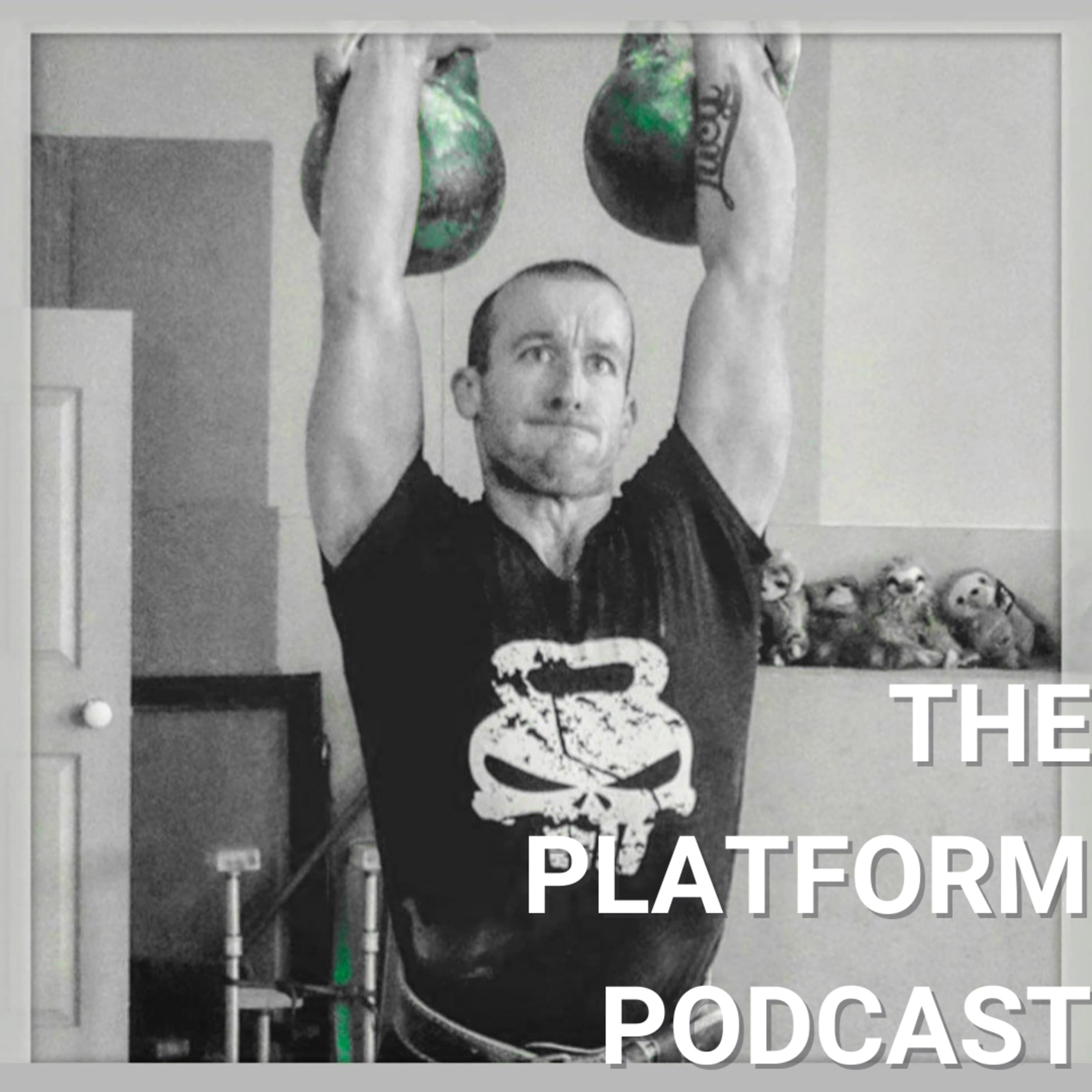
The Platform Podcast · Episode 37
Steven Riddle | Owner Riddlestruck Fitness, Head Coach of Team Riddlestruck, CMS - Long Cycle
March 3, 2021 · 58 min
Show Notes
This week my guest is Steven Riddle (@riddlestruckfitness), owner of Riddlestruck Fitness in Ontario, Canada & coach of Team Riddlestruck (@team_riddlestruck) and in this episode we get into his athletic background, how Covid has affected his business & training, and some of his tips for new lifters.
If you enjoy the content please leave a 5 star rating & review, share on social media, and support my work by supporting my affiliates:
- Kettlebell Kings, use code TCKB to get 10% off
- Bearfoot Athletics, use code TWINCITIESKETTL to get 10% off
- Gaspari Nutrition, use code JWright20 at check out for 20% off your order
Transcript
Machine-generated transcript; may contain transcription errors.
Welcome to the platform podcast where we talk to coaches, athletes, experts, and real people to learn about their approaches to training, nutrition, mindset, and much more. I'm your host, Jordan Kunde-Wright, founder and head coach of the Twin Cities Kettlebell Club. And I'm on a mission to help others build sustainable, healthy lifestyles. My guest this week is Steven Riddle, owner of Riddle Struck Fitness in Ontario, Canada, and coach of Team Riddle Struck. In this episode, we get into his athletic background, how COVID has affected his business and training, and some of his tips for new lifters. If you're with us, I want to take a second to say that I'm incredibly grateful that you listen to this podcast.
If you haven't already, please be sure to leave a rating and review of the platform podcast in your app of choice, and support my work by supporting our sponsors, whose affiliate links you'll find in the episode notes. And if you want to step on to the platform and competing kettlebell sport, please reach out to me. I help athletes of all levels reach their goals without wasting time using my integrated coaching approach. You can follow me on Instagram, Facebook and YouTube at Twin Cities Kettlebell Club, or email me at Twin Cities Kettlebell Club at gmail.com. Now, let's step on to the platform with Steven Riddle. All right, welcome into this week's episode of the platform podcast. My guest this week is Steven Riddle.
He is the head coach at Team Riddle Struck, the owner of Riddle Struck Fitness in Gulf, Ontario, is that how you say it? Well, so close. He's also a CMS in log cycle and CMS in snatch, very accomplished lifter himself and his team also continues to kick ass on the Canadian scene, which there's something the water up there in Canada, man, like there's a whole bunch of high level lifters up there. What what are you guys up to up there? Is it just because it's so freaking cold? You got to do something or like, why are you guys so good at kettlebell sport up there? I'm really curious. I don't know. Honestly, it's funny because, as you say, there are a lot of good lifters, but in the grand scheme of things, it's still very small here, compared to what it is down in the US.
Luckily for myself, just because I put the niche sport and small pocket, I've become friends with so many people from out east and out west. And we've all been into like, you know, at times, training together and he helped push each other as well. So honestly, I can't really tell you what it is. Maybe it is because it's really cold, but you look Minnesota. It's probably pretty cold in Minnesota as well. It's my, I mean, it's my it's minus 14 here right now. So I mean, you know, we're like, you know, just south Canada, basically. Exactly, right? Exactly. So you know what it's about being cold. And yeah, I guess because we're stuck indoors, basically, from maybe mid-October till April, and we have nothing else better to, especially this year with COVID.
That we're just got way more time to lift kettlebells. Yeah, so we were talking a little bit about that offline. You obviously, you run your own, your own facility. They're in Guelph. Real struck fitness center. Hopefully I got it better at time. Nice. How has it been there? Is the province is Ontario back open? Are you guys allowed to train yet? Or are you guys under restriction? How is it going? How is it going in Canada? I know it's generally better there than it has been going here. But I don't know specifics about, you know, Ontario and how fitness centers are being run. So officially tomorrow, the 16th, the emergency state home band is, it's finished. It's been done. So certain municipalities in our province have now opened a few open last week, just because their numbers are so low.
But like I live in Guelph, I also work in another gym in Milton. That's another city about 30 minutes from Guelph. So we're all able to open, but you probably know like Toronto. Yeah, but I actually know, I actually know Milton Ontario as well. Okay, yeah, from working in the logistics industry. So I did some, there you go. Okay, so, you know, Toronto. Toronto, Mississauga, Brampton and New York, they're still in our lockdown for another week. And then I guess at some point, maybe earlier, or like next week at some point, the premier will announce if they, if Toronto will remain in like the gray zone, which is lockdown or move to a red. And like we're all in red right now, which means that gyms can open up at a very limited number of people. So you could have like say a 50,000 square foot gym.
And you could only have 10 people in the gym at one time working out. Okay, yeah. So they're limiting your occupancy pretty significantly. Yeah, 60 minute time limits, 50 minute resets where you basically go to clean the club and then the next 10 people come in and it's just kind of like that. And then personal trainers, we have to be like in our own little pocket, like group X studio, the group in this. We've actually basically stopped in group fitness. All the trainers in their clients were now moved into that area. And that's where we have the trainer clients. So COVID has definitely had a huge impact on the fitness industry, just in terms of like being inside a club. Like people are afraid to come in. People don't want to work out right because of COVID. They're free of cash. If you're catching it.
So it's definitely been a tough is your probably on the fitness and feel and a lot of people are switching out of this training at home. Yeah. And so I'm I'm curious. And forgive my forgive my ignorance because I I don't know how the Canadian government is supporting people like I obviously I know what's going on here in the US, but I don't know what kind of support are they given for gym owners and are they because does your rent. Did they did they I'm assuming your rent didn't get didn't get put on hold or anything. And so now you've got occupancy limits put in place by the government. Yeah. How are they helping you making because if you still got to pay your rent, you have a natural cap on the revenue you can generate. I'm assuming that's pretty painful. So how are they.
They're open with that. Luckily, like my my gyms in my basement, my house. So the gym I do on here is there. And then the gym I work for is like another company. So I kind of like a small business my own plus I work for like an established based company. But they have been doing a lot of like small business loans or larger great larger group loans for like see businesses who have had their businesses obviously impacted by COVID, right. So a lot of like I know I put a few friends who I've like say finished studios themselves who have been struggling because again, they haven't been able to open just because of the city lay living even though they might only have like 20 to 30 members total. Yeah. And they're still like, no, you can't you, you, you, you're in Toronto, you're in Mississauga, wherever, sorry, you have to be closed.
I know, you know, some of my friends probably are still opening their business and doing a like behind closed doors. The speak easy, the speak easy fitness club is a thing now. Yeah. That's it, right. Exactly. But then the same point, if you're quiet about it, no one knows. It's when you start becoming like blazing about and being like promoting yourself. Hey, I don't care what the government says. I'm going to open up. That's when you kind of bring yourself to trouble. But yeah, like I was laid off as well. And then I got EI from the government, which is like employee insurance money. So they were paying me money, even though I was like off work. Right. So the government, the Canadian government has stepped up pretty well to make sure that when all of our citizens were not working, they were still making some money.
Obviously, it's not what you're making when you're working, but something's better than nothing. So yeah, yeah, I think it states it's a lot different. Right. Yeah. Well, it depends on where you're at. And that's the problem. Right. So like, you know, it's keeping it, you know, the whole idea of employment insurance is supposed to keep the wolf from the door. Right. I think it's supposed to be what it's for. It's not necessarily to restore what you were making. But it's supposed to help you just stay afloat until things get better. And, you know, for, for the US, it's in some states, there's more unemployment insurance that the state gives, as well as in addition to federal. And in some states, there's no unemployment insurance, a size from what the federal government is giving. And then there's the political, the political football being passed back and forth of whether or not they're going to pass the things and how much of the budgets are going to be.
Which party is, you know, we just had the transition from, you know, Republicans controlling most of most of the levers of power and government to now the Democrats control all of the levers and powers and government, but not at such a level that it's majority proof, you know, veto proof. And, you know, it's, it's, you know, the crazy American political system. So it's, it's a little decent. It's a little decentralized and scatter shot. And, you know, it really depends on where you're at. And then you've got people. You know, I've had people on this podcast that, you know, to your point, we're like, you know, better gym owners that are like, yeah, I'm not, I'm not fucking closing. And there are some of them have been public about it. And some of them have been quiet about it. And, you know, and, and interestingly enough, depending on local law enforcement, they may or may not get in trouble.
Like there are some, you know, Doug Steven was on here and he said, you know, he had relations relationships with some of the people in law enforcement in his area. And they're like, dude, we're not coming to shut you down. We understand, you know, and it was not like he was being unsafe about it or, you know, he was still trying to limit and be safe and, you know, mask and, you know, and all the things. But kind of the same decisions that people are having to make about, you know, what's a reasonable risk to take and, you know, how, you know, how can they stay afloat and keep their hard, hard earned businesses, you know, a float during these really, really challenging times. But it's been really, it's been really crazy. It's been a crazy, crazy time this, this whole, going on, going on a year plus now, right? Yeah.
And it's not stopping anytime soon, right? Like, luckily for, for your, you're like, you know, in the United States, you guys are getting vaccinated pretty, pretty rapidly. So you guys are going to be in, your guys are going to be ahead of us. Like, how is it, I was just going to, how is it going up there? Brutal. Yeah. We wanted to buy so many from Pfizer. They said they would and then they didn't get as many as they wanted the transmission is going slow. Like I just saw a red opposed yesterday that like they're moving on to face two of vaccinations. And it's still people over 80 medical workers, like senior homes, like that's who we're still targeting. And like, yeah, so they say by September, October.
If you want to have vaccination and your Canadian system, you'll get it. So we basically still have seven more months, eight more months of waiting until our vaccinations are done. Yeah, we're kind of not too far ahead of you trajectory, though. I think the higher risk populations are definitely getting it faster. And of course, they're saying, you know, I never, you never know which report to believe depending on when you read it. Like last week, they're saying, oh, it's going to be, it's going to be end of, you know, end of September. They're saying, oh, by end of summer. And you're like, oh, well, you know, that's good. If those trends continue, I hope that that's, you know, I hope that that's true. But I just never know how much of it is spin from the, from the companies and how much of it is, you know, factual. But, you know, I hope everybody is vaccinated sooner rather than later. And we can get this thing all under control and get back to normal life.
Yeah, I just want to go to a sporting event, just travel, like I family to live in the States, let they go see them, like, yeah, we're doing one October 9th is the plan. You know, I put the date on the calendar. We're going to do a competition here in the Twin Cities, October 9th. Yours is usually in November, right? Like you. Last year was November. Last year was never, and I think this year we actually switched it. And we're doing it in August. Okay. The only reason we switch and we switch was because one of our other Canadian counterparts, who we have a group talk with, I guess, prior to that, like last year, she had always done hers in November. But with COVID, she moved here's up to August because she was hoping that still doing it in August, she would be able to have like a in-person live event, which she did have plus zoom.
Whereas, like, if she had waited until, like, say November, there was a greater chance that, like, there were restrictions, they were talking about, like, I'm like, you could be shut down again. So she wanted to get her person, her comp done in person. So this year, she's now switched to November. And we gracefully move guys back to August. So I was just like middle of August, I think. Okay. Awesome. Yeah. Do you have a registration link for everything? We do. Yeah. It's on the, um, it should be the, uh, you, the, the, the, okay, okay, okay. Okay. Okay. Cool. I'll make sure I put it in this. I'll make sure I put it in the show notes so we can make sure that anybody that hears this, you can go on up, you can go on up to Ontario and compete in person.
And will there be a, where they'll be, will there be also an online? Yeah. 100% there's only an online, even if like, um, there is some, like, like, we do an in person. I think that's one thing that, like, say the COVID situation has maybe helped is that, like, Twin Cities, you guys, us, other places on you and I, you ask national competitions that you can do both online and in person. It's going to be a great way to help grow the sport and allow more people from, like, other parts of the world. If we have people in Thailand competing at ours or in Korea, like, England, say, as I say, United States, like East Coast and West Coast of Canada, like, if we, if it was in person, you wouldn't be able to come.
You're not going to compete. People in Philippines aren't going to compete. Thailand, like, England. So I feel like, if you, if you allow online people, they want to compete more often than not. So allowing them to send a video to is great. It gets them judging. It gets them some feedback and get some, like, something to work for. Because, yeah, other times it's like, I would host like one event during the year. Another friend of ours guy who will host events will do one or two. So, and then you might have one other one. So in a year realistically, you're doing like five, maybe four or five competitions versus now. It's like, you could do one almost every week if you really want to because of the online capabilities or even one every, like, one, like, you could do as many as you wanted.
Which is so nice. I got one of my athletes sends me links all the time. He's like, hey, what about this one? Hey, what about this one? Bro, I'm not competing that often. If you want to go, he's, I mean, one for like a half, a snap, a snatch half marathon. I was like, I was like, no, crazy. Just, just, no, I'm not doing snatch for 30 minutes. I have a hard enough time focusing for 10 minutes. Are you kidding me? You're going to try and give me 30. Like, no, no, no. And that's it, right? Like you and like, same thing is like myself. Like I look at the events. I'm like, oh, I got like, you know, January, February. And then you're like, sounds good. Sounds good. Sounds good. And then also when it gets like three weeks out, you're like, man, that doesn't sound good anymore.
I'm still tired from like the one condition to two weeks ago. So it definitely puts a little bit more like you have to start thinking about your events too. And really like spacing out your count yourself. But again, I love the opportunity. And because again, you just get to like meet people that you never met before. And connect with them like online. Right. So it's pretty sweet. And you get to meet and meet more friends because obviously like you probably know the kettlebell sport people, the crowd, they're like, it's an amazing group of people. It is. Like everyone was so it is. No one is like, oh, man, I really want to beat that guy. Or man, that guy being by two reps. I just can't stand it. It was like, be stupid by two reps. You're giving that guy high five.
And you're having like, if you were allowed to get first a drink together. Yeah. Like a hug. Like you're, you're happy. Everyone's happy for it. The only the only community that I found that was comparable was rugby. Because in rugby, there's the tradition of the visiting team is hosted by the team that is, you know, like you literally stayed like if you travel, you stay with the people at their, you know, in their house or, you know, like in college. You would literally play against them in the morning and then go drink with them at the social afterwards and then stay at their home. Right. So like there has to be a level of, you know, so you get that level of community and camaraderie. And it's like, hey, if you're, if you're willing to step onto the pitch and smash heads like we respect you. And it's the same kind of thing with, with kettlebell sport is like, if you're willing to step on the platform and suffer.
You're, you're one of us, right? Like, hey, you're sick. Like, wait, you're sick. Like, we are exactly this guy. You're just like, I am. Yeah, because you know for sure. I know it because everyone does it. Like when you tell somebody who has no idea what kettlebell sport is. And you're like, oh, yeah, you pick up a kettlebell, whatever weight. And you lift it for 10 minutes. They look at you with like the most dumb found look on your face. Like, why would you do that? And you're like, it's fun. Yeah. That doesn't sound like fun. I'm like, yeah. But once you do, once you get the people that are like, well, that doesn't sound that hard. It's only 10 minutes. It's like, oh, no, you can't set them down. Yeah. And then they're like, they're like, what?
Because they're like, oh, I do e-mom workouts all the time. I do them for 20, 30, 40 minutes at a time. Like, yeah, I don't know. It's like, e-mom, but you don't get to set the bells down and you just keep going. And they're like, you're like, wait, what? Then you get exactly like, what is wrong? What is wrong with you? Why would you do that to yourself? Yeah. That sounds horrible. And you're like, yes. But like it's like anything. Once you get that itch, it's just the drive. Yeah. Well, so speaking of like, how did you find the sport? Because I don't, I don't know very many people that found it on purpose. It's almost, we did something else and you stumbled upon it. And you know, so how did you stumble upon kettle, I'm assuming you stumbled upon kettlebell sport and didn't go searching out for it. You weren't born into it like the Russians. So I'm assuming you stumbled into it.
Yeah. So obviously, like being a fitness trainer and everything, different like learning techniques and all that. Like, I like to keep my skills up today and like trying new things and learning, just learning new skills to make myself a better trainer to help my clients and all that stuff. And it's probably like 2012, 2013 that kettlebells in the gym I was, I was we're going to we're being brought in. And I was playing around with them a little bit here and there. Like, you know, checking out probably YouTube videos or, yeah. Some of these, how are these cast iron bells or were they the competition those at your, at your gym? I think we had a few competition ones, which is pretty nice to learn off over. Right. And then we had some like cast iron. We had a kind of like a mixback. Like you got even like the vinyl rubber coated like Oh, yeah, super. Just like, awful. Try snapping with those after like three minutes and like that was like going to like fly through the window, right.
So I'd be doing it for a while. And, you know, I learned some easy techniques. One of my clients cooled my client. She bought me for a birthday. She bought me a pair of kettlebells, like a 69.24 competition was well for my house. It was, yeah, it was pretty sweet. So I got a few of those. And then colleagues of mine had done a kettlebells shirt through a gatsuit finish. And I was like, okay. Well, I'm like, well, you know, maybe it's about time I probably should go and maybe get a certification for myself, right. Like just to learn from a couple of people who actually know where they're really talking about versus like the people I may find on the internet or seeing a video. That's right. That's right. Swing hard and harder and harder. So I did the, so I did the a gatsuit shirt. And then Sean knows and like the instructor, he mentioned that a great way to get better doing like say snatch long cycle, like clean jerks are just jerks in general is to train for kettlebell sport.
So that was like my first like what I heard the words kettlebell sport because like most people was like, let's get a little sport. Yeah. So then they were like, oh, it was like, I don't know when I would have done this course. But then like, oh, yeah, it's probably like April and May. And they're like, our next event we're doing is going to be not like that following October. So I was like, okay. So I was trained, I was doing like a bodybuilding training at the time. Competition as I was doing like the surf. And then I was, okay, once I'm done, the bodybuilding, I'm going to switch and go to kind of a hundred percent train from my kettlebell sport. Probably like a month before my last like before I was in my show, I like, I'm switched to kettlebell sport. This seems much more interesting than like bodybuilding training. So then I did you got tired of being in the carb depletion.
And then you're just like, yeah, I just got tired. I'm like, I'm done. I'm done not eating carbs and doing nothing but chest buys back. Exactly. Right. These are kids are really boring. I'm like, let me just get some kettlebells. So I started doing kettlebells. And my first event, I, I like snatch like that was like probably like the one event that I, when I first started doing it on like, oh, this is great snatch is amazing. I really like it. So I just sign up. I'm like, I'll do like simple 16 kilogram snatch set just to get myself into the sport itself. And then again, you tell the people like my, my brother and all the family and they're like, man, that's so crazy. I'm like, yeah, this one train for there. Like that just sounds horrible. I'm like, I don't know, maybe. So I did it. And then it was like, again, it's almost like anything. It's like, okay, I did want something. I really want to do it again. And I want to be better. And then it just from there, it's basically, I got the bug. And then it was ever since 2014. So 2014 was like my inauguration into the sport.
And I've been competing ever since. And just kind of like getting progressive, getting progressive way better. Yeah, trying to get for a bit better, trying to hit like certain numbers and targets. I guess you've been doing really quarantine has been good for you from, from what I've seen from your training progress, man. Like you're putting up some, some pretty legit, some pretty legit output and testing out pretty well when you, when you test out. So what's your, what's your, what's your goal, right? I mean, you're at CMS right now with long cycle is long cycle your focus? Are you, are you? Yeah, from like, I find like, it's funny, because like, I like long cycle just because I don't like being in the rack position. So like, right? Like in jerks, it's just like, you're going to be, you're in a whole rack. And I just find uncomfortable. If you're like, more like, oh, it's just because like, it's a working Iraq, you're probably mobility and all that stuff.
I think it's just my mind as well. Like I can, I can do 10 minutes, but like, at other points, my mind just gets like, I get bored of holding racks along. Then it just kind of like plays with my head. Yeah. So that's like the mental aspect of that. But like, I just, for like, you know, also because of, with kids as well as you know, sometimes when you're at home, time is of the essence. So for the best bang for your buck, if you get a good workout in, like 15, 20 minutes, long cycle, long cycle, right? 15 minutes of work. And you're like, oh, I'm, I'm smoking barely, barely lift my arms. So I find that was one of, that's why I transition to long cycle. And it just also was like, what else it does? It helps increase your cardiovascular systems as well. So your muscular endurance and all that stuff. Just by doing long cycle can help other aspects of training. I used to run there. I used to be a runner as well. So I used to, I trained marathons, which again, it's like, absolutely crazy stuff that, like, people are like, why do you do that? I'm like, I don't really know either. But I look back at like the bulls, like, I feel like I feel like I'm probably like marathon running a kettlebell sport. And I'm like, okay, I'd rather still do kettlebell sport versus like running like a 30 kilometer round. Yeah. When it's like, I'm six, I'm like six foot and, you know, a 115, 120 kilos, you know, depending on, depending on the day. And so, you know, I will often tell people, what do you, like, oh yeah, run marathons just to just to see the reaction. And they're like, really? The shock on their face. I'm like, no, I, I lift heavy things until I can't feel my face. And they're like, oh, that makes, that makes that makes more sense. Exactly. So yeah. So that's where I'm like, long cycle is my thing. I dab a little bit, because I don't want to lose like my snatch, like, level or like even say with jerk, sometimes I'll throw in jerks here and there or like some snatch days, I'll have like a couple sets of snatches. And like right now, I think with my, my focus on snatch, I have some heavier kettlebells. Like, I got a 48 and a 52 kilogram one. Oh, nice. So I'm hoping to like, just basically dead stop snatch it. So not like the 48 I've done a swing snatch to it. But I want to be able to just do it from like that's that's that's that's that's some power that's some power generation. Man, that's yeah. So that's some that's some legit power generation.
My biggest like, so I want to do that. I'm also like fearful doing it in my house because I don't want to drop it as much. Have a crater in my floor, right? Yeah. Yeah. Yeah. So that's like, that'll be like more like outside stuff when the when I guess a little bit better to So, and then long cycle right now, like there's a train for now is like the CTA. It's a Canadian kettlebell association. Their nationals is in the march. So that's what I'm focusing on now. And I'm going to do like long cycle of 24s. And I get my goal right now is like 85 to 90 reps. Like that's nice. What I'm basically this on. And what's your, what's your, what's your what's your weight class? It's just to give people context, right?
I generally weigh in like 78 kilograms. So about 170 170. I walk around like 170 to like 173, 173 pounds. And we're talking, and we're talking and we're talking double 28 24. Oh, you're doing. Okay. Okay. So we're, so we're still talking 48 48 kilos and you walk around it. So it's at 78 kilos. So we're talking more than half your body weight for just under 100 reps is the is the goal. That's right. So yeah, that's that's that's up there. Man, that's that's what you got. What do you got it? What do you got it? Well, that gets you to MS or will that get you just is that still CMS? Yes. For with greens because they're still like amateur for guys. That that like that would just give me CMS. Okay. And are you aiming for MS at some point? Is that Yeah, for sure. Yeah, I think once I can do like 80 for me is just like that number because like that is on certain like on certain like say kind of a sport charts like 80 is the number versus another one I did.
That's where I got this year. It was like 75 was the number. So because there's so much like variance. And I just want to get over 80. I feel like that's just like, I get eight rep from it. Like it just seems like that number that established in the industry where the sport where people say you do like 80 or 85 and people like, that's good. Like that's legit. Like that takes training. If you can sustain eight RPMs, like that's right. So legit cardio legit legit technique. Like that's that's yeah, man. And then after that, I'll go to like 28 which I've done a lot like in the previous year too. I've done a lot of work with like 28 long cycles. So I'd be enough to like Yeah, I think six or seven minutes under like the at least six minutes with like the 28s. And I've hit about I close like 35 38 reps as well. So nice.
Gain those back under. I'll like, you know, by end of the end of the year, hopefully, nice. Maybe by my competition, I'm just throwing out like a 28s as well for 50, 50, 60 reps. That sounds that sounds terribly awesome. Terrible. The same thing. Yes. So with team with team Rural struck, how many how many athletes do you have on the competition team now? Three, nice. Three team want to shout them out. Who are they? The Matt forest, Sarah Summers and Josh Lang nice. And we have like a obviously a little team group of like other lifters on there about like seven or eight of us on it, but I guess even some nice Eric St. And I think he's been on your pocket. He's nice. Well, Dr. Kettle belt. Dr. Kettle, but he's sometimes will compete under the team Rural struck banner as well.
But I'm not going to say I coach him because he should be coach. He could coach me. Well, but you know, add to your point, right? Time, right? He's got the young kid to you. That's right. He's I'm a press but him because he trains at like four thirty five o'clock in the morning. And I'm all like, how do you do that? When like, I don't, I don't First off, like, I can train that I train that early soon as myself. I'm just like, how's your like wife and kids not like wake up when you're smash those bells around and you're like garage like my kids wake up and are like like a pin drop and they're like, oh, hey, hey, I'm like, get away from me. So like, I have to be like my bell lifting midday. When I was awake or I did mine for for for the longest time I did mine actually at like eight, nine, ten, sometimes 10 o'clock at night. Like I literally the hashtag kettle after dark because like I would, I would do it like F after I did everything else for the day. It was like the last day. Yeah, but it just it affects your sleep so much like because like, if you're doing a hard long cycle set at 10 p.m. Like, don't expect to go to sleep before 1 a.m. Because your core temperatures too high, you're like, I know you're exhausted, but your core temps so high. And like, so I kind of now I've worked at, you know, now I do it in in the early evening instead, but I still have the hashtag and everyone's well still bust out the late the late night training because I can't do the early mornings anymore. I just I can't do it like at the last time the last time I did a 6 a.m. long cycle session, I did it with double 24s and I messed up my back just because I wasn't I wasn't warm enough and it wasn't anything bad. It was just like, you know, but I remember like, oh yeah, but back injury ended my college football career. So like, I have to be really careful. And like in the morning, you've got more fluid in your discs and you know, you're more likely to injure yourself early morning. So I was like, yeah, I need to be smart about this. And so I just I stopped doing any any early morning training because I just I can't I can't get my body warmed up enough to be able to do it. And I'm not and I'm also not a morning person. I don't like getting up at 4 a.m. 5 a.m.
to do anything like if I if I'm seeing that time on the clock, it usually means I was up late editing a podcast or something like that. Like I put one out last night at 3 a.m. So yeah, no, well, my I'm a morning person. I like for myself. I honestly have been like, it's crazy. Like I say, like I told you earlier, like when I was like marathon training because at like in the summertime, it's hot. There were days I was getting up. There was getting up at 3 o'clock in the morning to run. Yeah, people think that Canada doesn't doesn't get hot. And it doesn't. It does. And the summer does. It does. It does. It absolutely does get hot up there. Like if you're trying to like do like a 15 20 K run at like 11 12 o'clock in the afternoon, where it's like I would say like, you know, 90 degrees Fahrenheit, it's hot. It's not comfortable at all. Yeah, even lifting kettlebells at that time was not fun because I've done that a few times too outside. And that's already my house even. It's just it's like a song recipe for blisters and tears and just everything, right? Yeah, exactly. Just everything drained. So I actually like training early. I find that I actually have a lot of energy in the mornings to do my training. I find I'm like by the end of the day, night, like 5, 6, 7 o'clock, I'm just drained just because of like what I've done throughout the whole day, just for either work, being with the kids, I'm mentally physically drained. So like if I do lift, it's a very light lift. There'd be like some one minute intervals stuff that it's like still challenging, but it's only output for a minute at a time that you can get it done, and you'll feel happy. You might feel like 5, 6, 7 reps. I feel attacked right now because one minute intervals are like my favorite thing ever. One minute intervals are everyone's favorite. You see like a you see like a 10 by one on your program, you're like, yes, one minute only. This is this is this is this is the day. Yeah, this is the greatest. So then I put then I put 15 on there and people are like, oh, okay, cool. I'm like, yeah, just wait until you hit minute 12. The like the last three, and then you get up to 20, like 21 minute intervals, you're like, oh, okay. Yeah, 20 by one. And when you want to keep like a good solid like following two, right? You don't want your reps to drop.
You want them to 20 by 20 by one at plus at plus three over competition pace, right? Like, that's good. Yeah, that's good luck. Yes, that's so yeah, I would I would lift like for like you to like I need a good warm up because I'm getting older too. My body's not as nimble who said it was when I was like 24, 25 like. So I will spend easily in a morning, generally doing like anywhere from 30 minutes to 45 minutes at just mobility work. Nice. Just to help get me loose and just get me prime to just be in rack position alone. Like my hips and my low back open up just because again, like in that in the sport, like that's something that is necessary. You have to be in the comfortable and get in that position or you're going to be in trouble fast. Yeah, what do you do for what do you do for mobility? Like what is your favorite kind of modalities for for modility for mobility enhancement? I don't really have like any like specific things like I do. I just do a really good general bot, like overall full body warm up. That's 10 to 50 minutes neck shoulder like starting to work myself down the shoulders, hips, knees, ankles, and then I'll just go into simple like a lot of just body weight mobile joint mobilization stuff and then into static stretches. Exactly, and then even there's a like a program like this range of sprint program that I found and it's like real movement people like the group is a real movement and they've had like they have like a four set exercise stretches that you could do and it helps to like like middle splits, full splits, back bridge, and like your pancake. So the whole purpose is like you do these things for like for 30 days. It's four days on one day off, four days on one day off, and it's five sets and each round each set lasts like 20 to 30 minutes. When you get comfortable with the movements, it's a lot faster.
It's like 2020, 25 minutes. So I mean, I've incorporated that a lot and I have found that lows have really helped out. So, and I think for me too, just with my job now too, I see a lot more than I need. I should be drive your home, you're sitting in a car, like your chair, like most be it, we're become a sit, a pop, a pop, they're sitting on the sofa, right? So my low back hamstring muscles are always as so much tighter. So I find I really need to work on those just to help loosen those up because like you say like if there's a day where I'm rushed and I go into a workout, you're going to do sport and you only do like a 10 or so minute warm up, I'm so stiff, I'm so sore and I'm like okay, I'm going to hurt myself. Like those are the days I leave when I feel I'm like oh my gosh, my low back is like fried. It's killing me and I the rest of the day it feels horrible where if I can have my time, which again, I have to say COVID really helped me because it provided me that time where I was on the rush to work so I could be at home, I'll spend 45 minutes to an hour stretching and then later in the day I'll lift and I was like man this is great, this is like the best thing and now I've just it's nice because I built that habit and now I've just been able to continue to do that even though like I'm back to work or my life's changed, right? So obviously the last month and a half I've been getting locked down but it's a good habit I build and I find like I don't think enough lifters maybe take enough time when they're warming up or stretching or they're not doing the proper stretches they need to to help them lift or they're just doing their general like you know arm circles like twist the hips like stuff with the kettlebell and they're like okay I've heard a lift I'm like that's all you do for your warm up. Yeah have you have you seen like some I think one of the things that was kind of revelatory to me as I as I watched you know some videos from old from old like competitions in Russia like seeing some of the warm up routines that the like the Russian guys go through like I would see like they spend an hour doing mobility work before they ever touch a bell and then and then they go and then they go do you know another 30 40 minutes of lighter bell stuff to get like and before they're on the platform so you're like wow they're doing like a full 990 minute to two hour like preparation before they go do their one 10 minutes and I was like like okay no wonder these guys come like fold in half and like they're so they're so like that to me was a big revelatory thing and I kind of I kind of realized like okay if you're ever going to get really serious about this like you have to get serious about the about the mobility piece because it's super super important yeah and even like the mobility obviously before you do your stuff like during as well like the warm up and all like like like a really good warm up solid like not just skipping and then even like a cool down because again I'm gonna speak like you know I used to be the same person it's like I have a two hour window to work out I'm gonna work out for an hour 45 hour and 50 minutes quickly shower and then I'm doing something else stretching I'm not gonna stretch I don't know the stretch but stretching after as well just doing even like 5-10 minutes so just miss some simple again static stretching holding just to let your body cool down yeah and store the length and muscles that you just exactly shortened over and over again well also has a huge impact on how you feel the next day and how you're training is right and it can help to limit like the muscle soreness or the injuries and the recovery so like a couple of old men like oh don't forget to stretch or you're gonna be sore tomorrow well I am I feel like I went old man but I mean it's a wise old man it's it's but I do honestly think it's one of those things that as you get older and you you realize the importance of the mobility component like the and the more and as you get more experienced in the sport too you realize like I think that's probably the biggest learning over the course of you know 10 years is like if I only have 30 minutes I'm not shorting my warm-up and my cool-down I'm I'm shortening my work sets like okay I've only got 30 minutes I'm doing 20 minutes of I'm doing my 20-minute warm-up routine I'm doing I'm doing a 7-minute set of long cycle and then and then I'm stretching and then I'm stretching for 5-10 minutes after and that's it for the day okay great that's all I had time for but I'm not I'm not doing 30 minutes of work and no stretching no warm-up because I'll I'll I'll fuck my week but oh yeah exactly I won't be able to come back a day or two later and drain I'll be too sore or I'll hurt something or you know so yeah that's what I tell everybody to like I'm adamant because I was like how long do you warm up for and I was like oh like you know I'm 20 25 minutes and they're like really that long I'm like easily I go depending on the day some days might be 15 just because if I feel really good but mostly 20 25 maybe even longer I go but there's zero chance as you say I'll I'll change my I'll alter my main lift but I won't cut I won't I won't impact my warm-up because that to me is like the most important thing yeah and it just makes you feel better when you lift too if you're properly warmed up yeah for sure and you know my I said there you you well and you notice that like you notice the output numbers too right like yeah like I like I I'm always like if I didn't if I shorted my warm-up for whatever reason uh and then I I go do like a three by three I'm like that first set was basically warm-up set because I could only hit seven RPMs and I was trying to hit eight or nine but I could only hit seven on long cycle because I just wasn't warm and then it sucked it was terrible I felt like dog crap and you don't even feel good until you get to the third set and then and then you're like oh I was finally able to hit eight nine RPMs but you know you sacrifice two work sets by not warming up like you you know so it's to me it's just not worth it's not what the investment right like yeah you have to do it exactly and obviously again like the two of us it just takes learning experience to like get that and then now it's just like because we've done it yeah that's why he's like people are like oh you just you don't know and you're like no I know I've been there done that probably more times than it really it should only take me one time but it probably took me about 50 times brought back the pamphlet man like trust me exactly so if only if only if only your your your teammate or you're like the the people you train listen to you every single time you know I'm pretty I'm pretty fortunate I have I have a really I have a really compliant group of people like one of my guys is I mean he's a he's an infantry man from Alaska so he's like if I tell him to do something he does it even if he doesn't like it he's like no I follow follow my orders like you you tell me what to do like so I give him but I also have to give him very explicit orders like you know shout out to Jay like he's he's actually right now he he just he just had a hand tear like a couple days ago and we've got we've got IKO worlds on Saturday and I was like and I was like hey you got to let your hand heel and he was like he was like okay um so and I was like I was like wait let me be more explicit you take the next five days off don't touch a kettlebell for five days let your hand heel you're not gonna I was like we needed to taper anyways like you're not your hand is not going you're not gonna lose any strength and your hand is going to get better so you can't touch a kettlebell for five days and he was like oh man I feel like a kid that just got grounded like I got sent to my room and I can't play with my toe like he's I know and also say things like it's taper we like you're not gonna all of a sudden like lift if you're doing seven rpms for six minutes all of a sudden taper we you're not doing eight or nine rpms for six or seven minutes because it's taper week like you're not magically gonna lift better like we were gonna we were gonna do like 15 minutes of total time this week anyways like it's you know we're we're getting you're like just take it off it's fine you're not gonna exactly but that's you know it's it's his first competition he's gonna crush it though I'm I'm I'm cool I'm I'm excited I'm excited so when you when you're when you're programming for for you and your team do you do you program for yourself as well yeah do you find that do you find that hard because sometimes I find it hard to write programming for myself as well as my as well as my athletes um so I'm just I'm just curious how like I try to be like I compartmentalize and I like pretend that I'm that I'm one of my own athletes and I'm like I try and separate the two because uh then I'll program you know stuff for myself like the jerk that I am as a coach and I'll make it you know I'll vlog myself as hard as I vlog my athletes but what's your approach like programming for yourself as well as programming for your athletes I think like I understand sometimes I it is sometimes hard to program yourself just because you're like oh you're like I know we should do this today but do I really feel like doing this today or do I go like easy but um I sometimes feel like I actually go harder on myself sometimes with them like like the people I coach just because it's like okay I'm gonna program for myself I can be an ass of them and they call me dick and ass I love it just because you know it's just helping them in the end they're like you suck but yeah I love you cuz you suck yeah and they get the results they want but um I like from myself to like when I was like trainer or even coach now I also like what what you're doing in your lifts I've done I did it like multiple time before you even did it like I've done it and I've probably done worse so I know it sucks but I also know that in the end you're gonna get this result because you're doing these so that's all this kind of topic I mean I tell myself this I didn't have to try and tell myself that same thing it's like okay I want to hit 85 or 80 or 90 like I were always right down what my goal is my book and I'll look at it so I'm like okay I know I want to hit this reps I'm not gonna hit this reps if I half-est today's workout or instead of using my 24 as I got program I go I'm gonna lift my 20s because as you probably know like lifting 20s and lifting 24 is like it's 20% reduction in load it's huge difference too right yeah it is not night and day not even close like 20s is 20s is like one of those like where you do a simple warm-up and I could still for like a five-minute pace still hit 11 12 reps per minute for five minutes if I want to versus that much to me but then I have nothing else left and then like okay I'm done but with like 24 is it's like five minutes or like you know 80 to nine reps paces like who's that's that's a that's a heartburner yeah I was always trying to explain it to people is in terms of like percentage right because it's like they're like oh well it's only two kilos you know it's only a two kilo jumper it's only a four kilo jumper it's only two more reps per minute and I'm like yeah but when you went from 10 RPMs to 12 RPMs yeah only two reps per minute is actually you know that's actually that's actually a 20% increase in output yeah that's a big deal or like when you went from a 20 kilo belt to a 24 kilo belt or whatever 8 to 12 or 12 to 16 like anytime I'm explaining it's people's like you can't think of it in the raw it just in the raw numbers because then it seems smaller than it is but when you think of it in terms of the math like it's it's a much bigger it's a much bigger increase in load you know so yeah those days when you're like you're like I really am not feeling the 24th today like and there are legit times when it's like hey that's the smart decision to do because you don't want to hurt yourself you got to come back and train the next day but there are also times like you sell where you're like I'm I'm I'm just taking it easy on myself because I'm because I'm not feeling it today that doesn't I'm in any danger or anything like no I'm just just not feeling it today like that's when you have to be the the coach on you know you step outside of yourself and be like you know coaching yourself can be can be a little challenging but yeah how do you how do you find your how do you find your own weak spots right because that's one thing I struggle with as a coaching myself right it's always good to have outside eyes to be like hey you suck at this component right like right now I know like I've recently started to do more long low slow intensity cardio like 20 30 40 minutes just sitting on the bike keeping the legs moving right like I need to do that but I had somebody else point out to me I actually went and got objective data you know like got my heart rate training done and they're like hey you're you know your your VO2 max is kind of shitty for as good as your lactate threshold is your VO2 max is kind of shitty so you need to you need to work on your cardio like you know how do you how do you how do you find your own weak points like but how do you do that as a as a coach I think I do a lot of like review my own videos and technique and see what it is and then even and obviously not that I'm like comparing myself but I look at like the pros and how they lift and like siding like watching their cleans and like I know that's like product belongs like that's probably my weakest point like a minute interval like mid-cub minutes cleanser fine it's like when I start getting longer on like my cleanser become in my weaker aspect so I just watch them and see how fluid and effortlessly they do every single every single rep to say so I know for myself like I I do practice or work on just a lot more of my cleans and just focus on that same cast position every single time on the hips low on my belly like that insertion point just above the belt like that's where I want it I don't want that that high clean hitting your almost like the top of your shoulders exactly then bring them back around it's for me it's working on that drop swing easy clean that's like and I know that is my biggest weak point yeah so that's like who's got the best clean in the game who are you who are you what who are you watching who who's close to like Dennis Vassalov I watch him a lot is his is effortless effortless and smooth every single one like when he pumps out like you know 12 reps per minute with 32 is our 14 reps and you're less like I can't even do that many in like four minutes four minutes with 32 is like and you're doing it in a minute yeah like I was I did have he wasn't a coach mine before actually little two like I did have Dennis as a coach for every year yeah I did too actually and he tried to kill me he killed me yeah he was he was he was great but it was great the the volume is insane yes but like the techniques changes that he made for me definitely help me to where I am today because I still use those tips and techniques and his his training style as well or his like programming I still do a lot about myself just because it it works I think if it works for him and he still basically it's the same way I think I can work for me like an amateur like yeah he's like he's the king right he's writing rewriting wrote like the history books right so it's I'm gonna I watch him a lot and I like like what he does is amazing yeah like he as he did our competition in November and he did 140 reps with 24's like that's non-stop I I I still go I still go back and watch the the YouTube video of him doing 101 with with the 32's yeah like I still go back like I have probably watched it it's probably it's it's always like the my top of my feed and my in my suggested videos for YouTube because I watched it so many dives but it's just like it's like to do 101 reps on the double 32's in long cycle it's just it just it boggles it boggles my mind like and it's like it was like a perfect set it was just oh yeah it was such a good set like and that's what I see like a lot of this is lately they're all like it's just so precise and so clean and like again what he does is so effortlessly so I'm like okay like that's the guy like look I saw I watched a lot of his videos I'm like and obviously I'm not copying this technique but I just try to like if I follow the principles exactly and like because I have like a pretty good groundwork of like what kind of sport it is and how he how he does it so I just imply myself I'm okay but like that is my main first time I look at him be like god that guy's pretty bad that's what he does yeah he actually just posted a video a couple a couple I'm in a moment a couple of weeks ago but it was a video from him back in like 2008 2009 I think he said it was his first Saint Petersburg championship and it was actually really cool to see because in my mind he's always had perfect technique and he's oh like I've you know he's always been that guy that just always lands the bells on his hips and oh it like it says that perfect long cycle in that video he was he was cleaning it up to his chest and rolling the elbows down to his hips and like he wasn't comfortable in his rack and like I mean he still put up I think 84 reps or some ridiculous number you know but but but it was still like it was kind of cool to see I actually commented on the posters like oh my gosh it's it's cool to see that like even you who are like in my mind like the pinnacle of technique and technical you know technical precision like that you've improved so much over the course of your career is like okay there's hope for all of us like if you know if you start if you started you started looking like this and okay I guess I guess you know I can do even even I can improve to even relative output I'm never I'm never I'm never gonna do 101 on the 32s but you know that's because I'm I'm human yeah I'd be happy with like 40 in 10 minutes with like the 32s I mean that would be or 30 even 65 that's the number for me 65 I think that's to get to get master master's master's sport yeah so that's a lot it is it is yeah that is a time or if I can or if I can successfully take off you know 40 40 pounds or so then it goes down I think 63 there you go so you know maybe worth you know worth it I need to lose the I need to lose the weight anyways so why you know nothing nothing nothing motivates you quite like two extra reps of your long cycle total but for 40 40 pounds for like four reps you might just like why did you just get a little bit stronger and do those four reps I just not kill myself trying to like lose that much weight yeah it's it's probably easier it's probably easier for me to to drop the 40 pounds then to add the extra two reps on the double 32 you think about it like how long people work just to add a rep or two or like you know like how long Dennis worked to work to go from eight in the 80s to in the 90s to that one time he said over a hundred you know and even I know I've only ever had one set where I hit over 100 with the 32s you know so yeah exactly and that's the other thing too is like how long it takes you do 80 or 82 and you're okay to get the 90 that's like eight more reps you're like okay now I got to add on another rep one more minute eight more for eight minutes yeah you're like oh that sucks yeah it's I think that's I think that is one of those things that unless you're in the unless you're in the sport in a discipline right it's hard for people to grasp how hard that is it's like people that you know when you talk about powerlifting and they're like oh like you know oh you squat 700 pounds is like yeah my goal is to get to 800 I think it's going to take me another two years and they're like they're like what I was like no I don't think you under I don't think you understand how hard it is like yeah going from four going from four to five might take you a few months and going from five to six might take you another few months going from six to seven might take you a year going from seven to eight might take two going from eight to nine might take five you know exactly right like people don't understand the non you know how non one year some of those increments of improvement are once you get towards the peak you know the peak capacity of human performance so it's it's like those people know that like they're the ones who are doing like I start at one eight five and then two weeks on or three so I'm not betting two twenty five you're like it's easy I should be able to do everything like this faster like yeah who's actually like newbie games man that's right that's on your newbie games there we go you're pushing white now but we've all we've all been there at some point where you were like you were like oh yeah I'm getting so much better so much faster like oh yeah if I keep this up I'll be able to I'll be able to hit my first sport in a year or two I'll be double reds convening with Dennis like no problem yeah who's Ivan come on won't be won't be anything at all right exactly well I want to be respectful of your time thank you so much for coming on I'm gonna I'm gonna ask I'm gonna ask one more question is one that I that I love to ask and we've kind of touched on some of it but you know if if you could go back in and reset your your career and give yourself one piece of advice to at the start of your kettlebell sport career what would that piece of advice be that you would either give to yourself or a brand new lifter like what would that one thing be that you would tell them probably take your time for sure enjoy the process and like you know rack up like the the time so under the bells and get the get better experience versus you know like one work two weeks with like a light bell and then all of a sudden like okay now I'm good to go to start lifting 24's right like enjoy it it's a fun sport you'll get better over time but just enjoy the whole process don't you're not you're only you're only racing against yourself like don't don't be looking the numbers of like on like the like the the the the competition ranking tables like don't worry about the ranking tables right just worry about yourself worry about your own numbers and as long as you're constantly improving the bellways will change itself and just have fun right nice don't I like that I've never I think you're the first person that said set the rankings aside and just just focus on just focus on your own on your own numbers because I think it's super easy to get like fixated on my oh I want I want ranked like and that's the because that is the goal that's the exacty right of the sport but like you can get so focused on chasing a number that you lose sight of like just yeah just progress and again like well oh be quick on it like think like you're like okay I want to hit level one I need to hit 80 reps your four five minutes into your set and all of a sudden you're off pace now you're gonna be like oh fuck I'm done I'm not gonna hit it what's the point of lifting all right versus if you'd be like okay like I've never hit 60 before sure that's only gonna give me level two but if I get it 60 that's a win right and I feel like that's what people don't like even though it's a win for them they look at themselves like well I'm not the best everyone wants to be the best and of course it's like competition everybody are you trying but I think the way if I if I compare for is what you're saying is don't focus on being the best focus on being your best exactly 100% every day you let try to be better than you were like yesterday or every competition tried to be the best in competition you can't be for that day to be your personal best and then once you can do that then when you're starting up there then those rankings are gonna come to my or what because you're gonna be better because you're not putting that pressure yourself to be like hitting any reps at your first or nine reps at your first competition when you're just lifting right like it's again also the same one too it's like it's all for fun yeah like none of us are professionals lifting kettlebells like we're never gonna be like the top echelon like the Russian guys are so enjoy it's a great sport great community as we both discuss and yeah like if you don't focus on those ranking tables I really think those numbers gonna come for itself in time anyways nice well Steven thank you so much man I appreciate you coming on I really I really enjoyed the conversation and good luck with the rest of your training and I'm looking forward to to the to the competition in August and we'll there we go man some people showing out for that definitely we'll definitely be starting next few months or so for now but promoting it more often unlike pages and I appreciate sharing it as well on your on your podcast on your page would be great and yeah of course look forward to keep tracking your progress and seeing what you can do as well the uh this this upcoming weekend thank you man appreciate it have a good one you too best take it easy you too bye thanks for listening to this episode of the platform podcast I'm Jordan Kunde-Wright if you have a question please email me at Twinsities kettlebell club at gmail.com follow us on Instagram and Facebook at Twinsities kettlebell club on twitter at tckb club online at twinsities kettlebell club.com and please help us grow our reach and give us a review on apple podcast spotify stitcher or wherever you get your podcasts until next time
Want This Kind of Coaching?
Everything on the show comes out of real coaching. If you want a plan built around your goals and your life, the first step is a free intro call.
Apply for Coaching