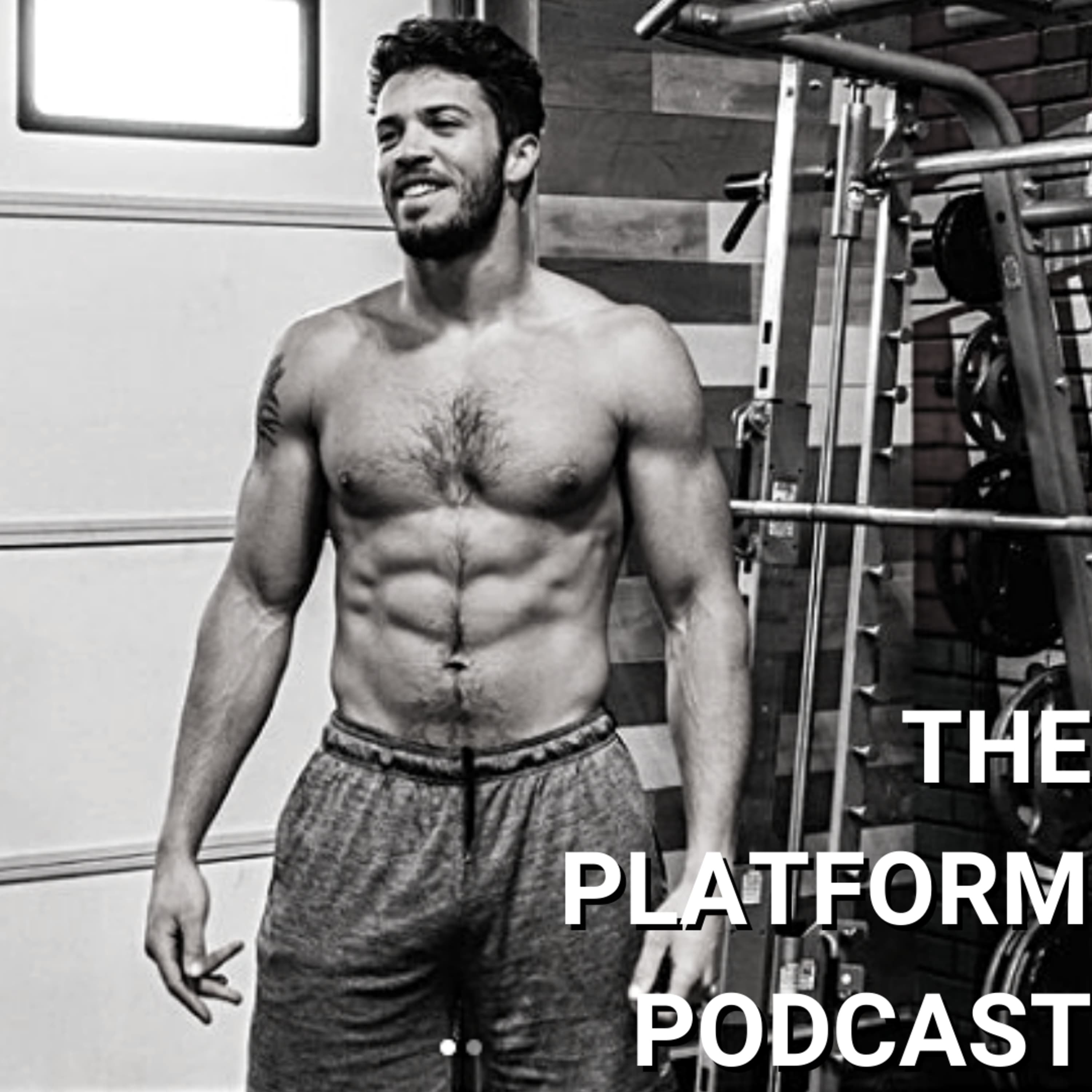
The Platform Podcast · Episode 39
Jonah Mitchell | Owner Jonah Mitchell Fitness, Personal Trainer, Nutrition Coach
March 10, 2021 · 66 min
Show Notes
This week my guest is Jonah Mitchell (@jonahmitchell_fitness), owner of Jonah Mitchell Fitness, and in this episode we get into how we met, what it's like walking off the football field for the last time and why that's so difficult for many athletes, and how he helps former and current athletes now.
If you enjoy the content please leave a 5 star rating & review, share on social media, and support my work by supporting my affiliates:
- Kettlebell Kings, use code TCKB to get 10% off
- Bearfoot Athletics, use code TWINCITIESKETTL to get 10% off
- Gaspari Nutrition, use code JWright20 at check out for 20% off your order
Transcript
Machine-generated transcript; may contain transcription errors.
Welcome to the platform podcast where we talk to coaches, athletes, experts, and real people to learn about their approaches to training, nutrition, mindset, and much more. I am your host, Jordan Kunde-Wright, founder and head coach of the Twin Cities Kettleball Club. And I'm on a mission to help others build sustainable, healthy lifestyles. My guest this week is Jonah Mitchell, owner of Jonah Mitchell Fitness, and in this episode, we get into how we met. What it's like walking off the football field for the last time, and why that's so difficult for so many athletes as well as Jonah's journey after football. And now how he helps former and current athletes today. So if you're listening, I want to take a second to say that I'm incredibly grateful that you listen to this podcast.
If you haven't already, be sure to leave a rating and review of the platform podcast in your app of choice. And please support my work by supporting our sponsors whose affiliate links you'll find in the episode notes. And if you want to step on the platform and competing catable sport, please reach out to me. I help athletes of all levels reach their goals without wasting time using my integrated coaching approach. You can follow me on Instagram, Facebook, and YouTube at Twin Cities Kettleball Club, or email me at Twin Cities KettleballClub at gmail.com. Now, let's step onto the platform with Jonah Mitchell. Alright, welcome into this episode of the platform podcast. I am incredibly excited to bring on my new friend Jonah Mitchell.
He is the owner of Jonah Mitchell fitness. He is a certified personal trainer. He is a nutrition coach and just I think I officially dubbed him a certified professional badass. So I'm really glad to I'm really glad to have him on Jonah. Thanks for coming on, brother. Thank you, Jordan. Like, like you said, it's really awesome that we connected lap basically last night. And we just hit it off. So I'm very happy to do this with you. Yeah, it's really like like we were talking about this yesterday. Like it's the the double edge sort of social media, right? Like you and I both kind of have the similar like love hate relationship with social media because it can be such a black hole of negativity and like trolling on people and people hating on you and what have you.
But it can also be like this wonderful vehicle to connect with people and if you if you like get the opportunity to meet somebody and connect with somebody and it goes, well, you're like, oh, this is why this shit exists. Like, this is why it got so popular in the first place because like for people to have the backstory. Jonah posted a post on Facebook. We're in some similar similar circles, you know, we connect, you know, nutrition coaching circles, you know, on Facebook, a lot of groups. And he he put a post out about what it's like to what it's like to leave playing football, the playing the football field for the last time. And I literally teared up like I read his post and I literally got tears like, you know, it got dusty in my office.
Okay. So I reached I posted I posted on his on his feet. I was like, bro, I got to have you on my podcast because this is such a huge part of my story. And I want to have you on my podcast. So we just connected last night. We ended up talking for like 40 minutes and you like, dude, I don't know why we did just press record. We really got to know each other a little bit last night and like just immediately hit it off. And that's like the cool part of social media, right? Like when you when you get that opportunity and like you actually connect with somebody that like you're like, okay, you're my people, right? Yeah, like straight away like that was that was super, super cool. So how often are you on social media? Like do you go on every day?
And is it like do you like block time? Or is it like a time suck for you? Is it like only like once a week or like how often are you on there? Sadly, I'm on there every day. But it's an it's an necessary evil, you know, you know, the whole thing. But I'm actually learning to love it as I learned to like build communities and provide value for many people. It was definitely a chore when I first started like doing all this stuff on my own like last year. That was, oh, that was like getting way out of my comfort zone. Like, oh God, now I have to expose who I am to all these random people. Now that gunner for so long, it's like, like I really enjoy it because the people I do connect with, like connect with coaches and we do cool stuff like this.
People who just need help with their nutrition or fitness, like it's an awesome tool. But like that being said, it's a double that sort of just today. I was randomly scrolling through stories and I found this guy who's just taking my posts and putting them on his story and putting his name on it. So nice. Yeah. So. Well, just so you know, I've started photoshopping my face onto your body. So just don't be surprised. I'm going to start branding some stuff that's like if you want abs like these. Give the kettle those for right now. People won't even notice like the skin tone difference or anything. It'll just be like my super pale face and you're like 10 six pack abs. Like nobody nobody will notice that it'll be fine.
It'll be fine. No one cares. This is fine. This is fine. Don't worry. I'm just flattered. Well, dude, you're profile picture. You're friggin ripped man. Like you are, you are shredded in your profile pictures. So like, is that just how you walk around? Like, do you just walk around ripped? No, no, pop contrary to pop your belief. That is me flexing as hard as I possibly. Like most of my pictures are. But thank you. I do appreciate it. It was definitely a long road. I mean, like the reason I got into fitness nutrition coaching was because I struggled so much myself. And now that I'm actually at the part where like you throw like at praise at me. Oh, God. I just do what I'm just doing my best man. But yeah, yeah, I like, well, I had no idea what the hell I was doing.
And then when I kind of when it clicked for me, I was like, I got to help other people do this, you know, whether it's to get ads or to just be healthy or to be crazy and do kettlebells for it. Like you, like, that's the fault of it, man. So much nuance. So it's just, I love it. So how do you, how do you react when somebody, when somebody, when somebody steals your stuff? Because like the guy took your post and like, there's like, I hear there's two ways to go about it. Well, there's more than two ways. But like the way that in my mind, it's like the old like lizard brain caveman, if man is like smash that. Oh, like season to see him show up in his door, beat the shit out of him. Like, and then there's like the high road that's like, Hey, it's, it's flattery. And like, he's not going to be able to keep up with the rate at which you're creating connection and like creating content. So like, just ignore it and let it go.
And don't waste your time and energy going into a negative space. Like, there's probably something, there's probably something in between there too. Like, but I'm curious what, what was your reaction when you, when you saw that. Me personally, it was the, the former or the former, where I looked at it, I was like, this is hilarious. Like, he thought it was that good. Then he wanted to put on his things. I was like, oh, like my wife, she helped me a lot with my back office stuff and a lot of like helps me with a lot of social media. So when she saw it, she was pissed. Like, she was like, that's our stuff. What the hell is he doing? Like, she messaged him and all this stuff. And I sit here laughing. Like, this is kind of like, like, damn, like cool, man.
Like, I'm glad you're taking my stuff. You find value. You want to share it on people. I mean, this, at least tag me in it. You know, that's the thing, man. It's like, I'm such a, I'm such a, like, rising tide floats all boats. And like, there's such an abundance of people that need help. Like, if you think that you got to steal somebody else's content and not give them credit for it. Like, what you think we're running out of people that need help losing weight in America? Like, are you not paying attention? I really don't understand that. But I feel like it probably comes from a place of insecurity. And somebody being like, they don't feel like they can create enough value themselves that they're like, they're just going to, they're just going to steal somebody else's stuff.
Because I feel like it has to come from a place of insecurity. You're like, not believing in themselves enough. Or maybe they're just trying to make a quick buck in the space. And there's a lot of people that do that too, unfortunately. But, you know, I feel like it's got to come from giving the benefit of the doubt. I say it's not malicious. It's just like insecure. Right. I did a little research on his account. And it looked, it wasn't as malicious as, as it sounds. You know what I mean? Like, most of my stuff has my face in it. So it'd be really, really hard to cut that out. But it's not that hard. Trust me. You'll see it. Fair enough. Fair enough. But I think it was just like he saw it. I was like, oh, it's a great message. I'm just going to throw it up there. And no harm. No foul. Like it was, it was pure chance that I was going to ever see it. You know, it was, it was lucky.
But I mean, I'd rather connect with that person. And like you said, there's, there's, there needs to be more coaches out here helping people. Because like, there's not, there's not a shortage of unhealthy people right now. I mean, I think the current number is 44% of the US population is obese. Like we're almost to the point that there are more obese people than there are not. And that is a huge issue. You know, when you say, when you take it in the like they say obese and overweight, it starts getting like 60, it starts getting like 60%. It's like, it's like more people are unhealthy than healthy and an unhealthy way than healthy way. You know, that's sad and scary. And honestly, like when we look at it from like a, you know, national well-being, it's like an existential threat as well. Like you look at, you know, we're in the middle of the pandemic. And, you know, one of the reasons that we're leading the world in deaths is because we have a very unhealthy population that this, this virus does a lot of damage to, right.
You know, that's, that's a, that's a sad state of affairs. But, you know, that's, I don't know, that's why we do what we do, right. That's why that's why you, that's why you got got into this space. So, exactly. Tell me a little bit more about your like origin story, right. Let's go back. Like, obviously you were a baller. So when did, when did you, when did you start playing the brutal chess match that is football and how long did you play and you know, take us through that journey. Dude, all right. Let's, let's, let's on, let's dust off the, the old memory box here. Strike up the chin strap. Yeah. Dude, that was, I started playing football. Actually, football was a last sport I got into. Like the first sports I started playing.
Well, the first part I ever guys who technically was karate. And I was a really short, really chunky, unethnic kid. And my mom's like, yeah, go do karate. And the kids around there were like doing jump kicks and spinning backfists. And I was like, what? I went from that to like soccer. And then there was a little bit of time I was in gymnastics. Again, like that didn't work. But football was the last one that I got put into when I was in second grade. I was eight, seven or eight. It was when I really started. And I was horrified of football. Like for a very long time, I had no idea what to expect. I started as an offensive lineman because I was a short and slow. But after the first game that, and I like got to actually hit someone.
I was like the first game. I got mortified. I was terrified. I don't know what to do. They actually got to hit somebody. I was like, oh, wow, this was, I didn't know at the time. But it was really stress relieving. So that's where it like started my, my love for football. So I carried that. And I ended up being a three sport athlete. I grew a foot and a half in going into high school, lost all the all the way. I actually was able to do some athletic stuff. So I moved to tight end and defensive end. I played baseball, a ranch track and I played. I use air quotes for played basketball because I was terrible. I wish they gave me more fouls because basically I found out every game. I have, I have a similar experience with basketball as a freshman as a freshman. I, at one point in a summer league game, I shot a three and I missed.
I was a decent shooter, but I shot a three and I missed and our coach during the next time I was like, all right, Jordan, I want you to go set a screen. And then working the post and if somebody gets you a pass down there, I want you to pass it and then go set another screen. And if somebody shoots, I want you to get a rebound and pass it and go set another screen. All he wanted me to do was was block on the basketball field or on the basketball court rebound pass the ball to other players and then go just keep, you know, keep setting screens. That's what he wanted me to do. Like rebound, rebound pass, set screens and then go play defense. That's what he wanted me to do. Maybe basketball, maybe basketball is not for me.
Yeah, we would be great postmen. We just give it to the other three guys who could actually score points. We'll get them the ball. Yeah, exactly, exactly. That's a simple experience. That's funny. Yeah, that's funny. But anyway, I stopped playing my other sports care football all the way through college. I played at DQ School, the Mount Here Colorado, played defensive end. I was a three. I started the last three years of my career. How big, how big were you at your playing weight? So when I got to college, I was 185 as a defensive end. Yeah, I was small. I was really small. I was like, I'm going to open your ass all game. I'm letting you get up feeling. I am straight up wailing. Wait until I get to the story of my defensive coordinator, my sophomore to senior year.
Oh, he did shit. He made me do was awful. But anyway, that first summer I put on 20 pounds. So I got to 205. I felt a lot better. I was actually able to do something. After my red shirt year, I basically hovered around to 15 and 220 up until my senior year where I put on an extra 30 pounds. I played at 245. And that was actually when I started to learn the importance of food and understanding your nutrition. Because I thought I was eating a lot, but in college, you're burning a shit ton of calories all the time. And I was not eating enough. But so my senior year, when I got to 245 to 50, I was eating six, seven times a day. I was actually putting on weight. I was working out five to six times a week. I was like, I felt like I was in the best ship of my life.
And that season, like the first six games, I felt I had the energy. I had the strength. I had I had very little injuries going that prior to my previous season, when I was under size, getting hit all the time. Like by these 300 pound dudes, like you like just tossing me around. And the fact we played a three three three five. And I was a head up for technique. Oh, no, yeah, I was going to ask if I was going to ask if that size, if you were like a Russian and a like a stand up Russian and a three four, like that would make sense to me because you get to you get to use your speed. And it's okay to be a little bit smaller, but a straight up four technique had up on the table. Like four. Oh, dude, I'm sorry. Like, what was your decordinator that you were a sacrificial lamb? And you were a clean and fire.
Oh, sorry. It gets me so aggravated. But when I got up there, they said, yeah, you're going to be a stand up and you're just going to pass rush. You're going to like just seal off the edge. I was like, cool. That's why didn't high school. I'm ready to go. Then I get there. And it's a head up four. And then you're basically my decordinator was also a linebacker's coach and he's like, your job is to let the linebackers make the tackles. Yeah. And I was like, what's like I didn't sign up for this. And so it was it was it was a head up for and a three technique. So either on a one on one, I was getting double team and I had zero leverage. The only time I was ever allowed to be in a five was third and long. That was it. That was it.
Oh, yeah. I had a rough time. But I feel for you. I feel for you, man. Like your coach did not do you any favors, probably. That is not. But of course, he's letting the linebacker shine. And in high school, I was a I was a center and a nose guard. And I played a straight up zero technique, you know, because I had an all state middle linebacker right behind me. And that it kind of made sense. I was like, Hey, you're big. You take up these two guys and just let Jimmy go tackle the world. And it was like, okay, that makes sense. Yeah, that's fine. I'm good with that. You know, because it made sense. Like that was my strength. Like I'm big. I can I can eat space and push guys back and let Jimmy run and make tackles. Okay. That makes sense.
But for you to be an undersized DN. And they're like, Hey, stand, you know, straight in front of this 300 pound guy and just try and keep him from moving you. Good luck. Yeah. Well, you know, I can I can complain. But I was actually very fortunate to be a starter in that position, even though I wasn't. I wasn't in my perceived optimal spot to succeed. I still even though I was not happy about it. I still did my best to try and make as many plays that could not disagree and commit. Right. I disagree. You know, like I actually had got many arguments with my decordinator. Like I told him a fuck himself. I practice that like that didn't end well very well. But after I did that, he started respecting me a little bit more. He's very old school.
And I still I don't know about every list of this, but I still have a lot of respect for him. Because he did like make turn our defense into the number one defense. The first year he was there in the R. Matt conference. So that was super cool. And my my D line coach was always a great guy. So I had really good coaches in the long run, even though it wasn't where I wanted to be at position wise, I tried to make the most of it. And I definitely had a very mediocre career. And that kind of goes into why I felt so devastated when I lost football is like I didn't achieve anything that I wanted to, you know, I wanted to be a 10 plus sack off state all American player. And I never did that. I mean, the most I've ever had in season was four and a half like.
And then after I finished, and I was like, I'm going to try and go professionally. I had no foundation to even consider going professionally. But I was still stubborn tonight, even accept the fact that I want to leave the sport. So then I try out for the team football league. I try out for the NFL. And I mean, there's still there's a lot. There's a couple of stories in there about the training I was doing for that. And man, it was it was a rough time. I still I still kind of like I feel myself choking up thinking about it right now. Yeah, well, so I mean, I mean, you think about it like you started about the same age I did, right? Like you started super young, you're you're, you're seven, eight years old, nine years old when you first put the pads on.
You play all the time, you know, your entire life revolves around sports, you know, and multiple sports in high school. And then you get to college and did you play any other sports in college or was it all football? It was all football. Yeah. So like that's your life for four years, right? Like that's, you know, studying obviously is part of it as well. Like if you're like, if you're like a lot of guys like you study so that you can keep your grades up so that you can play ball. Yeah, right. Like that was that that was the motivation for a lot of for a lot of for a lot of guys, right? It was like just stay eligible so you can keep playing ball. And then all of a sudden, like what's been your identity for 10 plus years of your life gone snap of the fingers, it's over, right? You're not a football player. You're not a football player anymore. Jonah, what do you do? Who are you?
Right. Like that's that's like such a huge that's such a huge thing. And so I was like you and you were like, no, no, no, no, I don't accept that. I'm going to keep going after this. I'm still I'm still going to play ball. Right. And like so, so what is that? What is that? Like how do you, how did that journey affect you? Like tell us a little bit about that. Okay, so after college I did my try I trained for three months at a facility in Centennial or Denver, Colorado to prepare for those pro days. And I went to Vegas and Texas to try out for my pro days. I didn't hear anything for a couple of weeks, right? Then I'm working after after I don't hear anything this training facility offers me a job as a personal trainer.
So like just to keep me occupied to start training young athletes just waiting for to hear a response without having lunch one day and I get an email and it's like a video response. And it was 10 seconds and said hi Jonah, thank you for all your efforts, but we will no longer be pursuing you for the Canadian Roughnecks or the other couple of teams that I tried out for. And I didn't even hear anything from the NFL scouts that I've been in contact with. So after I got that email, I just sat there like I had no emotion, like I noted, I wasn't happy. I wasn't sad. I was just empty. And I felt empty for about six months. It was rough, man, like I had lost like that entire drive, the entire feeling of of a belonging because my like in the post, if you guys listening, haven't read it yet, I felt so lost in that six months. And it was so aggravating because I didn't know what was wrong with me.
I didn't know what to do. I didn't know where to go. I didn't know who the hell I was. And it wasn't until I started getting my groove of personal training. I had to, this is another story, but that first that first personal training job I had was not good. Like that environment was not good for me. They didn't let me get any sort of, they didn't require me to have any sort of occasions. And the guys who tried to teach me, I just couldn't really pick up the pieces. And it was just a very, like on top of me being basically depressed from losing football. I was also in a negative and work space environment that was that had to be there for 12 hours every single day. And I wasn't having any fun. So I was lost.
I was beyond lost. I was like a hollow shell of who I was until I actually started took the time to I quit that job and I got certifications and personal training and started making and connecting the dots of where I was lacking in my own, my own sporting career, like even though I tried my best in the weight room and on the field. I was the most stiff human being ever. I had the worst movement on the entire planet, like all my joints were in agonizing pain. And I never knew why I just did it. I thought that was the thing that you did because we played football. Yeah, because football is hard on your body. Yeah, yeah, it's it was like you just sacrifice it for the greater good of the sport. I was like, hey, I'm really sore and they're like, yeah, of course you are. Yeah, that's the, that's, yeah, good job. Okay, hit the ice tub and we'll see you back tomorrow.
Yeah, bang your head against this guy on the next play. You're going to be fine. So as I started to break down my own movements, I was like, man, this makes sense why I sucked, like why my career was so mediocre. I started to feel better. I started to enjoy weightlifting again. I was like, oh my god, like this is what it feels like to move without pain, like holy shit. And that idea of like, man, I can optimize my performance by focusing on little tiny things that are outside of practice. I had to start reigniting my love for competition by figuring out how I can improve my performance, even though I didn't have a sport to improve for, but I was still learning a lot. And I was training at 24 hour fitness and I had this high school athlete come up to me football player, wanted to put on weight and I watched a squat.
He had no idea what he was doing, but everything I saw in him was at what I saw in myself. All he had was his high school coach to tell him to do this, do that and the other thing, but not telling why or fixing his movements. So when he came to me, it's like, dude, my knees are killing me and I fixed his movements and he was like, holy crap, like since we've been doing this for like last three weeks, I've been running faster. I feel a lot better. That's where I made another connection. I was like, holy crap, I can help people do this. So that's where the spark got ignited. I started analyzing myself and I helped that high school athlete and I started reinventing myself. Like one of my old trainers, he said, if you can't do, you teach, you know, and since I my entire, I consider my football career failure because I learned so much after it all and I continue to learn so much that after that that six months of depression and anxiety of like, I don't know who I am.
I started to rebuild, like I started to recognize myself as the athlete's coach, but I didn't know it at the time. Like it's just until very recently, I didn't realize how many athletes I generally just attract because of my background. So I don't want to be very roundabout in this explanation, but it took a lot of introspection to understand that I still can compete on my, I can compete by improving myself. I've improved myself. I learned more. I can share that knowledge. If I share that knowledge, I can help other people improve their performance and expand their, my impact or their impact in their sport. And I impact them on a much bigger level. And as I help, as I undercover more layers of myself, I find other pieces that help me back emotionally, physically.
A lot that I have kind of went through in this, in this experience, and I try to connect that to other athletes as well, because we don't understand, well, we don't always understand like the relationships we have within ourselves that we hide behind our sport. And if we can kind of unlock those things, and I think that's where you can unlock your true potential. What do you mean? I think I track what you're saying, but give me an example, like render it explicit with an example, like what do you mean when you say we hide the relationships that we have within ourselves behind our sport. Because I know that I, I hit a lot of shame and feeling of inadequacy behind see searching out achievement, right, I was going to be the best football player I could be, I was going to, I was going to achieve, I was going to maximize my physical potential and get squeeze every ounce I could out of my talent. And that was so that I, you know, that like my dad would be proud of me and my coaches would be proud of me and people would, would be like, oh, he, he did it right.
So I, that was, you know, my, my experience with it. Is that what you're getting at? Like, give me, give me an example from, from your, from your experience. That is definitely what I'm getting at, especially football for me was the only way I got praise from my mom, I don't know my dad. So my coaches were a lot of time were my dad. And when the, the man my mom did marry was a deadbeat shit bird. So, like getting away from them and doing well in football, I got a, I got praise from my mom, which I would never, I didn't really get much of, but she was also a young mom, I don't have any resentment towards my mom. But my insecurity was, I hid my insecurities of not getting enough attention as a kid. I mean, that sounds kind of poofoo, if you think about it, but.
No, no, no, no, no. We all want that. That's, that's normal. That's, that's a basic human need, right, to have, to have adoration and to have connection and, especially with your parents, right? Like, yeah, that makes total sense. It's a normal human drive. Yeah, so that was something I didn't, I couldn't identify that until two and a half years ago, because I hid behind it through football. I don't know why I couldn't ever tell you why I love football so much. Like someone like, why do you like football? I just love the sport. But it was because I was hiding from my insecurities of a lack of a lack of adoration, or hiding from the insecurity of myself, my self image, like I, I hated myself for a long time.
I was able to hide that through football, like football literally different person on the, were you a different person on the football field in your mind, right? Did you have kind of like an alter, an alter persona on the football field? Yes, definitely. And that person I felt like was, I was not a very talk, I wasn't a big talker in football. I was very stoic. Like, I don't care what happens. Like, you would kick my ass. I'm going to get back up and I'm not going to, you're not going to see anything. I'm not going to be pant, not going to see me an agony, not going to see me mad. I'm just going to get back up and line up and like nothing happened. Very quick memory or short memory. Thank you.
And that person, I always admire because he was only on when the helmets were on and we were in practice or in the game. The person was emotionless, like nothing affected him, other than what he needed to do. And I was running from my emotions for a very long time. Like, I'm going to get a little personal with you, Jordan. I was suicidal in high school and in some parts in college, especially when football wasn't in. I was actually suicidal in college when I tore my MCL and I was out for six, six weeks to six to 12 weeks. I can't remember the actual duration, but I couldn't get out of bed. And I was just like, you had a similar injury, like hobbling to practice is like the most depressing thing ever when you know you should be out there.
And you just want all you all you want is to be out on the field cracking. Yeah, and it's without football, I was so vulnerable to the things I've always run away from. And this kind of goes back to like when it's gone, that empty issue feel is way more intrinsically tied to other things. And most people, most athletes ever really realize, you know, you just have this conversation with you. I'm uncovering a bunch of other friggin emotions that I haven't had to deal with the long time. It's I find it really interesting that like you were a very stoic player and that made you feel in control because it sounds like outside of the football field, you felt like you didn't have control of your emotions.
I feel like maybe it was you know rage or inadequacy or sadness or you know any of those you know that we all kind of those negative dark emotions that we all kind of cycle through and you were able to put those away when you stepped on to the football field. And I kind of was I was the other way I was still very stoic on the football field. But I would get like I was a straight up savage like I would I didn't care like I would like I went to a very dark place a lot of times like like I would imagine like very very bad things sometimes. And I like I played angry a lot of times, but it was like that was my that was my safe place to be like violent and to be like you know like I like if I was blocking you like my my goal was not just to block you.
My goal was to take your will to continue to play like that was my goal by the end of the game. I wanted you to not want to line up against me for another play like that was my goal every single time. You know like and but the same way like I didn't I didn't talk to people I didn't talk I didn't talk smack I didn't but I just I just I would bury guys pick them up, bury them pick them up, bury them pick them up like that was. And I wanted it to be like by the end of the game they're like slapping my hand away because it because they they just got tired of me burying them like that you know but I was like that came from a very like that felt like the only safe place that I could let my rage out.
It's kind of interesting like the it's like this weird cathartic space but everybody finds it cathartic in different ways like for you it was where you felt in control for me it felt like it was like where I could let my rage out and I could be uncontrolled a little bit you know. I had to learn to control it so I didn't get penalties and I didn't do I didn't do dumb things that we're going to hurt my team you know but you know I'm very proud of the fact I got call for one holding one holding and. What I got also yeah I only held once that only ever happened one time in in four years and only ever happened one time because if the rest didn't call it it didn't happen. I am damn offensive lineman.
I was never dude I would do I would do anything to get my block man if it meant like grabbing the back of your ankle while I'm throwing a cut blog like I don't care. I had no I was so mackerel you know on the field man any means necessary I did not care you know whatever it took to get the job done you know I think just having this like being able to connect with you like this like I there's definitely I try to get along with all my teammates you know because I off the field it's a completely different relationship but like here like not but so the players I would go against were just like you I always feel like it was always a good stalemate. Like you weren't talking shit but you were trying to fucking kill me and I wasn't saying a word I was just going to fucking just like it's a chess match for me like all right you're going to get me this time you're going to get me this time but I'm going to figure that that one time that one time I'm just going to look at you I'm going to say a word.
Yeah yeah and that one and that one look would be the one that would sit in my in my head just that would be my rage trigger for the rest of the practice right like I saw that look I saw that I saw that we might have to go through some pads on Jordan yeah man yeah man I'm too old from too old for that man you're you're 12 years younger than me bro like that would be that it would be ugly I can barely I can barely hold a good three point stance anymore but you know I'm really good at it. You know for the guy who goes 30 minutes worth of kettlebell exercises you know it's specific adaptation to impose demands I'm well trained in the in the I'm well trained in the areas that I'm training and I do actually I do actually want to pull a little bit more on your threat about like pain free movement because like that's something in my sport which you're just discovering right but one of the things I love about kettlebell sport is you have to be able to achieve positions in a comfortable manner so range of motion.
Joint stability mobility flexibility are super super important in this sport so like for me like I actually have a spreadsheet that's called on fucking Jordans injuries because I have so many old injuries and I've got like I've got like a group of a group of movement therapists and people that I work with that are helping me try and like restore mobility in my elbow that I dislocated so many times playing you know or hyper extended so many times play in football and like all the old all the old injuries like I'm trying to get rid of those things because I did so much damage but. When I'm trying to restore normal pain free movement so like that's something that you're trying to bring to your training philosophy like how what's your approach to that like how do you go about like I don't want to say diagnosing I want to say assessing assessing people's movement patterns and like what's your approach to how do you go through that process with your athletes so it all comes down to like I know best based off my own my own experience right I've gone through the Nazum and.
A couple other movement assessments like overhead squatting single leg squatting all these different movement assessments and I really have to like my best way of evaluating assessing is always asking like is there pain like I used to accept pain as just part of the part of thing you know like this is just normal your knees are supposed to feel like you're an old person when you when you squat which is normal to have knee pain when you squat which is a completely ass and I think to. That is BS the biggest BS ever so when I'm when I'm talking when I share this story and I do people's programming I do program mainly full body movements to improve overall function is like always assess like is this pain or is this activation and I have a lot of people who are athletes who avoid deadlifting avoid compound list because they hear the horror stories I hurt my back squatting or deadlifting or I can.
I can't squat because of my knees you know all these things and I like the squats hurt my knees is like no the way you squat hurts your knee so it's always my counter so it's always about like first I always start with a overhead squat assessment evaluate knees hips ankle movement and if and after the initial assessment we do I do prescribe a corrective exercise like 99 he says combat stress work on mobility but almost all my programs have mobility in them. To address pain free movement because so many things that I did in through my sports in high school in college we never focused on flexibility or mobility it was always about more weight on the bar more weight on the for the deadlift or the kettlebell or whatever the hell we were doing that day and like it's that that's where I got my like it doesn't matter if it hurts as long as I'm squatting heavier you know so when I bring it up to clients they're like yeah my knees hurt my back hurts it's like all right stop what we're doing like I don't care what we're in you're going to send that most of my clients are online they're going to send me all their lifts super lightweight I want to see what's going on and then by looking at them they'll like have a excessive forward lead the valgus ankles rising all these issues that nobody is really talking about when they're in a sport or anything like no one like I used to watch my teammates like squat in their knees would basically buckle in when they're doing a max out effort and I was like he stood up that's a great rep right there yeah but he got past parallel yeah I would put it up the damage that I didn't wasn't aware of and that would current athletes former athletes are not aware of like it's so important to connect those dots to understand that when you do squat you're supposed to feel better the next day or like yeah she'll feel sore sometimes like that's totally normal sores sores different that's a different sores different it's not talking about joint we're talking about joint pain yeah like so roundabout answer but actually just talk to one of my clients today about deadlift he's never deadlifted this much and we only did that once a week but he's a former football player former baseball player trying to get back into getting in shape and never deadlifted so before we even touched weight like we have to go through movement assessments and now that we're starting to add weight he's like I'm starting to feel this in my back you know I'm really scared so I haven't sent me a video and I look at it like it's perfect form neutral spine hip hip drive lat stay activated like okay so like I said before is this pain or is this muscle activation are you scared of what you've heard from a 50 year old man who says he can't squat anymore because he heard his back squat or deadlifting and now you're just like assuming all pain is a sign of dysfunction like understanding that and reevaluating the pain threshold understanding that there's a difference between pain and soreness and activation there's a lot of different things that go into it but no one knows how to really read their it's really hard to read your body as an athlete because you just gave yourself for your sports so much that it's easy to just shove it off it's like oh I'm just being soft or something like that you know I'm I'm notting so hard you can probably hear it on the microphone but it's uh you know for the people that are just hearing the audio like that is such a huge thing and I think you touched on a really important thing that it's so funny because athletes are so proprioceptive of that like people that are really high on the athletic athletic performance spectrum are so highly proprioceptive that when you cue them the right way they're really good at tuning into their body and finding feedback and yet we're conditioned from such a young age to ignore the the proprioceptive feedback or we're told we tell the coach a thing and like you're told you're told oh yeah that's normal or don't worry about that or like like I can't tell you how many times like plan plan sport plan junior tackle like you'd be like coach my headhurt and they'd be like oh yeah that yeah that happens you just run your bell don't worry about it like just take a take a minute and you'll you'll be okay you know I'm like like all of those things like you're you're basically told your condition from a young age to to ignore one of your greatest strengths as an athlete which is that your body you're in tune with your body and your body tells you a lot of things and you're able to take that feedback and adjust your performance in space and in real time as a result of that that's what athleticism to me is basically defined as is the ability to take proprioceptive feedback and perform in real time right like that that's athleticism you know and athletes are so great at that and yet we're conditioned to be really good at parts of that proprioception the parts that lead to high performance on the field and ignore the parts that are are all of the consequence of that performance right and that's like we sacrifice so much of our of our ability to tune into our body and the feedback that we get and and ignore the pain parts of it so that we can go back out and practice the next day or get back into practice or get back into the game or you know all of those things and I think that that also leads into like why athletes get hurt and then like feel like a they feel like shit because they can't go out there because they're well you failed I failed I failed I failed my team I failed like I failed everyone my body let me down yeah in reality it's it's a bunch of little things that you haven't been able to pay attention because we're conditioned not to listen to it I mean I this could be even related to nutrition for athletes like they get so like there's I think there's one of two athletes one has the help from a young age understands nutrition that food is fuel or the other one that you just I'm athletic so I get to eat whatever the hell I want and I always definitely that one eating whatever the hell I want but I like as I've learned more and more about nutrition like like you said athletes are very appropriate separate proprioceptive and can can adjust their body based off feedback our body when it comes to nutrition does the same thing with biofeedback and we don't we forget how to listen to that like hunger sleep levels energy what else is there the amount of times you take a shit away yeah yeah like all of those things are are how we communicate but we're never taught to understand this like food is just food and if I don't if I put once a time week that's just how I do it it's like there's no difference you know the great the great and terrible thing about human beings right the reason human beings are the top of the evolutionary chain is not because we're the strongest right cheetahs are faster than we are bears are stronger than we are sharks you know swim better than we do right but the reason the reason we're still the top of the evolutionary food chain on this on this planet is is because we're the most adaptable it was never survival of the fittest it was survival of the most adaptable and because we're so adaptable we're great at that but the problem with that is again the double edged sword thing we can adapt to terrible situations and and it becomes our new baseline we don't even think of it as as being abnormal anymore we just recalibrate to whatever baseline where we experience over and over and over again and now that's just our new normal it's like you know hey you're living in prison and that's okay well that's the new normal at a certain point that becomes your new normal right or what if there are so many things and we can you you can get used to like oh yeah I only poop twice a week and you're like like wait what like you know people that people that go regularly are like wait that's crazy to me like I'm like yeah that's just how my body's been for years and you're like and then you get you as a nutrition coach get that person you know going regularly and they're like oh my god I feel so much better you know or you get somebody you get somebody who's been sleeping five hours a week up to like seven you know or five hours a night up to seven hours a night and they're like oh my god you know we're like you know one of my one of my one of my friend one of my friends you know he and I were just we're just talking about this how like you know when when you were abusing when we were abusing our bodies you know post college drinking all the time and like drinking heavily and smoking and all of those things like you just get used to kind you don't even realize how shitty you feel until like you quit smoking you quit drinking you start taking care of yourself you start working out again and then it's like all the sudden you're like oh my god I feel so much better and then like you have one of those weekends where you like go back and party like you're 22 and you're like oh my god I believe I did this to myself like how did I ever live this way you know like but that's just like how that's how crazy it isn't like how well we can acclimate to even like terribly destructive like nutrition habits physical habits mental habits like all of those things like we can adapt to anything like you can tell yourself you're worthless over and over and over again and like that seems normal you know because that's just your internal dialogue and it's not until you have a coach telling you like hey you probably shouldn't talk to yourself like that like would you talk to one of your friends like that and you're like no I would never talk to my friends like that like then why do you talk to yourself like that you know like like my coach told me that and I was like oh my god yeah I would never talk to one of my athletes that way well then why do you talk to yourself that way I don't know I never thought of that I just kind of always assumed I'm an asshole like it's just crazy how much we can we can acclimate to those those types of things dude definitely and now that you kind of bring up like how we adapt to just new normal mindset is also a giant really really big point for me you know because I've been on the the lowest of the low with negative self-talk depression suicidal thoughts that normal is just something from my own experience and other people that I've talked to with this like it feels like a bottomless pit that no matter how hard you try the walls are greased up and they want you to stay down there you know because of that negative self-talk and I was not fortunate and I was not fortunate enough to have someone really extend a hand to get me out of the hole I had to really figure it out by myself and it sucks so much I mean just that that saying you said like would you tell your best friend that like it's such a great like kind of switch to help people and start getting out of those negative habits because then they realize that like oh my god like how do I wouldn't treat this person like that why do I treat myself this way and it won't fix the problem like right away it takes it takes effort it's it's a lot of effort and honestly it's one of those things like for me at least I've had to accept the fact that it's like this is lifelong for me right like I I can't I can't ever stop doing the work because I have the addicts brain and you know at a certain point like if I stop putting in the work I'll backslide right it's just like yeah I've had to I've had to accept that fact and that's where like my whole like personal motto and mantra has come from like grow every day grow or die because that's that's like that's what it is for me like that that's literal for me like if I don't if I stop I'm going to backslide and it's going to be bad dude that I want to get that tattooed on me grow or die folks at all or do man that's that's our that's our motto right so it's it's honestly it's it's funny because I picked it up from my my first kettlebell client here in the in the twin cities Greg Anderson he's a legend he's awesome he showed up to he showed up to one of our training sessions he was wearing a shirt that said Voxa Ella Duh and I was like I was like what is I was like I I can read Norwegian but I don't speak it I was like I was like what does that what does that mean he's like oh it's grow or die is what it means and I was like oh my god like my mind blown you know like I went down a hole I went down a hole rabbit hole like I was actually going to call this podcast the grower die podcast but there's another podcast called the grower die podcast really which is Justin Mahaley who's a who's a body building high level bodybuilding coach right and that's how I ended up connecting with Jason Phillips which is how you and I can't connect it because because Jason Phillips is the founder of NCI we're both NCI certified nutrition coaches like you know and that like but like crazy coincidences like that like it's it's always interesting to me like how the universe like stacks up sometimes you know do coincidences it's it's all it's no coincidences I don't believe in coincidences anymore I think it's just like something that we're attracting I don't know how much of the law of attraction you you I'm very familiar good good I'm a natural skeptic but I but I do I do believe in a lot of those principles right like yeah I'll meet you dude I knew I knew we were born connected on this that like we're basically the same person Justin Colorado and Minnesota oh and I you know I probably got about a hundred pounds on you and you have worked twice as many visible abs as me but you know that's that's a that's a whole hey it's okay more to love that's all that matter we're getting we're getting there man I'm gonna get there I'm gonna get there I'll stop having to Photoshop your body onto my head so just give me like give me like a year or two that's all oh what you're dropping down to 230 for your way yeah that's yeah that's that's the that's the goal for for my competition here in the Twin Cities in October I'm working with Samantha so she's she's helping coach me and I'm gonna yeah I'm gonna drop down another there as of this morning I guess 30-ish pounds so yeah that's the that's the goal hopefully I can hit that by October and if not I'll get it then for the next you know another competition I because I'm committed to doing it the right way that's what I said I'm like I'm not gonna I'm not gonna sacrifice my long-term health for the sake of looking like Jonah Mitchell when I take my shirt off I'm gonna I keep I keep roasting you about that because of your profile picture red it's okay I can't help it you've earned that though so thank you now yeah a bunch more clicks now well I mean you're gonna get some thirsty dm's at the very at the very least you know not that you're not that you're hurting for those I'm sure yeah I just had to go in I mean I'm married so I show them to my wife all the time but it was honestly it was her idea to throw that profile picture up there well you know because she's a good marketing mind she knows what's up like if there's no there's no there's no doubt there's no doubt about it man like that it gets people's attention anything that stops the scroll I mean like even me like I'm I'm married with two kids and I was like god damn that guy's in shape holy crap I got like like look at this guy you know you know I tell my wife she doesn't have to worry about other women me I will say if somebody that's gone out in Boyce Town a few times in Chicago with some of my friends like I apparently fit the bear profile pretty strongly you know I've never felt more I've never felt more attractive than going out and going out in Boyce Town a few times so oh man you know hey that's a good thing if I think if gay men find you attractive that's the ultimate like compliment I think it's a good it is it is a very good compliment and honestly like a boystown is a blast if you've never got boystown in Chicago oh god it is a blast it is super super fun don't do it on pride weekend because it's then it's like crazy it's like off the charts 11 crazy but like any other weekend it is it is a great great time it really it really is so well man I don't think anything compared to this podcast have been I've had a great time with you Jordan I appreciate it man well I'm gonna I'm gonna leave you with just a really easy question and I say that completely sarcastically so who are you who are you now because you you've we've talked about how losing the identity of being a football player is you know is a major is a major loss but who is Jordan Mitchell now like what is what is your identity now and how have you how have you come to that identity that's a great question and I hate you for it because now I have to like concise my my ping pong mind into what the thing so we got time man you don't have to get concise but just just you know lay it on me brother this is a question that I am constantly forging every single day like you mentioned like it's a it's a lifelong relationship with your mental health it's also I also have a lifelong relationship my mental health I do something for myself to make sure I don't slide back into those old negative behaviors every every day so who I am now is one I'm a coach I'm a I would never have admitted this when I was playing football because I never believed it but I am a leader and I believe in the betterment of everybody around me competition or otherwise like I am growing away from the scarcity mindset of I can't have the good things in life and other people aren't supposed to have those things as well so I am a completely different person than I used to be I am still an athlete but I am better in almost every way than I that I could possibly hope when I was in in the lowest stages of my life and it's a constant journey you know I I don't know who I'm going to be five years from now well that actually I kind of do but you have a vision for it but you don't know concretely for sure yeah I have a different goal when you get there in five years I can tell you exactly from being a little bit older than you I can tell you who you think you're going to be in five years you should have a clear vision of that but who you actually show up to be in five years will probably be different because the experience of the unpredictable is exactly that it's unpredictable exactly and I am I am used to I'm one who thrive who thinks he thrives off of chaos like I don't like organizing I don't like planning because I feel like if you have a plan and it goes wrong like what the fuck was the plan for anyway you know but that's also a part that I'm always working on is because I do understand the value of a plan and even as the media as a social media player I'm sure she she probably values the plan very much yeah yeah join again on the plan she's the Yin to my Yang because everything I have not she is that's awesome that's perfect brain that's same for same for same for me man it's a good relationship man but yeah this this is definitely a question that I would love to answer again in like a year or two because I'm sure it will change I am with I mean this in the least like up my own ass term ever but I am trying to be a visionary for people like me and anyone else who wants who is in a similar boat or anyone else who just has no relation to me whatsoever with athletics but just wants to improve their health their mindset their their overall life I want to be the person or I'm trying to be the person that clears clears the way of all the BS and it really makes people realize that no matter how shitty it is and trust me I know shitty there's always a lie at the end of the town and it's it's always a process and I've had to come to terms with it I still have those days frustrated where I'm not because I'm not where I want to be but then I always find my center again is like get back moving in the right direction that's the biggest thing that I want to teach people as long as you get back on the horse no matter what it is you're never too far gone and it's until I'm going process man I hope that answer your question yeah dude that's awesome no I love it I know that's a that's a tough question it's intentionally a tough question so I'll ask you I'll ask you an easier one as a follow up though because you touched on it um you work with athletes you know as you're as your primary focus but you also said that that like it's not just athletes so it sounds like you kind of have a similar philosophy as me as which is everyone is an athlete to some level or another oh yeah wholeheartedly I run a I run a challenge called the athlete for like and you you've seen my posts it's directly targeted to people who understand what's like to be an athlete you know yeah but my first challenge about like 60% of them were never an athlete but the idea of it excited them like when I ask people when they come to me like what is your physical goals I want to be toned I want to feel good I want to look fit it's like okay for a lack of a better since you're not being concise do you want to look like an athlete and they're like yeah that's exactly what I want I want to look like I can I can run around by sports so to me we're all athletes so yeah some of us who were able to get it get our our edge scratched in little league and middle school we just carry that along but everyone's able to have the higher appropriately you don't have to be on a field or a quarter or a platform to be considered an athlete I mean just understanding your body it may put you in such an advantage of your life for I don't know I don't know if I'm putting that right but I'll end this I'll end with this question with this fitness and nutrition is my life and I love that but for most people it's not the biggest part of their life and I don't want it to be I want it to amplify their life make them understand that your your health your fitness will lead to bigger impacts in the relationships with your family in the relationships with your business or your your your partners or whoever whatever you're doing your health amplifies all of those things and I have had to learn that the hard way and now that I'm on the other side I know like holy crap yeah it's so valuable amen amen yeah that's yeah that is that is awesome I love that um I think that's I think that's huge right like understanding that everybody is an athlete you know because our species was designed to move like that's how we evolved right so everybody everybody's an athlete to some degree or another and the more you the more you can train that way and act that way and eat that way and take care of yourself that way like you'll thrive right you'll you'll be able to perform better in every aspect of your life so that's that's awesome I love that philosophy I love and it's the it's the athlete for life challenge right and that's that's that's what you're nice how do how do people how do people get at you how do they how do they follow you where where can they where can they see this profile picture that I keep referencing how can they how can they find you on social media follow you and how can they reach out to you uh so Jonah Mitchell on Facebook uh Jonah Mitchell underscore fitness on Instagram that's where I am most uh active on I do have Twitter is Jonah M. Fit because my my name is because it has to be under 140 years yeah um not very active on on on Twitter but if you want to get a hold on me it's Facebook or or uh it's yeah I recently just gave up on Twitter for that reason okay good it's not like it's just not weird I don't get it yeah it's a it's a very dark space it's it's a it's an angry kind of negative space it's not my jam but are you on a clubhouse no no not yet I've I've I keep hearing about it and I'm not I'm I'm only vaguely familiar I guess you've got to get invited yeah I gotta get your number because I got a bunch of invites so okay I'm I'm hoping to start my own like podcast um through that because that's basically what it is it's just podcast um without the equipment that I do not have like you well this is just a vocal mic I have from my singing day so that's that's all that that's all that that's a great conversation for another day yeah that's a whole other that's a whole other that's a whole other thing I actually I sang the national anthem uh at senior day for my my my uh college football my my at senior day at at Luther college the last uh on senior day so I actually sang the national anthem in my uniform and then went and then went and played and went and played in the game so wow that was yeah that was cool it was the worst awesome the worst I've ever done on a national anthem because I was so amped for the game yeah but I was like I couldn't like I couldn't control my I couldn't control my my tone nearly as well as I normally but I was so nervous like not for the singing but for the game and I'd never done that before I didn't I didn't I was not prepared for how amped I was gonna be so it's like my words national anthem I've ever sang but uh was that deal was that yours I got asked you it was actually but it was actually the the media department at the school's idea um you know because I was a for I was in choir my entire life and uh yeah so it was yeah it was a it was a whole thing but uh yeah I was the the media department for Luther college asked asked me to do it on senior day since I was a senior and I was a four year four year choir and four year football player they thought that was a kind of a cool thing so wow you're until dude man I certainly I certainly tried to be so well man it's great it's great to meet you I like like you said like I feel like we're we're we're gonna be we're gonna be friends for like time so like I'm super glad I'm super glad we connected I'm so pretty glad I met you um I'm definitely gonna invite you back on the podcast because we got we got more we got more things to talk about and we'll connect we'll connect offline because I feel like there's a lot of things that that we could cross over on and do some work on so I gotta get I gotta get you on the platform uh lift and some bells too because I want to see I want to see what you could do with with the with a couple of kettlebells I want to see I want to see the athleticism expressed on the platform we'll see how that we'll see how that goes I'm uh uh it's gonna it's gonna humble you and challenge you and then you're gonna love it you're gonna be like oh it's gonna be hard you're gonna be like you're gonna be like oh my god this is so hard I have to get better at this it's it's yeah I'ma get you hooked it's gonna be awesome I love it I love it too dude yeah watching you today I was like man that's so graceful the way he does it but I'd be more than happy to man a big chubby band owner yeah man and you're on Boulder I've I love like I love Boulder I've I've I've climbed the the flat irons um back there I've hiked the flat irons that's I love Boulder Boulder's a Boulder's a beautiful beautiful city so I've got I've got fam I've got family out there so I'm hoping I'm hoping to come out to my Ohio to catch a to catch a game um when when we're allowed to travel and and go see football again so my my Ohio is definitely on the list I'll hit you up the next time I'm out in Colorado for sure dude you better we'll sleep we'll slink we'll slink some iron I promise yes sir I love it well yeah this has been an awesome experience like you said we're gonna we're gonna do a lot of cool stuff together so thank you Jordan good to talk to you man I appreciate you have a good night brother good to you man all right please thanks for listening to this episode of the platform podcast I'm Jordan Kunde-Wright if you have a question please email me at Twin Cities Kettlebell Club at gmail.com follow us on Instagram and Facebook at Twin Cities Kettlebell Club on Twitter at TCKB Club online at Twin Cities Kettlebell Club.com and please help us grow our reach and give us a review on Apple podcast Spotify Mitchell or wherever you get your podcasts until next time
Want This Kind of Coaching?
Everything on the show comes out of real coaching. If you want a plan built around your goals and your life, the first step is a free intro call.
Apply for Coaching